
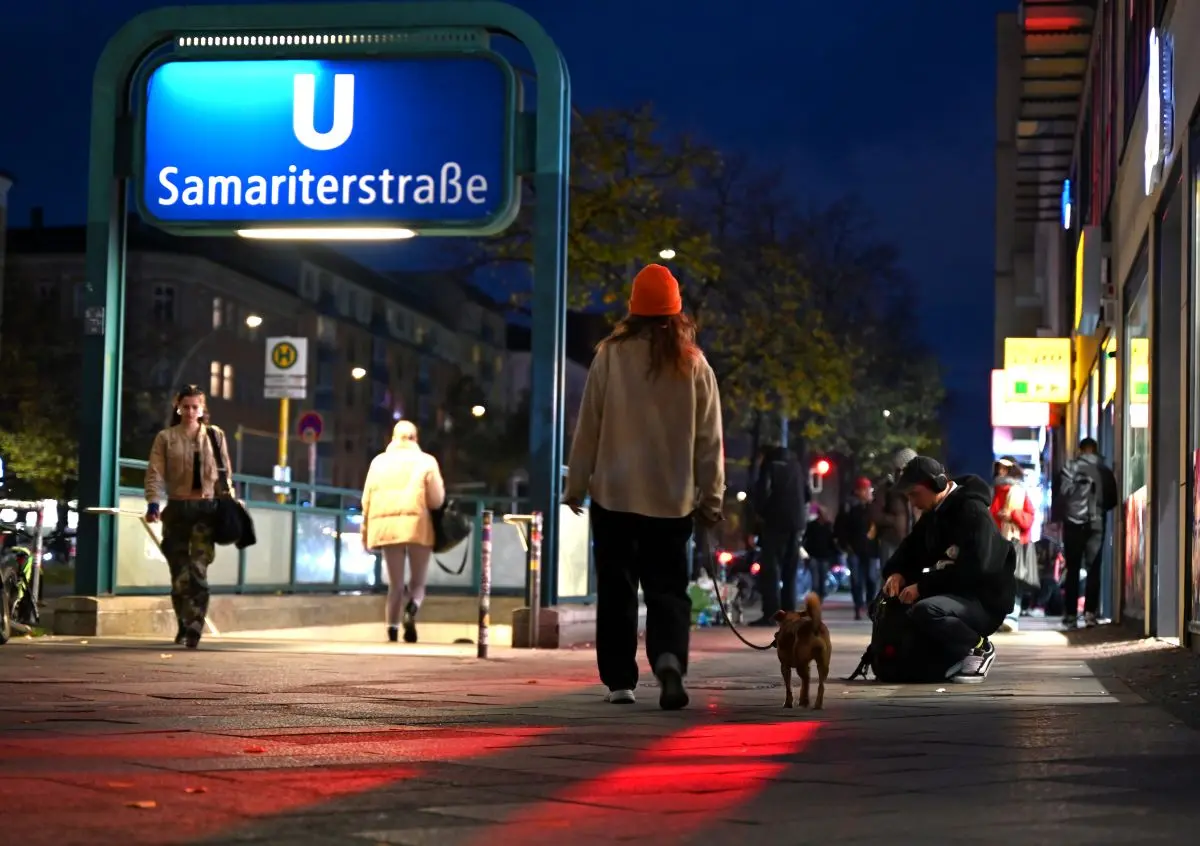
Debate around Friedrich Merz's now infamous ‘Stadtbild’ comments have dominated headlines and political discourse for the last two weeks, after the chancellor insinuated that immigrants were responsible for major problems in German cities.
Now, the Green Party district association in Berlin's Friedrichshain-Kreuzberg district has filed a criminal complaint against Merz, accusing him of racism and hate speech.
Polls suggest that Germans are split on the issue, with a recent study commissioned by RTL finding that 46 percent of people believe Merz has addressed an important issue and an identical number accusing him of fuelling prejudice against refugees.
So, to understand how Germany's foreign residents feel, we asked our readers in a recent poll how safe they feel in Germany's cities and what they thought of the chancellor’s comments.
How safe do foreign residents feel?
The majority of respondents to our survey reported 'feeling safe' (32 percent) or 'feeling safe most of the time' (39 percent) in German cities.
“The cities are just fine...I lived in cities where people cannot go out at night because of gun violence,” said Cory Kulas, who lives in Munich.
Andrés Reyes, who also lives in Munich and is originally from Nicaragua, called Bavaria's capital “one of the safest big cities in the world.” He added, “Whoever feels unsafe in general here is just a victim of propaganda.”
Yet, a significant minority expressed reservations. Among our respondents, 25 percent said they felt unsafe sometimes and another seven percent said they simply don’t feel safe in German cities.
For many, the sense of insecurity was tied to specific locations or times, such as train stations after dark.
Some, like Mahyar from Iran, who live in Munich, said, “A quick look at neighbourhoods near the central stations at pretty much any bigger German city gives you the impression you are in the Middle East. I try to avoid those areas.”
READ ALSO: How safe do women feel in Germany's cities?
Yet others, like Kevin Pearce, an American living in Berlin, suggested the real problem was quite different. He said he feels safe most of the time, but added, “Over time, I feel less and less welcome in Germany. I'm here legally, working and have paid a lot of taxes over the years. But everything is trending towards 'immigrants are bad'.
"It just seems that that's what voters and the people in power are really feeling, even if they say they need people to fill jobs and are trying to make it easier for those people to move here.”
Why do people feel unsafe?
While Merz has attributed feelings of insecurity in German cities mainly to immigration, many respondents to our survey pointed to a much wider range of causes, often linked to specific locations with drug use and poverty, or the presence of extremist groups and even the actions of authorities.
Max G. in Berlin, originally from Ukraine, said, “There are some places in Berlin which are clearly not safe...The danger comes from immigrants not sharing western values, Russians and right-wing elements.”
For Jenifer Stambaugh in Stuttgart, harassment was a concern: “I have been the target of harassment a few times in the past year...That said, it is not clear to me that the folks who harassed me were here illegally. Generally, I do feel there is a bit of a culture clash happening between some immigrant communities and the German population.”
“It would be great if the cops stopped beating up protestors they don't agree with politically. That is my greatest fear on the streets,” wrote Kevin Pearce in Berlin.
Other respondents pointed to visible poverty, drug use or the presence of extremist groups as factors that made them uneasy, including an engineer – originally from Italy, who preferred to remain anonymous.
“Although homelessness and drug abuse are a real problem, the main reason I don’t feel safe is racism and the escalation of war rhetoric,” he said.
READ ALSO: 'Stadtbild' controversy prompts calls for city safety summit in Germany
Ray, an American living in Rhineland-Palatinate, observed, “Germany and its Chancellor continue to lump all immigrants as bad...The areas around train stations in German cities have had problems for years – crime and massive drug use.”
Friedrich Merz: Right or reprehensible?
Reactions to Chancellor Merz’s comments were sharply divided. Some, like M.T. in Oberfranken, said there was “nothing wrong with what he said. [Germany] is changing, and the police are being overwhelmed with nuisance immigrants.”
Gary Murray, a Texan living in Zerbst, agreed: “Unfortunately his comments are very true.”
Others, such as William Darling in Munich, called the remarks “reprehensible” and “embarrassing.”
“I am a foreigner but have lived in Germany for more than 12 years and have often felt proud of my adopted country. Merz is destroying all of that,” he said.
An anonymous respondent, originally from the UK, went further: “Merz’s comments are a dog whistle. They are designed to pander to racists. He should be combatting racism, not making anti-immigrant statements for optics which will ultimately make Germany worse for everyone.”
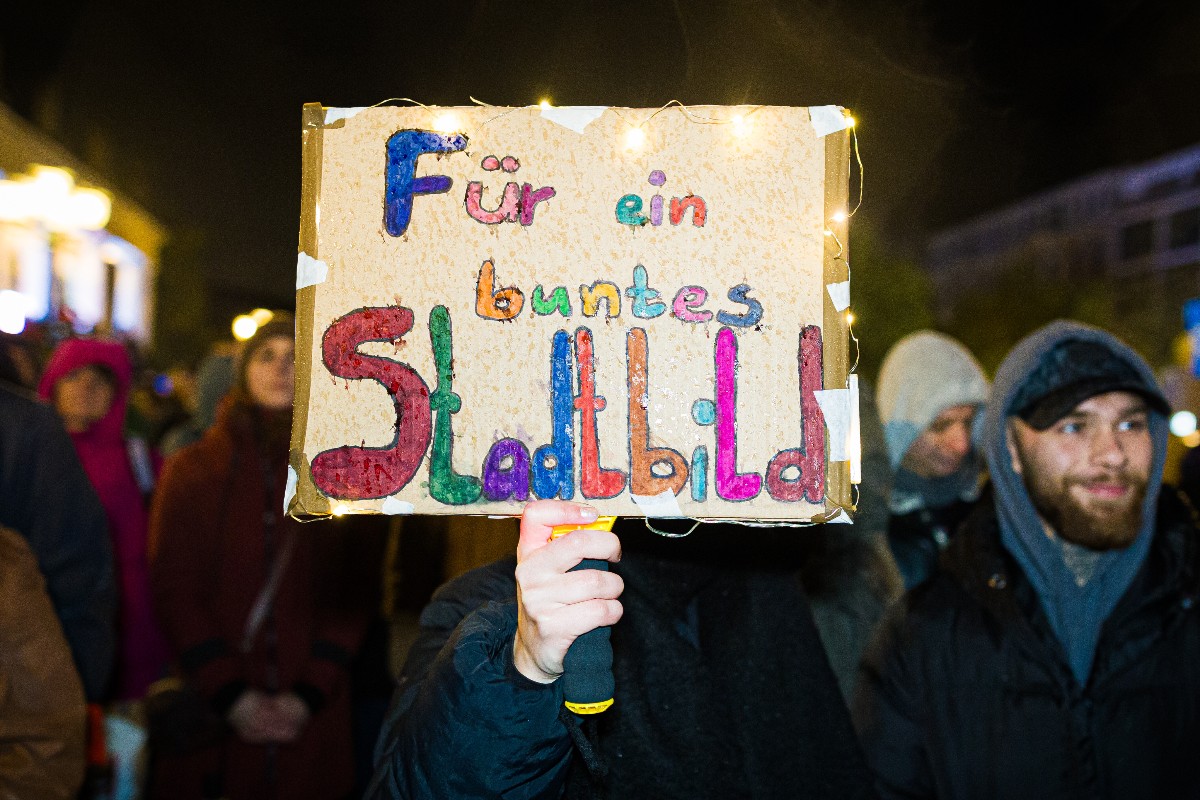
For many, the rhetoric was a reminder of the challenges of integration.
“Pegging every socioeconomic issue on immigrants is becoming a tiring trope...These off-hand comments only add negative energy,” said Adi Sinn in Munich.
“It’s just proof they only want immigrants here so they can use us for our labour,” said Robert Ruetsch, an American who lives in Berlin.
READ ALSO: How immigration keeps the German economy running
Some respondents expressed mixed emotions. “I feel conflicted. Yes, there are issues of security and safety in urban centres...but making it solely a migration issue does not solve the problem,” wrote one Cologne resident.
Pavel Stark, who has lived in Frankfurt for over a decade, said, “There’s an obvious and legitimate problem which the chancellor was afraid to describe using plain language...Merz was right in calling out the problem – he was wrong in oversimplifying the solution.”
For others, the rhetoric has a personal impact. “Despite integrating well...I no longer feel comfortable living here,” said one Munich respondent.
“At the very least it makes me want to stick closer to immigrant districts,” agreed Tim from Canada, adding that he felt more comfortable on Neukölln's Sonnenallee than in many smaller towns.
Ultimately, despite the increasingly harsh anti-immigration rhetoric heard around Germany, a larger number of respondents remain fiercely committed to their adopted country.
READ ALSO: Europe's shift to the right creates an 'unwelcoming environment' for all foreigners
“It does raise questions. But also inspires a desire to naturalise and be able to vote (for someone else!!),” wrote Richard Kinley in Bonn.
Joan A., who lives in Hessen, added: “The ‘Stadtbild’ may be changing, but for the better. A variety of cultures brings vibrancy and richness. It should be celebrated as an asset. I am an older woman, but I do not feel threatened by the presence of immigrants.”
Thank you so much to everyone who completed our survey. Although we weren't able to use all the responses, we read them all and they helped inform our article. We received a huge number of constructive suggestions for how German cities can be made safer, which we will cover in a separate article.
Comments