
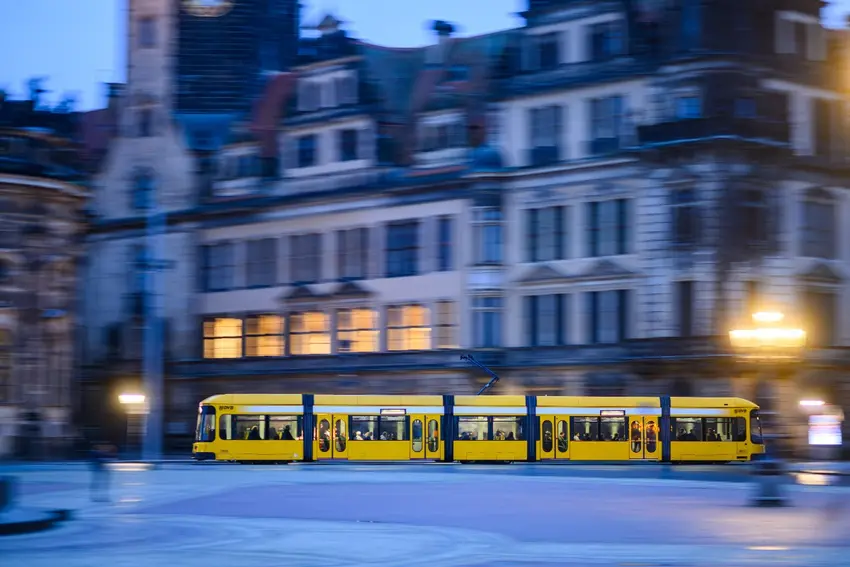
Many key sectors – from health and transport to hospitality and construction – would grind to a halt without people with a foreign background, figures from the Federal Statistical Office show.
People with a migrant background are particularly well represented in many of the professions struggling with a general shortage of workers. For instance, 60 percent of welders and metal-joining technicians have an immigration background, as do more than half (54 percent) of all cooks and food production workers in Germany.
The share of employees with a foreign background is also above average in the scaffolding sector (48 percent), among bus and tram drivers (47 percent), the meat processing industry (46 percent) and among service staff in the catering industry (45 percent).
A particularly large number of people with a migration background also work in cleaning services for buildings (50 percent), as well as in elderly care and automotive manufacturing (both 32 percent).
'Keep our country running'
The report comes amid rising tensions on the topic of migration in Germany.
Anti-immigrant party, Alternative for Germany (AfD), is getting more popular with German voters, while Chancellor Friedrich Merz, of the conservative CDU, recently came under fire for comments about the 'Stadtbild' (how cities look), which were widely viewed as racist.
READ ALSO: OPINION - Merz's divisive comments are a distraction from real problems in Germany
Experts say these statistics, based on data from 2024, highlight some of the positive contributions of people who have moved to Germany from abroad or whose parents emigrated.
"People with a migration background keep our economy – and therefore our country – running," Magdalena Polloczek, from the Economic and Social Science Institute (WSI) of the Hans Böckler Foundation, told Tagesschau.
"They often work in professions that are essential to the provision of basic public services and are therefore of great social relevance."
Yet representation is uneven. In emergency services, the police and public administration, people with a migration background remain a small minority.
Only eight percent of emergency service employees have a migrant background, while seven percent work in the police force.
In schools, only nine to 12 percent of workers have foreign heritage, while this group forms 10 percent of tax office employees.
Authorities should work on providing better access to education and more careers paths, experts say.
"There is a lot of catching up to do in terms of improving access to education and the labour market for these groups," said Polloczek.
Overall, just over a quarter (26 percent) of employees in Germany have a migration background.
A person in Germany is said to have a migrant background when either that person, or both parents, immigrated to Germany after 1950.
READ ALSO: Foreign workers keep Germany's hospitality industry afloat
Comments (1)