
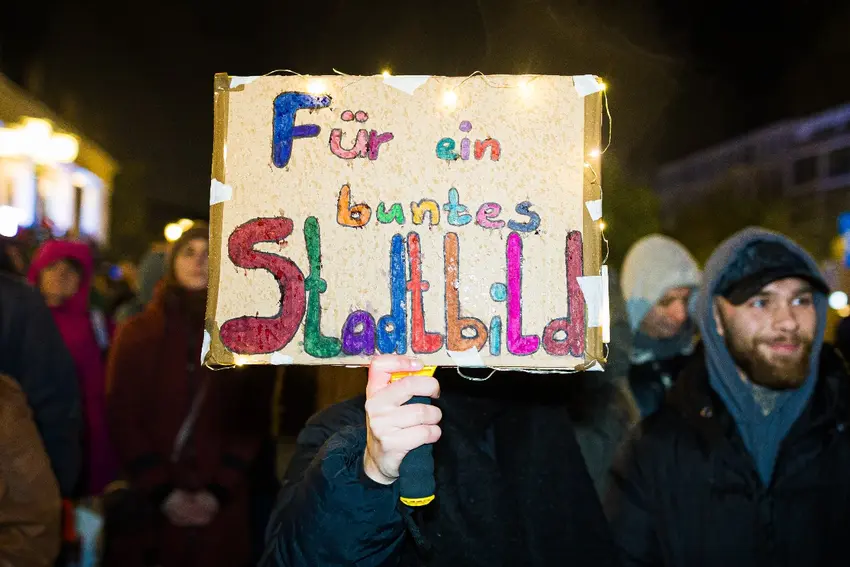
The look of German cities – or the 'Stadtbild' – has been at the top of the political agenda for nearly two weeks after Chancellor Friedrich Merz made controversial remarks that were widely viewed as racist.
Now, a group of MPs from the Social Democrats (SPD), the junior coalition partner in Germany's government, are pushing for a safety summit to be held at the Chancellery, which they say would examine real problems affecting cities.
The idea is to bring together city leaders, police unions and community organisations to tackle what many see as a growing sense of insecurity and division in public spaces.
Merz has been in the spotlight after saying there is "still a problem in the Stadtbild (cityscape)" and that's why the government is working to carry out more deportations. He then defended his comments and implied that young women in Germany were threatened by foreigners.
Then late last week, following several demonstrations, Merz said that Germany needed immigration in the labour market, and that his remarks were aimed at migrants without a right of residence.
The comments are understood by many to be anti-immigrant, while also sparking a debate about safety in German cities.
READ ALSO: OPINION - Merz's divisive comments are a distraction from real problems in Germany
Problems in the 'cityscape' have many causes
The proposed 'Stadtbild' summit would follow the model of similar events with coordinated responses to structural challenges in key sectors, but this time focused on everyday life.
It would look at potential solutions like more lighting and safety measures in city centres, video surveillance in crime hotspots and how to achieve better outreach services such as drug consumption rooms and mobile health teams.
In their plan "for a social, safe and united cityscape," the Social Democrats wrote: "Difficulties in the cityscape have many causes: social injustices, housing shortages, neglect of public spaces, lack of social infrastructure and inadequate prevention."
Those who narrow the debate to asylum and migration are preventing solutions, the SPD politicians added in a nod to Merz's divisive remarks.
The plan's authors proposed that the coalition government agree on a common understanding of the ‘cityscape’ by the end of the year.
"Whether in the coalition committee or a working group, clarity is now needed in this debate, and that applies to everyone in our cities," notes the paper, which has been welcomed by Dirk Wiese, parliamentary secretary of the SPD group in the Bundestag.
READ ALSO: Which types of crimes are on the rise in Germany?
It comes as senior figures slammed MPs for speaking out against Merz.
Senior CDU figure Jens Spahn told German broadcaster ARD that opposition from within the coalition has never worked, and that he was certain the vast majority of SPD voters shared the chancellor's assessment.
Spahn said it was "cultural and religious influences" and "an affinity for violence" that cause problems in everyday city life. The conservative politician said that even well-integrated people with a migrant background in Germany did not want these kinds of conditions.
In addition, Senior CDU politician Steffen Bilger sharply criticised SPD deputy parliamentary leader Wiebke Esdar after she joined a demonstration in Bielefeld protesting against Merz’s “cityscape” comments.
Bilger told the Tagesspiegel that it was irresponsible for a leading SPD figure to protest against the head of their own coalition government.
Comments