
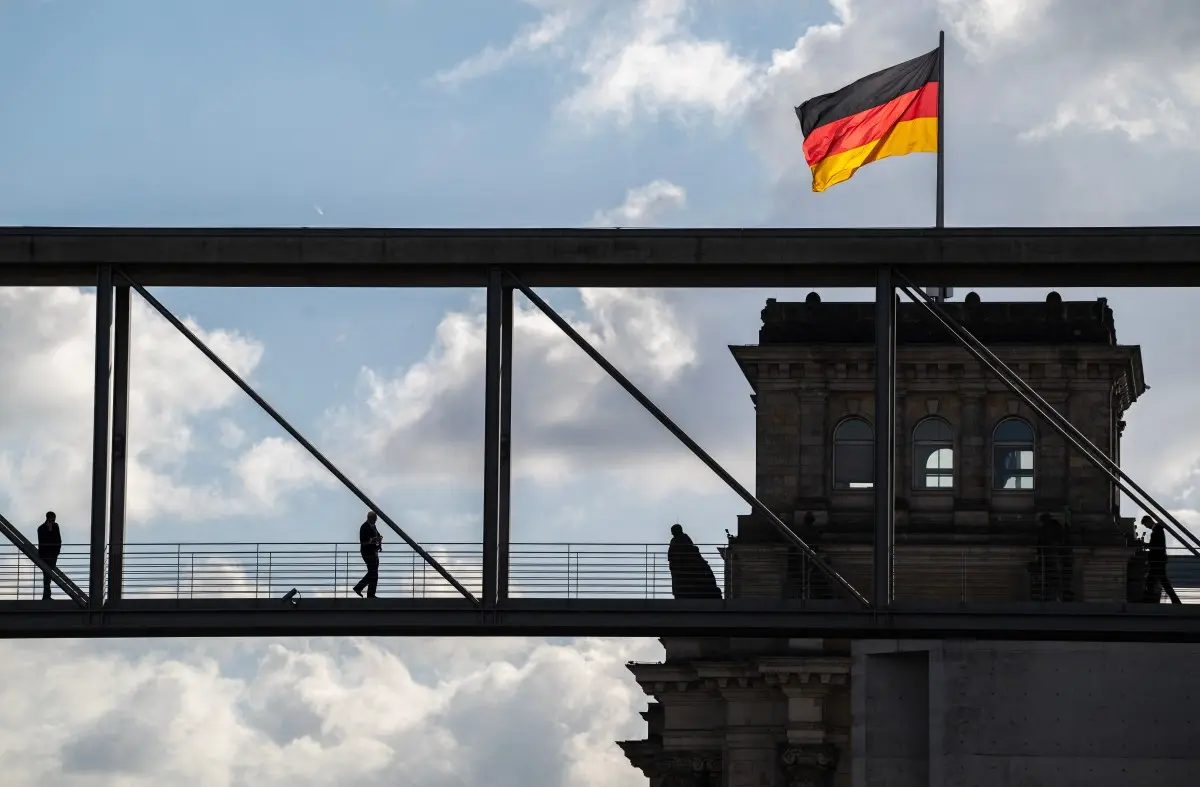
With just a few weeks to go until Germans vote in the February 23rd election, all eyes were on the Bundestag this week.
On Wednesday, a heated immigration debate triggered a political earthquake when conservative parties for the first time cooperated with the far-right AfD.
In what was seen by many as a breach of a long-standing taboo, the opposition Christian Democrats (CDU) and its Bavarian sister party, the CSU, relied on backing from the anti-immigration Alternative for Germany (AfD) party to pass a controversial resolution through parliament.
Political scientist Kai Arzheimer, from the University of Mainz, told The Local the events signalled a huge "crack" in the firewall or Brandmauer against the AfD - referring to a long-held strategy by mainstream parties in Germany to limit the power of the far right.
"What the CDU/CSU has done and what they plan to do is certainly changing German politics," Arzheimer said. "It is a serious crack in the so-called firewall that has been in place for many decades."
READ ALSO: German Bundestag passes far-right backed motion to limit immigration
What's in the motion?
The CDU/CSU put forward two motions on migration and security policy in parliament on Wednesday. It came after a knife attack killed two people, including a two-year-old child, in Bavaria last week. Police have arrested a 28-year-old Afghan man as the main suspect.
With the backing of the AfD, the Free Democrats (FDP) and some independents, the conservatives narrowly passed one of the motions - a five-point plan calling for a stricter migration policy. The governing parties, the Social Democrats and Greens, as well as the Die Linke group were against the resolution while the BSW abstained.
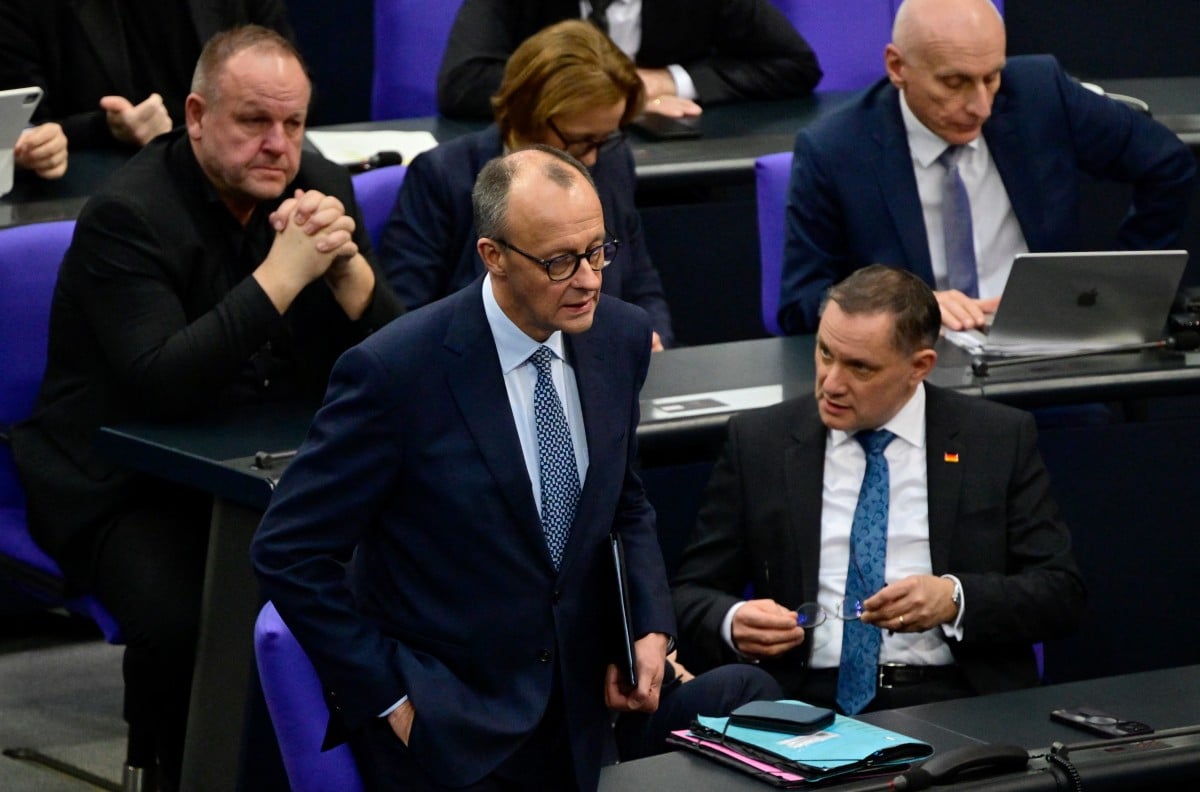
Though it is not legally binding, the motion called on the government to permanently police all borders and deny entry to all irregular migrants, whether they claim asylum or not. It said this should include those seeking protection because in the neighbouring EU countries they arrive from, "they are already safe from persecution".
The motion also argues that people required to leave Germany "must be taken into custody immediately", adding that more detention centres should be built, including in empty army barracks.
The resolution labelled the existing European regulations on migrants and asylum seekers as "clearly dysfunctional".
A second motion put forward by the CDU/CSU, with wide ranging measures aimed at increasing security in Germany that included a proposal to allow for dual citizens to have their German nationality revoked in cases of serious criminal offences, did not receive a majority in the Bundestag on Wednesday.
READ ALSO: The CDU's immigration plan for Germany including citizenship reform
What happens next?
Successful motions aim to set the tone for the path the German government will take, and laws can be formed on the back of them.
On Friday, in a move separate to this week's motions, a draft law previously drawn up by the conservatives concerning migration policy is set to go to a vote in the Bundestag - and that could also be supported by the AfD.
If it were to pass the Bundestag and the Bundesrat, which represents the states, it would have to be implemented. The draft law calls for family reunification for refugees with restricted protection status to be axed, and says that police may take measures to terminate residence if they encounter people who have been ordered to leave the country.
If the draft law passes with the support from the AfD - and following the motion backed by the party on Wednesday - it raises major questions on how far the conservatives, who are expected to win February's election, will go in collaborating with the far right in future.
Many, including Chancellor Olaf Scholz believes the conservatives have now cleared a path to enter into coalition with the far right if it wins February's elections.
READ ALSO: Opinion - Why there's no way of stopping the rise of the far-right AfD in Germany
What's the reaction to all of this?
Following the vote, AfD chancellor candidate Alice Weidel called it "a historic day for Germany" and "a victory for democracy".
But the CDU's cooperation with the AfD has been condemned and is seen as a landmark moment.
Even though CDU/CSU chancellor candidate Merz managed to secure a majority for his plan, "he is not a winner", wrote German magazine Der Spiegel, adding that it was a "turning point".
Political scientist Kai Arzheimer, told The Local it could have major repercussions.
"In the eyes of many voters, the sight of centre-right parties working with the AfD will further normalise the party and give legitimacy to them and their policies," he said. "This is a process that has played out in other European countries, where it led to the erosion of the centre-right, and often also to a weakening of democratic norms. In the short run, it may also galvanise voters on the left.
"Against this backdrop, I simply cannot understand what Merz hopes to gain by these manoeuvres," he said.
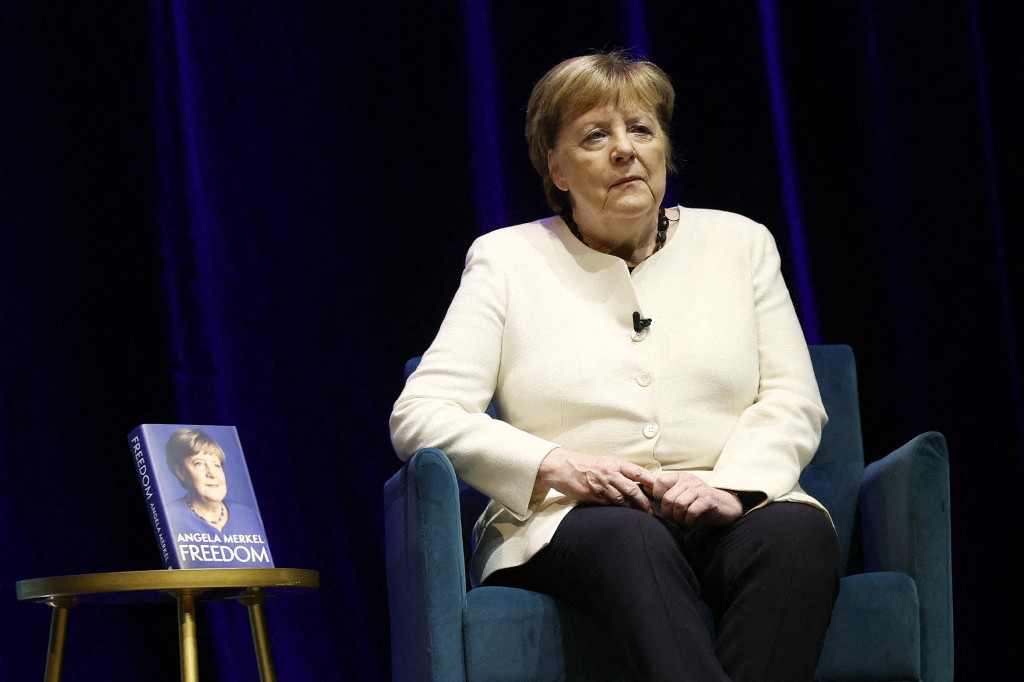
Former chancellor Angela Merkel, of the CDU, made the unusual move of criticising her party's approach.
Merkel referred to an earlier statement by Merz in November in which he vowed to only put decisions previously agreed with the SPD and Greens on the agenda, in order to avoid a majority with the AfD.
Therefore she believes "it is wrong" to allow for backing from the far right. Merkel called on "all democratic parties to work together across party political boundaries" to operate within German and EU law to do everything possible to prevent attacks in future such as the stabbing in Aschaffenburg.
In an unusually emotional interview aired on German talkshow Maischberger, German Chancellor Olaf Scholz said he now believes the CDU/CSU is capable of entering into a coalition with the AfD after the election.
"Anyone who says: ‘I don't care who agrees to my proposals’ is ultimately also saying: ‘I don't care who I get my votes from,'" said Scholz. "I can no longer trust him."
Meanwhile, hundreds of protesters angered at the CDU accepting the AfD's support demonstrated outside the centre-right party's headquarters in Berlin - and other cities on Wednesday evening.
Merz said he regretted that the SPD and Greens did not vote for his proposal - and urged them to take part in future talks on migration policy.
But Arzheimer pointed out that Merz will now struggle to get support from mainstream parties.
"Merz is still ruling out a coalition with the AfD. Unless he is banking on their tacit support, he will therefore need the support of the SPD and possibly the Greens to become chancellor," said Arzheimer.
"His flirtation with the AfD is massively alienating both parties and their supporters, because it is not just a breach of the cordon sanitaire but also a violation of an explicit agreement he had with the minority government. Everything else aside, his future coalition partners now see him as unprincipled and unreliable."
With reporting from AFP
Comments