
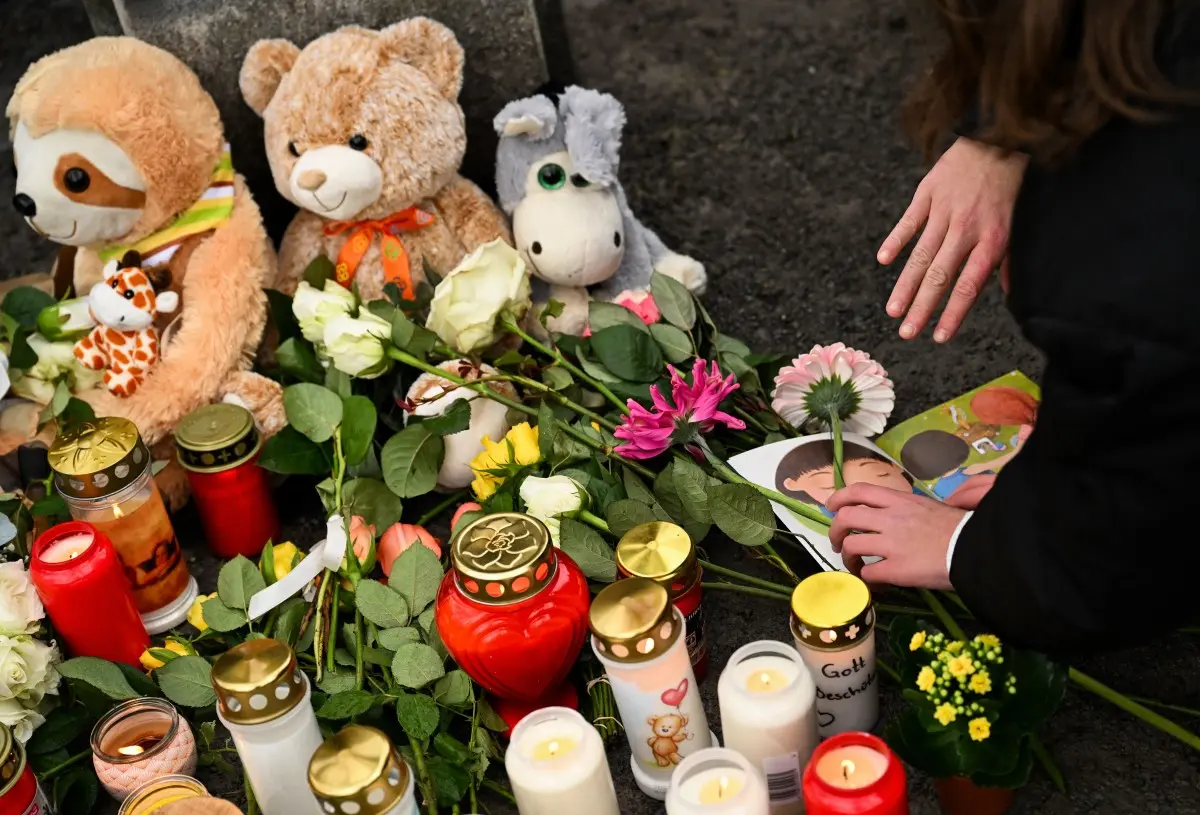
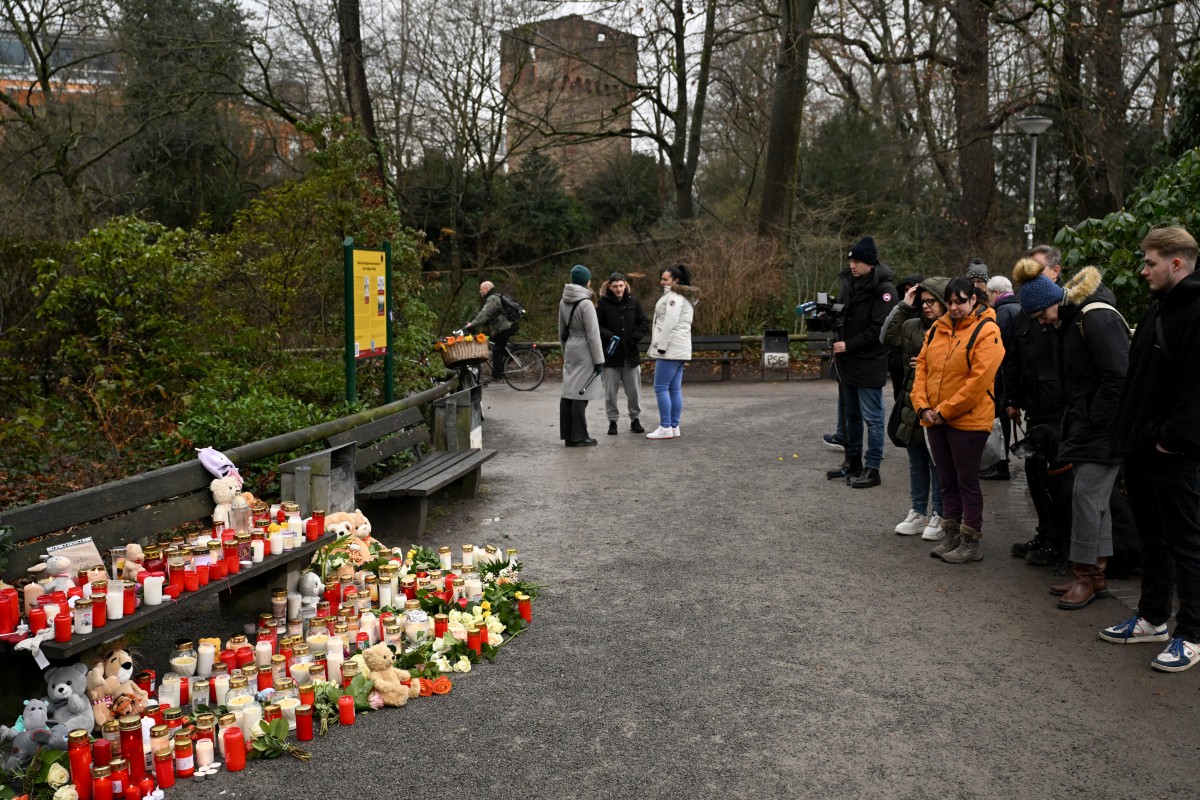
Police arrested a 28-year-old rejected asylum seeker from Afghanistan at the scene of Wednesday's attack in Aschaffenburg, where a two-year-old Moroccan boy was killed along with a German man, 41, who had tried to protect the children.
The latest in a series of bloody attacks in Germany, which left another three people injured, comes ahead of general elections on February 23rd, and has revived heated debate on immigration and internal security.
As well as paying tribute to those affected and their families, politicians in Germany have been speaking out on migration, with many calling for a change in course in asylum and refugee policies.
'Fundamental changes to immigration law'
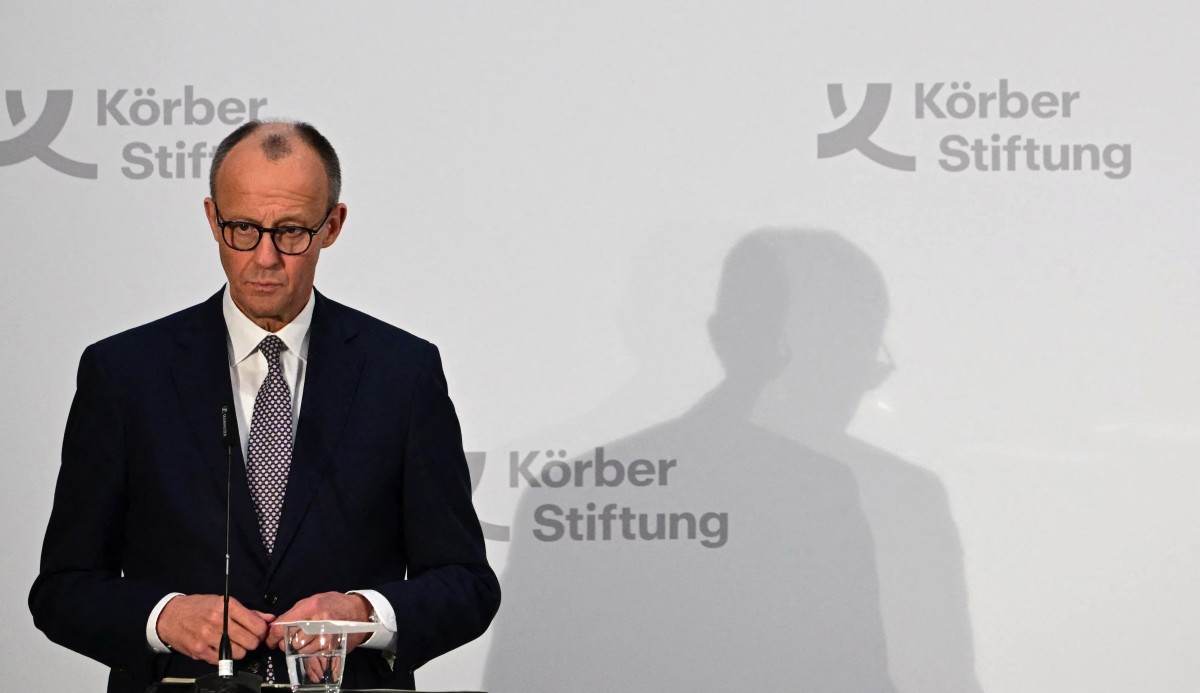
On Thursday, Friedrich Merz, who leads the opposition conservative CDU-CSU and has a strong poll lead, vowed that if elected, he would quickly order permanent controls on all German borders and push through sweeping policy changes.
"I am no longer willing to accept these conditions in Germany," he said.
READ ALSO: Knife attacker in Germany kills man and child in public park
Merz vowed that "under my leadership, there will be fundamental changes to immigration law, asylum law and the right of residence in Germany".
On his first day as chancellor, he would instruct the interior ministry to "reject without exception all attempts at illegal entry".
"This also explicitly applies to persons entitled to protection," he said, slamming the EU's current asylum rules as "recognisably dysfunctional".
"Germany must therefore exercise its right to the primacy of national law," he said.
Merz has also pledged to dismantle the citizenship reform brought in by the previous 'traffic light' government made up of the Social Democrats (SPD), Greens and Free Democrats (FDP).
READ ALSO: How the conservatives want to gut German citizenship laws
'Authorities must clarify situation'
Immediately after the attack on Wednesday, Chancellor Olaf Scholz condemned the "unbelievable act of terror" by the perpetrator, who Bavarian authorities said appears to be mentally disturbed.
Scholz, of the Social Democrats (SPD), also demanded to know why the failed asylum-seeker had been able to stay in the country.
He said: "I am sick of seeing such acts of violence occurring in our country every few weeks, by perpetrators who have actually come here to find protection here.
"The authorities must work as hard as possible to find out why the attacker was still in Germany."
Scholz held a meeting with the Federal Office for the Protection of the Constitution, as well as police on Thursday, to gather more information on the background of the attack.
Economics Minister Robert Habeck - the Greens' candidate for chancellor - said that “the responsible authorities in Bavaria” must now “clarify the situation immediately”.
Later on Thursday, the Bavarian state government said failures lay with the Federal Office for Migration and Refugees (BAMF) and the federal government rather than regional authorities.
FDP parliamentary group leader Christian Dürr called for a swift meeting of the federal and state interior ministers.
"We have learnt from a series of terrible events that those who have already become conspicuous are a danger,’ said Dürr. "It is not acceptable for someone to simply disappear from the radar."
In August, three people were killed and eight wounded in a stabbing spree at a street festival in the western city of Solingen that was claimed by the Islamic State group. The revelation that authorities had missed the opportunity to deport the suspect, a Syrian asylum seeker, stirred outrage in Germany.
Sahra Wagenknecht, leader of the BSW party, which has a left-conservative stance, called out the government.
"The fact that nothing happened after Mannheim (where a police officer was killed at an anti-Islam rally) and Solingen is first and foremost the failure of the chancellor and his interior minister," Wagenknecht told Politico magazine. "That makes them politically co-responsible for every further terrible act."
The AfD's top candidate Alice Weidel posted a message on X urging "remigration now!" - using a term that the far right has adopted to call for the mass deportation of migrants.
READ ALSO: 'Remigration' - what is the AfD's 'mass deportation' German election policy?
Meanwhile, Aschaffenburg's major Jürgen Herzing (SPD) called for calm. Herzing said parallels could be seen with other attacks involving migrants. But he said: "We can and must never attribute the act of one individual to an entire population group."
Despite anger, grief and "thoughts of revenge", we must not "set in motion a spiral of violence and hatred", he said.
Herzing added that as a long-serving firefighter he has seen tragic situations, but added: "I can't remember an incident that touched me so deeply and left me as shaken as I'm sure many others are."
What do we know about the attacker and victims?
As well as the man and child who died in the attack that happened around 11:45 am on Wednesday, three others were injured in the attack - a two-year old Syrian girl, a 59-year-old female kindergarten teacher and a 72-year-old German man.
The Afghan suspect arrived in Germany in 2022, according to Bavarian interior minister Joachim Herrmann.
German authorities unsuccessfully tried to return him to Bulgaria, where he had first entered the EU.
He had initially agreed to leave Germany but then failed to do so.
The suspect had been referred several times for psychiatric treatment and initial investigations had pointed "very strongly in the direction of... mental illness", according to Herrmann.
With reporting by AFP
Comments