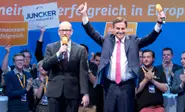
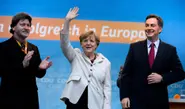
UPDATE: Chancellor Angela Merkel's conservatives came out ahead in European Parliament elections, official results showed on Monday, but a neo-Nazi party also won a seat in Brussels, echoing far-right gains elsewhere.
Chancellor Angela Merkel’s conservative bloc will remain Germany’s biggest party in the EU Parliament, according to exit polls, but lost ground to their rivals. It was a particularly good night for the centre-left and eurosceptic parties.
The Local's live election blog brings you all the latest results, reaction and fun from the 2014 EU Parliament elections in Germany. What is happening in Europe's most powerful country?
As Europe's economic powerhouse and paymaster, Germany has more influence in the EU than any other country - but just a quarter of its voters are interested in the EU elections. Professor Michael Wohlgemuth looks at what's gone wrong.
Largely untouched by the eurosceptic wave sweeping the continent, Chancellor Angela Merkel looks set to emerge the biggest winner of Sunday's European elections.
More than seven million people living in Germany are classed as foreigners. They live and work here, most of them pay taxes and all have the same obligations as German citizens, but with one great difference - they cannot vote.
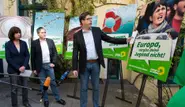
They may have been ousted as the third biggest party in the German parliament, but the Greens are alive, kicking and competing in the European Parliament elections. The Local explores their election manifesto.
Who should you vote for in the European Parliament elections? The poll is just three weeks away but if you’re unsure which party deserves your vote try these interactive quizzes.
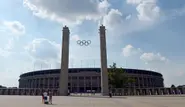
Berlin's Olympic stadium could become the world's biggest polling station if the Turkish community gets the go-ahead to vote there in Turkey’s general elections.
The more power the EU Parliament gains, the less interest voters have in it. The introduction of “top candidates” for parties in May’s elections is supposed to change this, but who is going to vote for them, asks Michael Wohlgemuth.
Germany’s smallest political parties have been given a huge boost ahead of European elections in May, with the country’s top court ruling they will no longer need a minimum percent of the vote to win seats in parliament.
Germany's Social Democrats said Friday they will begin talks with Angela Merkel's Christian Democrats, who are trying to put together a "grand coalition" with their election rivals.
The Social Democrats will meet on Friday evening to discuss going into government with Angela Merkel. But concerns are so strong that this could upset party members that leaders are expected to call for a full party vote on any negotiations.
Germany's upstart anti-euro party could capture seats in parliament in Sunday's general election and scupper Chancellor Angela Merkel's chances of holding on to her centre-right coalition, a poll on Thursday indicated.
As Bavaria prepares for its state election next Sunday, the main candidates fought it out in a televised debate, with the Social Democrat challenger performing better than expected against the conservative incumbent.
Half of Germans are against giving more money to Europe’s troubled economies, while most do not believe the two main political parties are telling the truth on the issue, a survey released on Tuesday suggested.
German workers pay among the highest tax rates in the world and depending on the outcome of the elections on September 22nd, they could get even higher.
Fairytales? Cake? Veggie Days? This is the most boring German election since 1949, argues Michael Wohlgemuth, a professor of economics, long-time election watcher, and director of thinktank Open Europe Berlin.
Central Berlin will be turned into a huge celebration of the Social Democratic Party (SPD) this weekend, with the famous Strasse des 17. Juni closed to traffic and crammed with beer and sausage stands and live music to mark the party's 150th anniversary.
Chancellor Angela Merkel's conservatives and their coalition partners are set to win enough votes to continue to govern Germany after the general elections in seven weeks' time, a poll said Thursday.
The main opposition were left reeling on Friday by a poll predicting a crushing defeat in the Bavarian state election, which comes just a week before the national election.
A spat between two middle-aged brothers within Chancellor Angela Merkel's political party is causing red faces all round, with her party chairman calling for his younger sibling to be kicked out for running as an independent.