
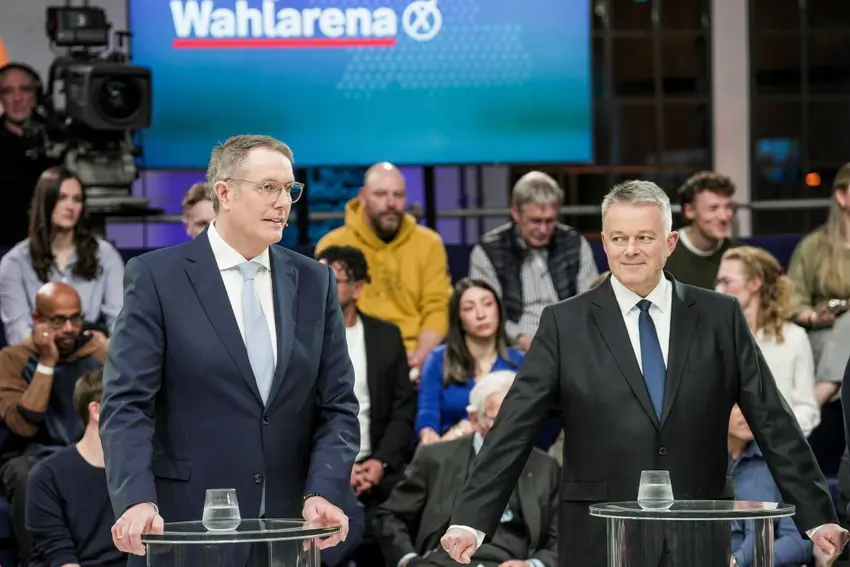
As voters in Rhineland‑Palatinate prepare to choose their next government on Sunday, pollsters say the contest is too close to call. The centre‑left Social Democrats (SPD) and the centre‑right Christian Democrats (CDU) are separated by little more than a statistical margin of error.
In total, 12 parties are competing for seats in the 101‑member state parliament, leaving the shape of the next government uncertain.
Rhineland‑Palatinate, created after the Second World War from a patchwork of former Prussian and Bavarian territories, is home to about four million people, many of them living in either Mainz (the state capital) or Ludwigshafen (the largest city).
The state is justly famous for its wine: 63 percent of Germany’s vineyards are located here. Its economy also rests on industry and manufacturing, including major employers such as the chemical giant BASF.
In 2024, the state economy contracted for the third year in a row, adding urgency to the political debate.
Among voters, surveys show that education is the number one priority in the state (cited by 25 to 29 percent of respondents). Infrastructure ranked second in the most recent survey, ahead of immigration/refugees.
While only German citizens aged 18 and over who live in the state can vote, the decisions taken by the new government will shape schools, transport, housing and local finances. The results could also have a major impact on coalition politics at the national level.
READ ALSO: 10 things to know about Rhineland-Palatinate
The CDU vs the SPD
The headline battle in Sunday’s election pits the SPD and CDU against each other – coalition partners at federal level, but fierce rivals in Rhineland‑Palatinate.
Since 1991, the state has been led continuously by an SPD state premier, making it one of the party’s longest‑held strongholds. The current government is a “traffic‑light” coalition of the SPD, Greens and FDP.
READ ALSO: CDU leads, Greens slip and AfD advances in regional elections in Hesse
Both the SPD and the CDU have made education the centrepiece of their campaigns, but with markedly different emphasis. The SPD is promising reliable childcare, free learning materials and a major expansion of “language daycare centres” to support early language development.
The CDU, which hopes to take the state chancellery in Mainz for the first time in 35 years, calls for a mandatory preschool year and a guarantee of primary school provision until early afternoon, including free lunches and homework supervision.
The polls underline just how tight the race has become. A recent Infratest dimap survey put the CDU on 29 percent and the SPD on 28 percent.
Which other parties could enter the state parliament
Behind the two front‑runners, the far-right Alternative for Germany (AfD) is expected to make the biggest gains. Polls suggest it could reach around 19 percent, more than double its 2021 result. The AfD campaign focuses on restrictive migration and asylum policies, more deportations and tougher internal security. The party also says it wants lower thresholds for referendums and more support for stay-at-home mothers.
The Greens are currently polling at around eight to nine percent, broadly in line with their last result. After 15 years in government, they are campaigning on renewable energy, climate protection and sustainable development.
READ ALSO: Elections and reforms - What can be expected in German politics in 2026?
A tight battle is unfolding around the five‑per‑cent threshold. The Left Party is polling at about five percent and could enter the state parliament for the first time, campaigning on free public transport, social housing and completely free daycare.
The Free Voters are hovering just below that mark, seeking to defend their presence with a focus on local government finances, support for municipalities and rural concerns.
The FDP, by contrast, risks being pushed out of parliament altogether. Once a near‑permanent fixture in government, the party has been polling below five per cent for months, despite campaigning on economic liberalism, digital education and transport investment.
Other parties on the ballot include the Animal Protection Party, Volt, the ÖDP, the BSW and the Humanist Party – but none is currently seen as having a realistic chance of clearing the parliamentary threshold.
Comments