
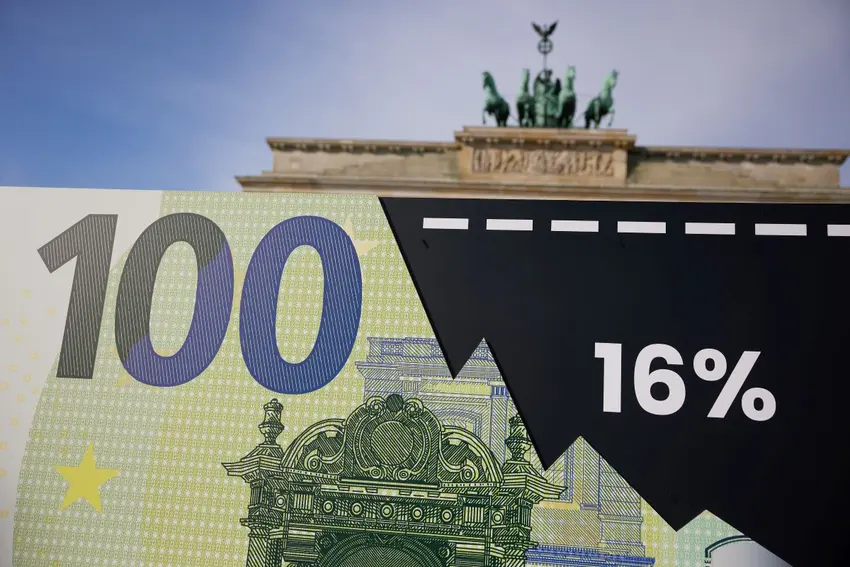
The unadjusted pay gap for 2025 was unchanged on the previous year at 16 percent, according to the federal statistics office (Destatis). In 2024 it had fallen from 18 percent to 16 percent.
In eastern Germany the unadjusted gap was meanwhile much lower than in western Germany, at just 5 percent versus 17 percent.
On the basis of the latest Eurostat data available from 2023, Germany's pay gap is the fifth largest in the European Union, behind Hungary, Czechia, Austria and Latvia, and well above the EU average of 12 percent.
READ ALSO: Why is the gender pay gap so big in German-speaking countries?
Economist Katharina Wrohlich of the German Institute for Economic Research told AFP that Germany lagged behind on the issue partly because German women were likelier to work part-time than those in the Nordics and Netherlands and partly because of a "selection effect".
"In Italy only about 55 percent of women work, whereas it is 75 percent plus in Germany," she said. "And in these countries where fewer women work, Italy being a good example, the few who do work often take high-paying roles."
The adjusted pay gap – which controls for factors such as educational qualifications and employment history – was meanwhile smaller at six percent.
The figure likely represents an "upper bound" estimate for the adjusted gap, Destatis said, since factoring in other characteristics and life events such as career breaks for childbirth would likely drive the number lower.
READ ALSO: Gender equality and religious tolerance - What do most Germans agree on?
The difference in the gap between east and west was partly down to larger numbers of women in the east working full-time than in the former West Germany, analysts at LBBW bank wrote in March.
"A greater reliance on childcare in the former East Germany led to higher full-time employment rates among the female population, thereby reducing the pay gap," they said.
The unadjusted pay gap in the private sector was also 17 percent, compared to just 4 percent in the public sector which includes areas such as education and public administration.
It would take about 90 years for Germany's unadjusted gender pay gap to close on current trends, the LBBW analysts said.
Comments (1)