
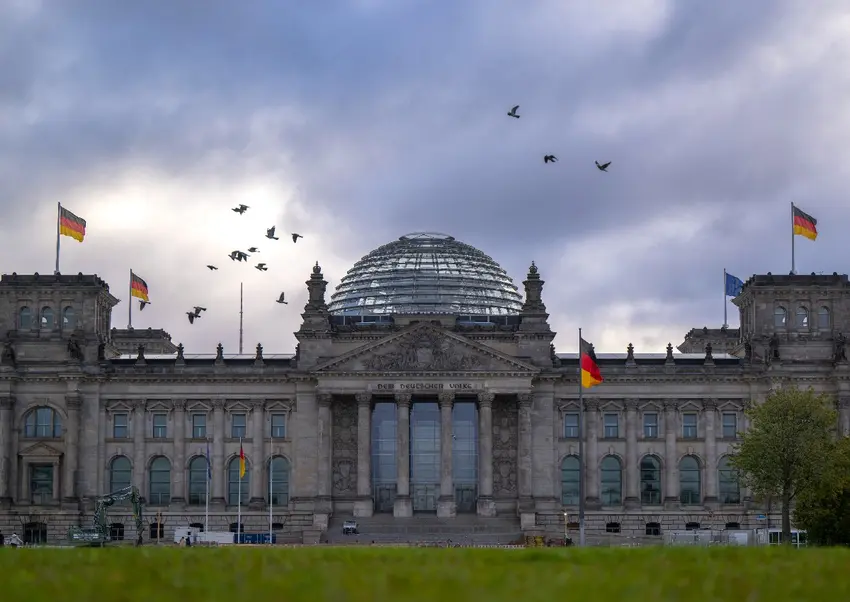
Regional differences exist in every country and can often strengthen a sense of national pride and unity.
In the Bundesrepublik, each region has its unique landmarks, traditions, culinary specialities and accents.
But differences in both quality of life metrics and peoples' perspectives in the former East- and West German states have been a point of contention since modern day Germany was unified 35 years ago.
Germany’s Day of German Unity takes place on Friday, which celebrates the reunification of East and West Germany that occurred on October 3rd, 1990.
So, 35 years on has Germany managed to become a unified nation with a set of common goals and values, or is cultural unity still a work in progress?
A major study published this year sheds some light on the question.
READ ALSO: How does Germany's 'phantom border' still divide the country?
Deutschland-Monitor is an annual study that surveys political attitudes and social moods across Germany. The most recent report is based on the results of a nationwide representative survey conducted in the spring of 2024.
Because the report includes data on responses given in both in former eastern- and western states, it’s possible to get a sense of where values are closely aligned across the old border, and of where significant differences exist.
What do most Germans agree on?
There are many points on which people in eastern and western Germany agree strongly, separated by no more than a percentage point or two in the data.
When it comes to gender equality, for example, 86 percent of people in eastern Germany and 85 percent in western Germany support the proposition that men and women should have equal opportunities in life.
READ ALSO: In search of German unity when it's in short supply
The results were almost identical when people were asked if they believed that everyone in Germany should have the opportunity to make something of their lives.
Similar numbers of people in eastern and western Germany were also in favour of religious tolerance and peaceful co-existence (72 and 75 percent), in which the principles of social justice were upheld (64 percent on both sides), in which hard work and performance were rewarded (57 percent on both sides), and in which there was no more political extremism (53 and 56 percent).
The data also suggests that a process of give-and-take is occurring when it comes to some values traditionally associated with either eastern or western Germany.
For example, 75 percent of respondents in both eastern and western Germany strongly agree that the state should be responsible for providing protection against major life risks such as illness or unemployment.
This marks a convergence in welfare state expectations, with western attitudes adapting upwards to eastern levels rather than the other way around.
Where do differences persist?
There are areas where significant gaps remain, however, particularly when it comes to attitudes towards Europe, environmental policy, and immigration.
In western Germany, 59 percent of people had an unqualified preference for living in a society which is part of a united Europe. The figure is only 46 percent in the east.
READ ALSO: Majority of Germans support higher taxes for the wealthy, survey finds
Again in western Germany, 36 percent of people were strongly in favour of living in a climate neutral way, compared with 29 percent in the east.
Approximately 33 percent of respondents in western Germany don’t hesitate when asked whether they want to live in a society which sees immigration as an opportunity. The number drops to 25 percent in eastern Germany.
Generational change
Besides geographic differences, the Deutschland-Monitor also revealed patterns related to age cohorts and generational shifts.
In short, younger people born in Germany after reunification tend to hold more similar values across the country compared to older generations.
Older cohorts in eastern Germany retain more scepticism toward immigration and climate protection policies, while younger Germans increasingly share near-identical views across the country.
Comments