

After historic scenes in the Bundestag last week - when a conservative motion on tightening migration policy was passed with the help of the far right AfD for the first time in recent history - the CDU/CSU are continuing to push their agenda.
The party is expected to adopt an 'immediate action plan' (Sofortprogramm) at its delegates' conference on Monday.
The plan, which was viewed in advance by some German media outlets, is a 15-point programme called ‘Our immediate programme for prosperity and security’. The focus is mainly on the economy, migration and security.
It includes the far-right backed five-point-plan on migration that has been in the spotlight, as well as proposals to reverse part of the citizenship law.
READ ALSO: Which coalition governments are most likely after Germany's election?
The Christian Democratic Union and its Bavarian sister party, the Christian Social Union (CDU / CSU), say they want to implement this programme immediately if they come to power.
However, in reality they will have to negotiate with a future coalition partner, most likely the centre left Social Democrats (SPD) or the Greens, and have any draft laws pass both the Bundestag and Bundesrat.
What immigration pledges are in the plan?
In addition to Merz's five-point plan for permanent border controls, rejections at the borders, more deportations and detention pending deportation, the CDU wants to pursue the ‘Influx limitation law’ that did not get enough support in the Bundestag on Friday. That law would boost federal police powers to detain undocumented migrants and restrict family reunions for rejected asylum seekers with stays of deportation.

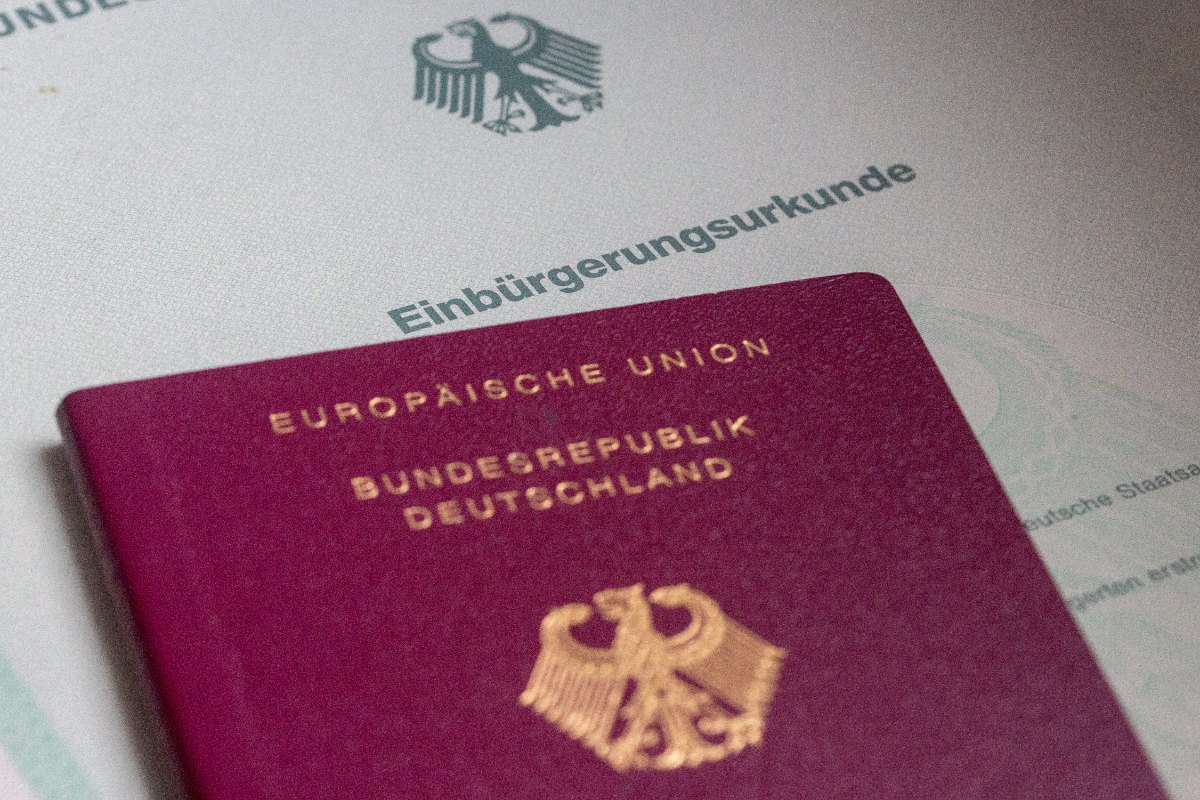
The previous 'traffic light' coalition government - of the Social Democrats (SPD), Greens and Free Democrats (FDP) - brought in a sweeping reform of naturalisation laws, allowing dual citizenship for all and the possibility to naturalise after five years instead of eight - and even after three years in cases of exceptional integration.
According to the 'immediate action programme', the CDU wants to reverse the "express naturalisation of the 'traffic light'" as quickly as possible. The plan says: "The German passport is at the end of integration, not the beginning."
The fast-track route allows exceptionally integrated foreigners with at least C1 German to naturalise after just three years, whereas the standard route is five years of residency in Germany.
It isn't entirely clear from this programme if the party is targeting only the three year fast-track route to getting German citizenship or if it also wants to increase the five-year residency requirement. There is also no mention of reversing dual citizenship in this version of the 'immediate action' plan, at least so far.
In general, the CDU - and the CSU - has vowed on numerous occasions to dismantle the naturalisation reform brought in by the previous government, including getting rid of dual citizenship for all. The Union wants to see a return to the days of dual nationality only for EU citizens - or in exceptional circumstances.
In their election party programme, the CDU/CSU wrote: "Integration is not a rush job. That is why we reject the traffic light's express naturalisation after only three years of residence just as decisively as the general possibility of dual citizenship. We are cancelling it."
READ ALSO: How the conservatives want to gut Germany's citizenship reform
What about security measures?
In the same section on security and migration, the CDU pledges a number of measures aimed at making Germany safer.
The CDU wants to reverse the previous coalition's cannabis legalisation law, saying "our children and young people must be protected from drug use and addiction".
The party is also in favour of the storage of IP addresses "to enable us to effectively combat the sexual abuse of children". It also wants to see known perpetrators of violence against women having to wear electronic ankle bracelets.
Other key points in the plan
In nine out of the 15 points, the action programme focuses on economic issues with the subheading ‘Priority for competitiveness and prosperity’.
These are the pledged measures concerning the economy:
- Electricity tax and grid fees are to be lowered - resulting in a reduction of at least five cents per kilowatt hour for consumers
- Reducing company bureaucracy: fewer company representatives, no more mandatory receipts, getting rid of German supply chain regulation and burdens imposed by the Energy Efficiency Act
- Shelve the previous coalition's 'heating law'
- Reintroduction of the agricultural diesel rebate
- Instead of a daily maximum working time, a weekly maximum working time is to be set to enable more flexible working
- Overtime bonuses are to be made tax-free
- Anyone who voluntarily wants to work more when they retire should receive a tax-free salary of up to €2,000 per month
- Reduction of VAT on food in restaurants to seven percent
- Halving the number of government commissioners
READ ALSO: How do Germany's leading political parties want to fix the economy and create jobs?
Will this happen?
It is unlikely that the CDU will manage to push through all of its measures.
According to current polls, the CDU/CSU will have to rely on at least the SPD or the Greens to form a government, who pushed through many of the previous laws, such as the citizenship reform.
Meanwhile, other parties in the Bundestag may not support these measures if they are put to a vote.
However, it does give a further indication of the points
READ ALSO: What a failed CDU motion tells us about the future of dual citizenship in Germany
Comments