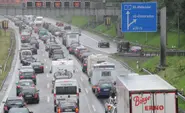
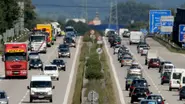
With summer vacation starting for schools in Bavaria, North Rhine-Westphalia and Baden Württemberg, some of Germany’s most populous regions are bracing for massive traffic jams this weekend.
Urban camping in Berlin, haystack beds in Bavaria and giant tree forts in Saxony – <b>Ruby Russell</b> discovers quirky alternatives for your summer holiday.
Holidaymakers face unusual transport chaos in Germany this summer, with the ADAC car club forecasting a sharp rise in traffic jams, while there have been early signs that overheating on Deutsche Bahn trains may once again become a problem.
Last weekend, villages across Bavaria erected maypoles for traditional springtime celebrations. But before the parties started, <b>Chris Cottrell</b> spent a night with a crew taking part in the longstanding ritual of pole snatching.
Germans flocked outdoors to enjoy a foretaste of summer over the Easter holiday weekend, but the country can expect cooler weather and showers in the coming days.
The major rail links between Hannover and Berlin and Nuremberg and Bamberg were closed down on Thursday, delaying thousands of travellers across the country amid fears the problems could affect Easter traffic.
Drivers preparing to travel during the Easter break are being warned that German roads are likely to be choked with traffic over the next few days, while increased petrol prices could add to their misery.
A flashmob is set to descend on central Frankfurt on Friday morning to deliberately break the law – by dancing in a public place between the hours of 4 am and 12 noon.
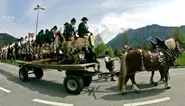
Little villages across rural Germany have set up watch shifts, with doughty citizens taking turns to protect local pride against attempts at theft by their neighbours. As maypole season gets under way, villages are on alert.
Exberliner, Berlin’s leading English-language magazine, spends April watching some skater girl action, discovers a hip Neukölln bar, finds new ways to get pampered plus gives a run-down of the best wholesome Easter weekend fun.
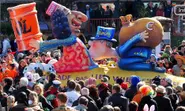
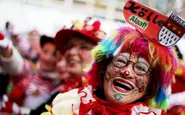
The Rhineland’s <i>Rosenmontag</i> parades kicked off on Monday, marking the pinnacle of the region’s Karneval celebrations with boozy processions featuring off-colour floats lampooning the year’s big news events.
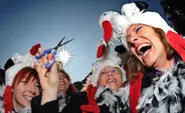
Germany's Karneval festivities kicked off on Thursday at 11:11 am, as jesters stormed city halls across the Rhineland, marking the official start to the clownish, boozy parades to come.
Cologne may be the traditional heartland of Germany’s Karneval festivities, but city residents these days are looking a little less kindly on its booze-fuelled shenanigans. Some are even saying the Rhineland has lost some of its renowned tolerance.
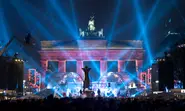
More than a million people gathered at Germany’s largest New Year’s party in front of Berlin’s Brandenburg Gate on Saturday night to ring in 2011 with a fireworks spectacle.
New Year’s Eve without fireworks is unthinkable for many Germans, but giddy pyromaniacs could face hefty fines for recklessly blowing things up near churches, hospitals and quaint thatched-roof houses.
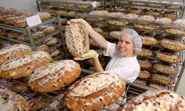
Germany’s favourite Christmas sweets include spiced <i>Lebkuchen</i> and <i>Spekulatius</i> cookies, as well as the raisin-filled, sugar-coated bread <i>Stollen</i>. But where do they come from? The Local explains some tasty holiday traditions.
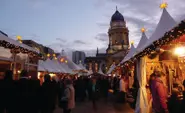
Exberliner, Berlin’s leading English-language magazine, in December tells you where to get your <i>Glühwein</i> on, hits the ice rink, and tries to be charitable for the holidays.
Decking the halls this year? It might be tough to beat a house in Calle, Lower Saxony for festive cheer after its owners decorated it with a record-breaking 420,000 Christmas lights.
Decking the halls won’t break holiday budgets this season, according to a media report on Tuesday. The cost of a Christmas tree is expected to remain close to last year’s Yuletide prices.
At exactly 11:11 am on Thursday, an army of jesters descended on the central squares in several Rhineland cities to kick off the traditional "Fifth Season" of Karneval. Months of clownish, alcohol-fuelled partying are to follow.
Germany’s favourite Christmas post office opens in the Brandenburg town of Himmelpfort this week, accepting wish lists for Santa Claus from children both naughty and nice.
As the German economy continues to recover from the global financial crisis, shoppers are ready to spend a bit more for holiday gifts this year, a survey showed on Tuesday.
Two leading business associations recommended on Friday that Germany reduce holiday time for employees from six weeks to four or five, in order to bolster growth.