

What do a dome desk lamp, a fitted modular kitchen, Sans-Serif typography and an Apple computer mouse have in common?
The design for each of them can be traced back to Germany’s Bauhaus movement, which revolutionised architecture and product design with an emphasis on minimalist utility.
Widely considered to be among the most influential art movements of the modern era, Bauhaus is unparalleled in terms of its global reach, longevity and the impact it's had on so many of the sleek and “modern” looking objects in our everyday lives. And it’s definitively German in origin.
So why does the Alternative for Germany (AfD) want to shut it down?
Within the far-right party’s 150 page election manifesto for Saxony-Anhalt is a – shall we say interesting? – section which accuses the state government of "running an image campaign called '#modern thinking' that seeks to derive the identity of Saxony-Anhalt from Bauhaus."
The AfD would rather shift Germany’s public identity away from internationalist, or "rootless", modernism. The party wants to cut budgets for institutions promoting modern, avant-garde and progressive art, and redirect tax dollars toward what it sees as more 'traditionally German' culture.
This is not the first time that the AfD has targeted Bauhaus, and notably not the first time that Bauhaus has been targeted by fascist politics.
In fact, many have commented on the fact that the AfD’s criticism of Bauhaus sounds quite similar to that of the Nazis – who also rejected the liberal and cosmopolitan aspects of the movement and wanted to promote more 'traditional' German art and literature.
The Nazis shut down the Bauhaus school in Berlin in 1933, and many of the artists most prominently associated with the movement fled Germany to avoid persecution.
Today the Bauhaus campus and museum in Dessau are a significant attraction within a region that has suffered from de-industrialisation for years. If the AfD were to take power in the state, perhaps this too would be lost.
As of Friday, just over a week from Saxony-Anhalt’s election, polls showed the AfD having the support of 40 percent of voters in the state. However, according to the latest calculations, this would not be enough for the party to automatically take power as a single-party government.
READ ALSO: Who can vote in Germany's high-stakes state elections this September?
What is this?
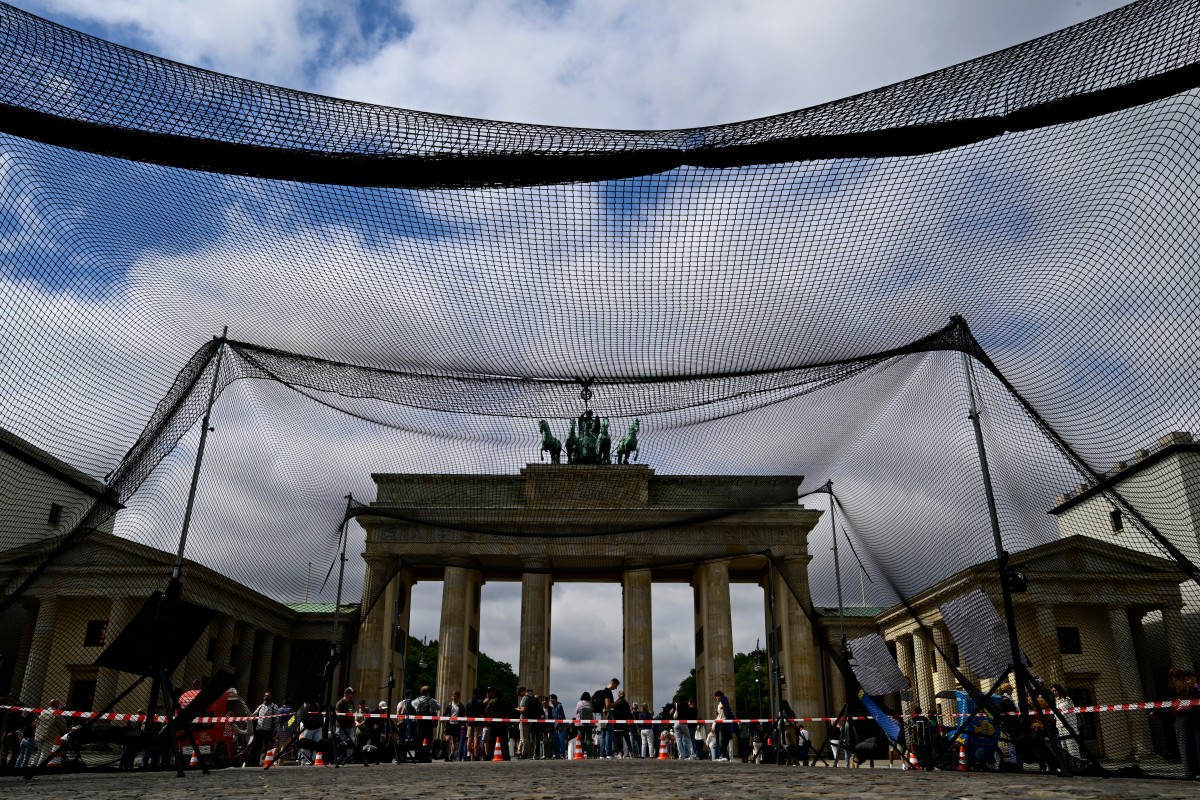
Unless you've been close to the front lines of the war in Ukraine, or followed the news from there quite closely, you might not immediately recognise what's going on in the above photo, which was taken at a demonstration in Berlin earlier this week.
The net seen above is similar to that used over roads and bases in Ukraine, designed to block explosive drones.
In parts of Ukraine, whole towns are covered in anti-drone nets to prevent attacks by FPV drones that explode on impact. Surprisingly, a bit of mesh netting is enough to prevent fatalities and structural damage in many cases.
The above scene was set up by activists as part of an installation on August 24th to mark Ukrainian independence day and call attention to Russian drone attacks. On the same day, Ukraine's allies pledged to keep up their support amid Russia's escalating attacks.
Germany is Ukraine's biggest military backer, having overtaken the US about a year ago after President Donald Trump dialled back military deliveries.
Is Berlin the real city of love?
Sorry Paris, Europe’s real city of love is on the Spree – at least according to Berlin’s public transit company Berliner Verkehrsbetriebe (BVG).
Reliability on the U-Bahn may be hit or miss, but when it comes to marketing BVG consistently delivers.
The latest example being a short video which makes a pretty compelling argument for Berlin being the true capital of love – in all of its weird, wild and dirty forms.
 Screenshot taken from BVG's 'Berlin, die echte Stadt der Liebe' video.
READ ALSO: Where in Germany are you most likely to catch an STD?
You can watch the video on YouTube here (or below if you’re reading this on the website). On YouTube, you can set the captions to auto-translate to English, but you’ll get the point even without understanding every word. For language learners, watching in German could even make for a fun way to test your comprehension.
Comments