

Until now the far-right Alternative for Germany (AfD) has effectively played the role of a very loud but politically powerless opposition party in national, and even state-level, politics.
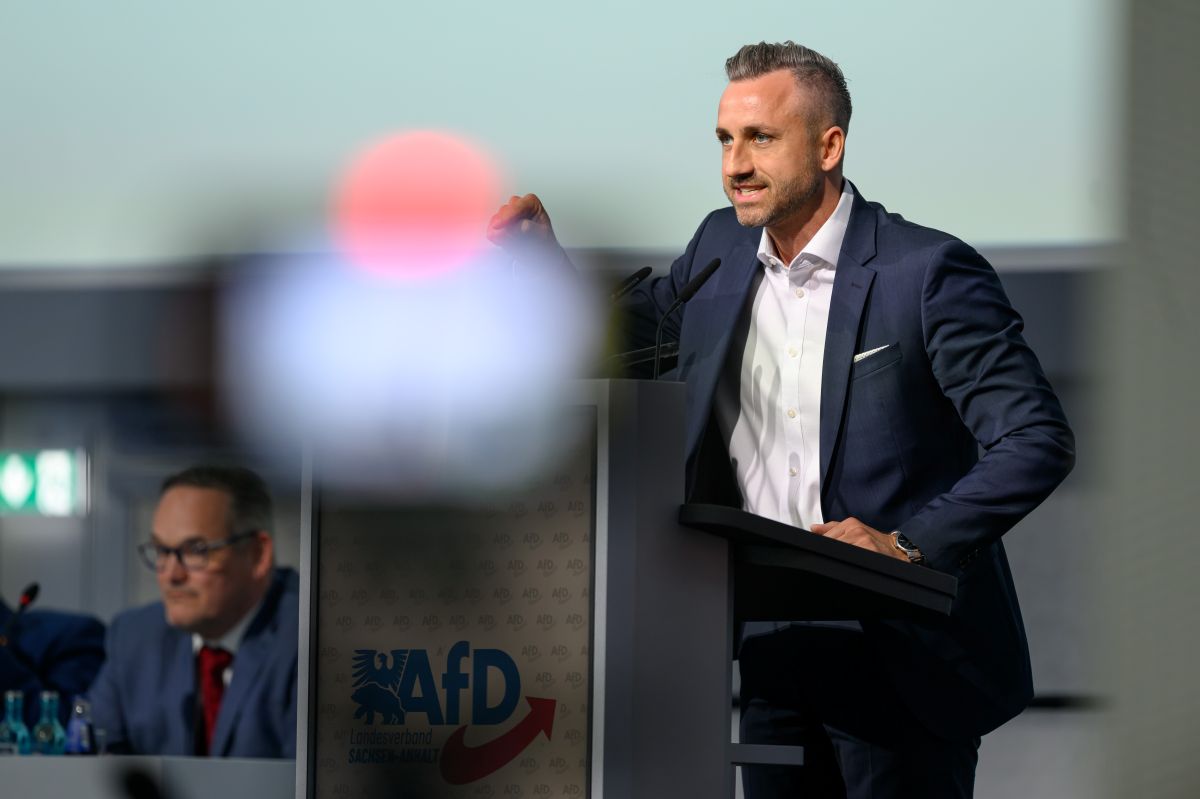
But having now scored its biggest win yet, with 44 percent of the vote in Saxony-Anhalt on Sunday, the anti-immigration and Eurosceptic party now has a shot at forming a coalition government in the state and pushing forward at least some of the proposals it campaigned on in the east German state.
Approximately 2.14 million people live in the state, of whom 11.2 percent have an immigration background.
Here's a look at the key policies AfD leaders have said they will bring in Saxony-Anhalt, and how these plans would affect foreign residents living there.
The AfD adopted its election manifesto for Saxony-Anhalt in April – a more than 150 page document that proposes a "radical blueprint" for the state, including a "180-degree turn" in migration policy. This would include widespread deportations of Ukrainians and the segregation of refugee school children to give just a couple examples.
Many of these policies would not be possible to implement at the state level as they are under the jurisdiction of the federal government in Berlin.
But the manifesto shows what kind of policies the AfD intends to pursue.
‘Deportation offensive’
The AfD continues to push "remigration" – a term linked to neo-Nazi ideologies – which here means the mass removal of people with ‘non-German’ origins.
To that end, the party plans a massive “deportation offensive” with €100 million in funding. This would include increasing the number of deportation detention facilities tenfold in the state, from 30 to at least 300, and organising deportation flights at the state-level from the Halle/Leipzig airport.
Carrying out mass deportations would require a significant amount of people and effort by various authorities. This year, the AfD’s Bavarian chapter suggested creating an “Asylum Search and Deportation Group” that it said would be “similar to ICE in the US”.
READ ALSO: Anti-immigration AfD party wants to bring ICE to Germany
The manifesto for Saxony Anhalt does not mention this authority specifically, but it does call for the creation of a deportation task force and a “Staff Office for Remigration”. It envisions these new authorities coordinating with existing authorities like the Center for the Support of Return (Zentrum zur Unterstützung der Rückkehr - ZUR) and municipal immigration offices.
Target on Ukrainians
Ukrainians in particular would be specifically targeted by the AfD’s deportation efforts.
The manifesto outlines plans to stop recognising Ukrainian asylum seekers as war refugees. It suggests they can instead find safety in western Ukraine
It also calls for cutting off their access to social and welfare benefits to incentivise their return.
Critics of the AfD have long charged that the party is a pro-Putin or pro-Russia party because of its political alignment with Moscow’s geopolitical interests.
The AfD’s manifesto says Germany's “current anti-Russian policies” are not in the country’s interest. It calls for lifting sanctions on Russia as well as “preserving Russian classes” in German schools and reviving German-Russian student exchanges.
Integration made harder
Not just asylum seekers but foreign skilled workers in Saxony-Anhalt can expect life to be made more challenging under an AfD-led government.
The manifesto explicitly rejects the recruitment of foreign skilled workers, and suggests that Germany’s labour shortage can instead be addressed with AI, digitalisation and programs to bring German professionals who have emigrated back.
READ ALSO: Why a Darmstadt hospital is showing what Germany would look like without immigration
Meanwhile, foreign residents in Saxony-Anhalt would be subject to mandatory integration courses covering German history and culture, with unexcused absences being punishable by the withdrawal of residence permits.
The process to get or renew a residence permit could also be made more difficult. The AfD states that it wants to encourage employees in immigration offices to use their discretionary powers to shift the agencies away from a "welcoming culture" and towards a "farewell culture".
Additionally, the AfD has also long called for stricter naturalisation laws.
The biggest change to naturalisation law would be the end of birth right citizenship (jus soli) and the return of citizenship rights by descent. In other words, being born in Germany would no longer make you a citizen unless one of your parents was ethnically German.
Crack down on cultural and religious freedoms
Stating that "Islam does not belong to Germany or Saxony-Anhalt" the AfD plans to limit Islamic religious expression. Specifically the party manifesto rejects the construction of minarets on mosques and the broadcasting of muezzin calls to prayer.
These measures would likely be seen as a direct violation of German Basic Law, which guarantees the right to any religious belief and the “undisturbed practice of religion”.
READ ALSO:
- Which of Europe's anti-immigration parties are the most extreme?
- How Germany's leaders are empowering the far right
This article was originally published 100 days ahead of the election in May. It has been updated following the election in Saxony-Anhalt on September 6th.
Comments (6)