

Monday's top story: Thousands rally across Germany in support of freedom in Iran
Thousands of people took to the streets in cities across Germany following US and Israeli air strikes on Iran, protesting against the country’s leadership and calling for freedom and democratic change.
Police said the demonstrations were largely peaceful, with some gatherings taking on an almost celebratory atmosphere.
In Düsseldorf, around 6,000 people gathered under the slogan “Freedom for Iran,” according to police estimates. Similar rallies were held in Berlin, where several demonstrations drew more than 1,000 participants each and continued to grow over the course of the day.
While many protesters expressed support for the military action against Iran’s leadership, others used the demonstrations to criticise the air strikes themselves.
READ ALSO: Germany warns against Middle East travel after US-Israeli strikes on Iran
Further protests took place in Frankfurt am Main, Cologne and Munich, where up to 500 people marched to the US consulate. Smaller rallies were also reported in Nuremberg and Erlangen. Authorities said all events remained peaceful.
The demonstrations followed the start of US and Israeli air strikes on Saturday, during which Iran’s supreme leader, Ayatollah Ali Khamenei, was reportedly killed in Tehran. Iran has since responded with attacks on military targets in Israel and US bases in several Gulf states, sharply escalating tensions in the region.
Germany urges Iran to stop 'indiscriminate attacks'
German Chancellor Friedrich Merz on Sunday called on Iran to "immediately stop" its "indiscriminate attacks" across the Gulf, while predicting that the country's rule by clerics was coming to an end with the death of Tehran's supreme leader, Ayatollah Ali Khamenei.
Germany shares Iranians' "relief" to see the "mullah regime come to an end," Merz said at a press conference in Berlin.
READ ALSO: Germany, France, UK ready to take 'defensive action' against Iran
He cautioned, however, that the killing of Khamenei in strikes by the US and Israel on Tehran had set Iran on a path to an "uncertain future."
Merz confirmed that he would travel to Washington on Tuesday on a scheduled trip to discuss Middle East developments with US President Donald Trump.
"Ultimately, we don't know if the plan will succeed," he said of the recent US-Israeli strikes.
Merz also said that Berlin, which had no part in Saturday's strikes, would not tolerate any "antisemitic or anti-American" attack on its soil.
BMW tests humanoid robots on production line in Leipzig
BMW has begun testing humanoid robots at its car production plant in Leipzig, marking a new step in the company’s use of artificial intelligence in manufacturing.
Initial trials started in December, with further tests planned for April and a pilot project involving a small number of robots scheduled for the summer.
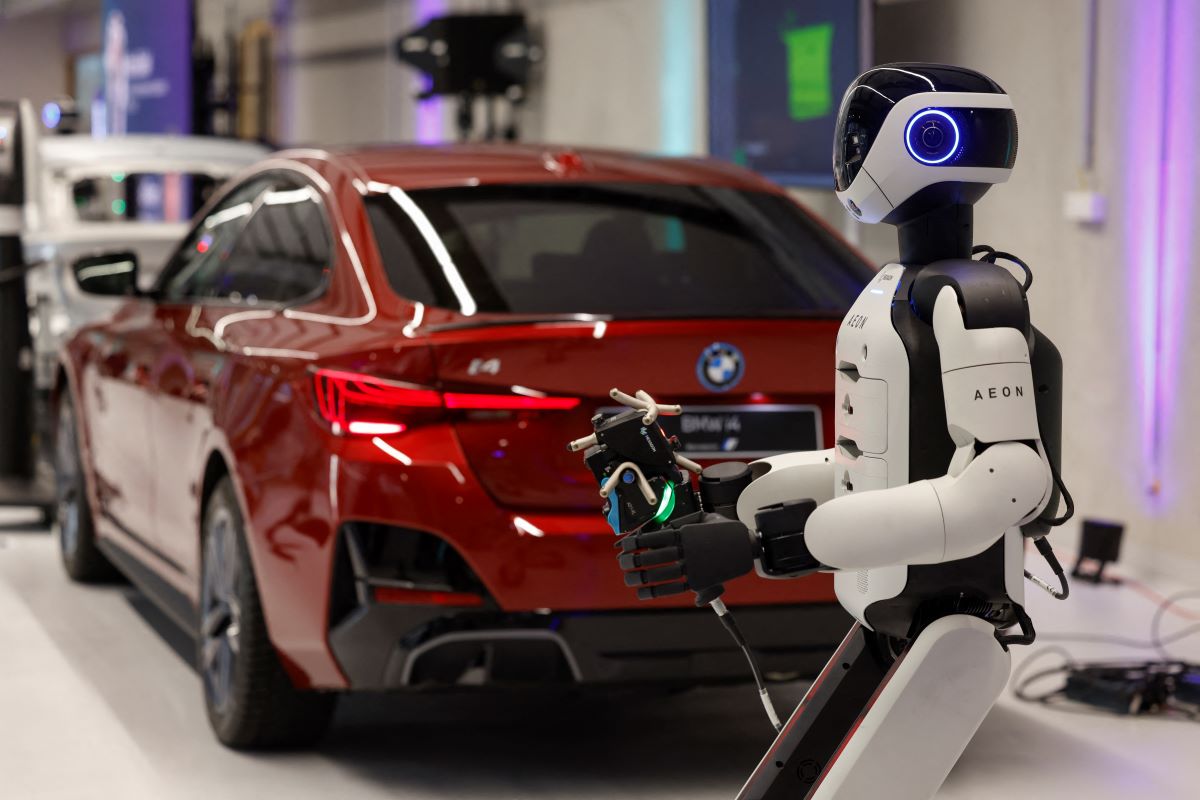
The robots, supplied by US manufacturer Hexagon, are designed to work in existing production environments and could eventually be deployed in areas such as battery manufacturing and component production.
BMW says the aim is to explore how AI‑supported, adaptive robots can be integrated into series production under real industrial conditions.
READ ALSO: Five surprising ways Germany is using new technology to improve mobility
Standing 1.65 metres tall and weighing 60 kilograms, the humanoid robots move on two legs, can carry out a range of tasks and are able to change their own batteries. For now, they operate in separate areas for safety reasons.
BMW has previously tested similar technology at its US plant in Spartanburg, where robots handled sheet metal parts during welding.
The company stresses that the technology is intended to take over unpleasant or dangerous tasks, not replace workers. However, the robots are still costly, with prices reportedly in the six‑figure range.
Sarah Engels to represent Germany at Eurovision with Fire
Singer Sarah Engels will represent Germany at the Eurovision Song Contest in Vienna this May after winning the national preliminary round in Berlin. The 33‑year‑old beat eight other acts to secure her place in the final on May 16th.
Engels will perform her dance‑pop song Fire, which featured dramatic flames and choreography during the televised final. “I’m incredibly excited and will give my all for Germany,” she said after her victory. A small sloth charm given to her by her children, she added, reminded her to stay calm.
READ ALSO: The most popular German language songs of 2025
Germany has struggled at Eurovision in recent years, often finishing near the bottom of the scoreboard. Aside from Michael Schulte’s fourth place in 2018, success has been limited, with entries ending mid‑table.
A seasoned performer, Engels rose to fame on Deutschland sucht den Superstar in 2011 and has since built a broad entertainment career spanning music, television and musicals.
Her empowering song message and strong stage presence, backed by 1.8 million Instagram followers, are now seen as Germany’s best chance for a stronger Eurovision showing.
Munich surfers protest as Eisbach wave remains closed
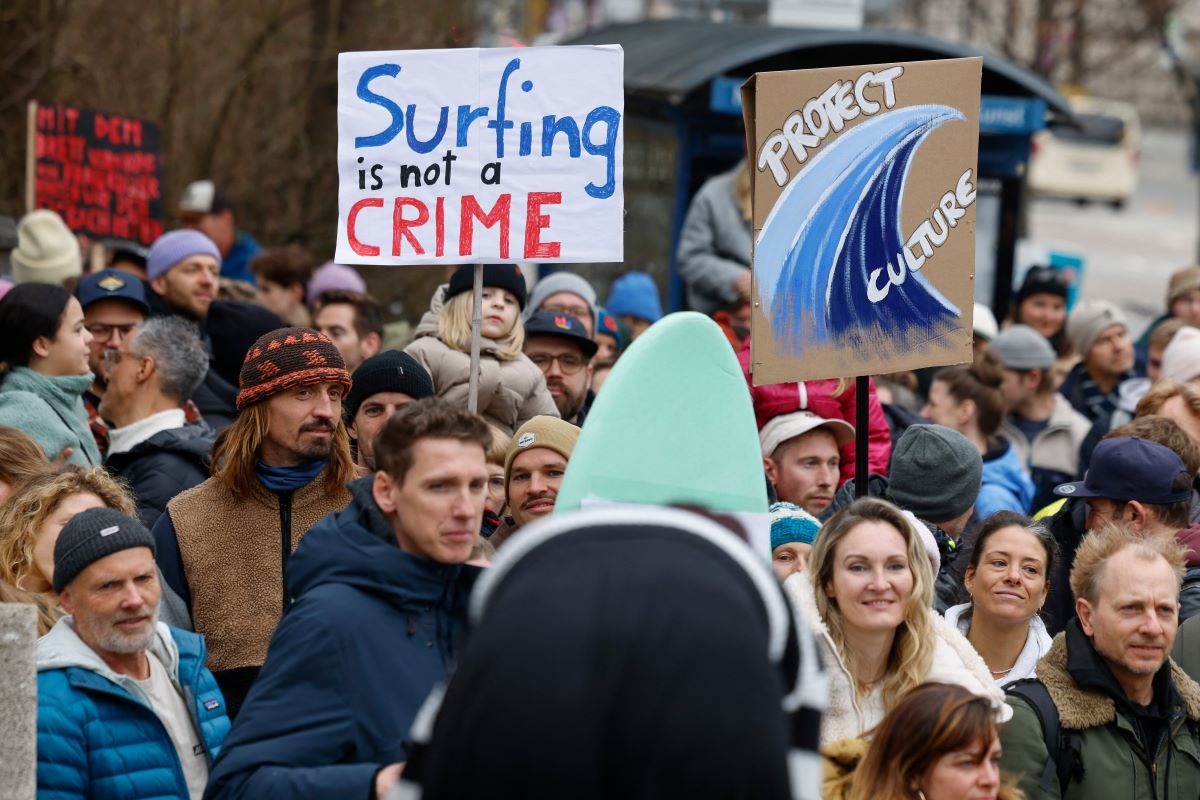
Surfers in Munich have staged a demonstration demanding the reopening of the famous Eisbach wave, which has been closed to the public since mid‑February due to low water levels and safety concerns.
Dozens gathered by the stream on Sunday with placards and whistles, accusing city authorities of unnecessary bureaucracy and political hesitation.
The Eisbach wave, a long‑standing symbol of Munich’s alternative culture and a tourist attraction, has been unsurfable for weeks. Protesters argue that the city and officials are dragging their feet instead of implementing a practical solution.
READ ALSO: LISTED - The new direct flights you can catch from Munich in 2026
Many surfers blame politicians for turning the issue into an election talking point rather than acting quickly to restore access.
Central to the protest is a call to install a ramp, which surfers say would stabilise the wave and improve safety. Demonstrators stressed the importance of personal responsibility, noting that the Eisbach is suited only to experienced surfers.
While a private investor has offered support under certain conditions, surfers have rejected the idea of a formal operator, warning that commercialisation would destroy the wave’s unique, free‑spirited character.
For many, the fight is not about surfing but about preserving a cherished piece of urban freedom.
With reporting by AFP and DPA.
Comments