

For all the jokes made about a place stuck in the 90s, Germany remains one of the most innovative countries in the world, particularly when it comes to transport. In a recent international study, the country ranked third overall for logistics and fifth for hi-tech manufacturing.
Just this month a number of new transport initiatives have been introduced, which could help pave the way toward more efficient and digitally connected mobility.
Here are five of the best.
‘Scan-Autos’ to enforce parking rules in Baden-Württemberg
Baden-Württemberg is the first state in Germany state to allow the use of Scan-Autos – essentially cars equipped with roof-mounted cameras that can scan license plates and cross-check digital parking permits.
The test phase began in two districts of Heidelberg – Bahnstadt and Altstadt – on September 18th, using technology that can inspect up to 1,000 vehicles per hour. That's compared to around 50 by human inspectors.
The Scan-Autos are still driven by human inspectors and staff, however.
In order to protect data privacy, images of legally parked vehicles are deleted from the system immediately and images of pedestrians are automatically blurred.
READ ALSO: How German schools are including more and more AI
During the test phase, no fines are being issued based solely on Scan-Auto data. Instead, the data will be evaluated and used to guide decisions about continued use and potential expansion in early 2026.
Other cities in Baden-Württemberg, including Mannheim, Freiburg, and Waldshut-Tiengen plan to introduce Scan-Autos soon, with test phases scheduled between late 2025 and early 2026.
Advocates hope the new scheme will improve safety by discouraging drivers from parking on bike lanes and bus routes, reduce emissions, and lead to fewer confrontations between enforcement officers and drivers.
Drone deliveries in Berlin
In Berlin, a three-year pilot project recently launched to look at the potential for making deliveries for groceries and medicines by drone.
The pilot project, coordinated by U-Space Berlin, is being conducted in industrial parts of Tempelhof-Schöneberg in the south of the city.
READ ALSO: How AI-powered drones are tracking down fires in German forests
Drones are already in operation, transporting medical goods (including vaccines, emergency medicines and blood products) and food for local businesses.
Ultimately the project is designed to discover how drone technology can be integrated into Berlin’s urban transport network. As part of the remit, it's also looking at issues around regulatory compliance and public acceptance.
Driverless taxis
The prospect of summoning a driverless taxi from an app may soon move from futuristic concept to everyday convenience.
According to current plans, Germany is poised to become the first European Union country to see self-driving ‘robotaxis’ on public roads, beginning in 2026.
Pending regulatory approval, American ride-hailing giant Lyft and China’s leading artificial intelligence and autonomous vehicle company, Baidu, aim to begin robotaxi services in 2026, with plans to scale the fleet to thousands of vehicles throughout Germany.
READ ALSO: Will German cities have driverless taxis on the roads in 2026?
Early launches are expected in cities including Hamburg and Munich.
Legally, driverless vehicles that meet certain specifications have been allowed on German roads since 2022, reflecting the country’s comparatively liberal approach.
Predictive traffic lights for cyclists
Also launched in September in Berlin, a new system called VeloFlow displays real-time traffic light forecasts to cyclists in the city.
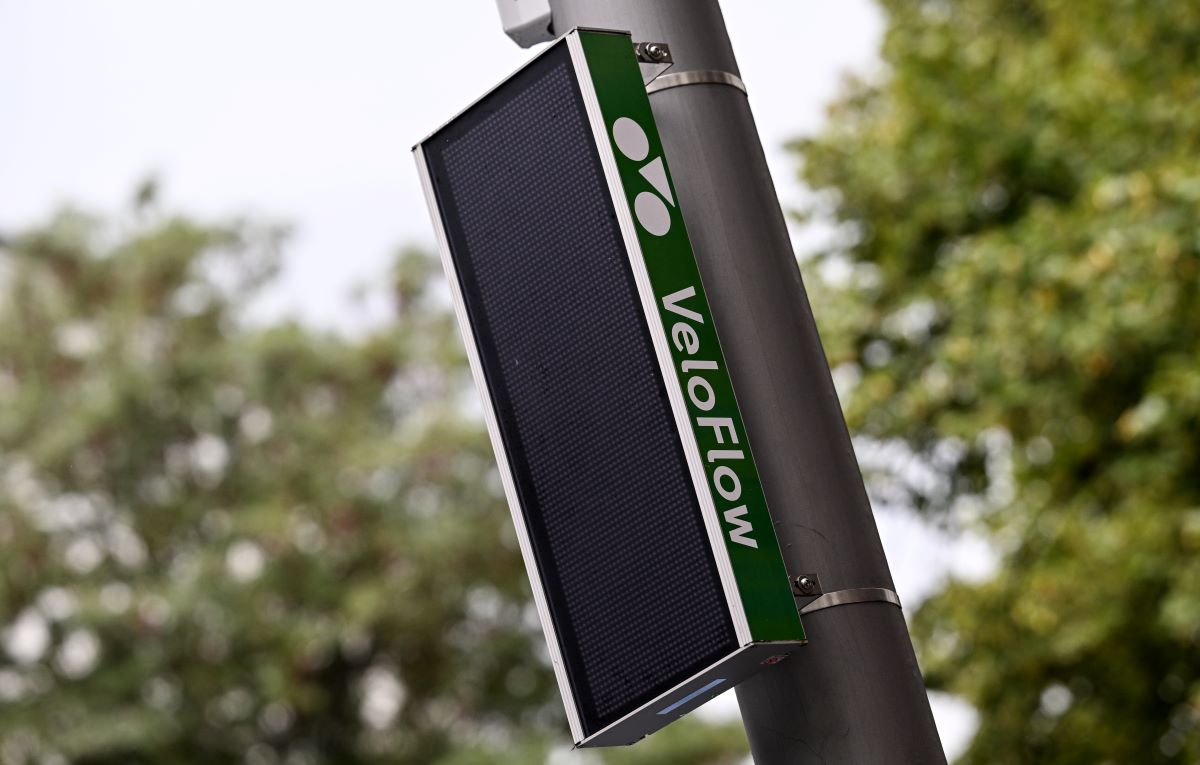
Digital displays have been (or are being) installed approximately 200 metres in advance of 23 selected traffic lights across the city, including on Invalidenstraße, Stargarder Straße, Schönhauser Allee, and Prenzlauer Allee.
The system displays a bicycle icon that moves between green and red zones to cue cyclists to charge ahead or slow down, depending on the colour that the traffic light will be when the cyclist reaches it, assuming a steady speed of about 20 km/h.
In theory, these real-time forecasts will allow riders to adjust their speed accordingly, encouraging smoother rides and fewer stops.
EXPLAINED: What to do if your bike is stolen in Germany
Self-driving electric buses in North Rhine-Westfalia
Since March of this year, the town of Herford in North Rhine-Westphalia has been trialling an autonomous, fully electric shuttle bus as part of the European ULTIMO project aimed at integrating driverless vehicles into public transport.
Currently operating on a fixed route near the train station, the vehicle has nine seats and one wheelchair space and can drive autonomously at speeds up to 40 km/h, with plans to increase to at least 50 km/h.
Developed by Austrian manufacturer eVersum with autonomous driving technology from German tech group ZF, the project includes extensive use of LiDAR, cameras, and radar sensors.
The initiative aims to expand the role of autonomous electric vehicles, particularly in rural or small-town areas with limited public transport options.
Comments