
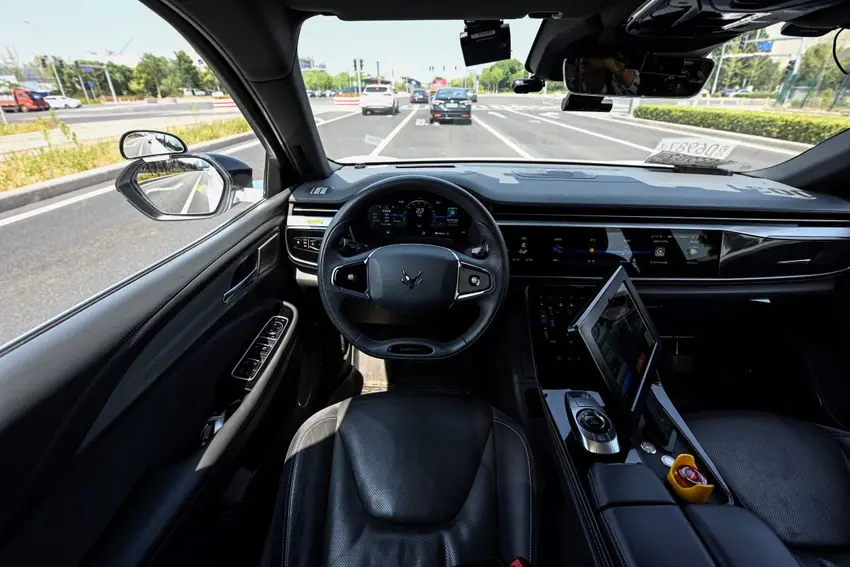
American ride-hailing giant Lyft, and China’s leading artificial intelligence and autonomous vehicle company, Baidu, recently announced plans to jointly launch a fleet of “robotaxis” in Germany in 2026.
In April 2025, Lyft bought the European mobility platform FreeNow from BMW and Mercedez-Benz for approximately €175 million. Because FreeNow operates across nine European countries and more than 180 cities – including major German hubs – the acquisition provided Lyft with a ready-made network to accelerate its self-driving taxi rollout.
Pending regulatory approval, Lyft and Baidu aim to begin robotaxi services in 2026, with plans to eventually scale the fleet to thousands of vehicles throughout Germany and across Europe in the coming years.
Early launches are expected in key German cities such as Hamburg and Munich.
Lyft will handle the platform, customer experience, and fleet logistics, while Baidu will provide the autonomous vehicles and technical support.
Baidu’s fully electric RT6 robotaxis are designed for autonomous ride-hailing, with a detachable steering wheel to provide more passenger space or allow the installation of vending machines, desktops, or gaming consoles, according to the manufacturer.
In order to navigate in traffic, the vehicle has 38 sensors integrated into its roof, including 8 LiDAR, 6 millimetre wave radar, 12 ultrasonic radar and 12 cameras.
Are self-driving cars allowed in Germany?
Germany’s regulatory environment for autonomous driving is notably liberal, with the country having adopted progressive rules compared to many others around the world. Since July 2022 driverless vehicles have been allowed on German roads.
The legal framework specifies the requirements for vehicle safety, responsibility, and data privacy, creating a clear pathway for the deployment of level-4 autonomous vehicles – or vehicles which are designed to operate without a driver – like the RT6 robotaxi.
READ ALSO: Car insurance premiums to increase for millions of drivers in Germany
If approved, the prospect of summoning a driverless taxi from an app may soon move from futuristic concept to everyday convenience for residents in Germany.
How widely are self-driving taxis used in other parts of the world?
While Europe begins preparations for its first wave of robotaxis, several other regions around the world already have established autonomous taxi services.
In the United States, Waymo operates commercial robotaxi fleets in cities including Phoenix, San Francisco and Austin, for example.
READ ALSO: The new retail trend disrupting Germany's shop-free Sundays
China is the clear global leader for autonomous taxis with companies like Baidu’s Apollo Go service running fleets of over 1,000 autonomous vehicles across 15 cities, including Wuhan, Beijing, and Shanghai. The United Arab Emirates and South Korea also have limited numbers of robotaxis on public roads, mainly in major urban centres like Abu Dhabi and Seoul.
Pros and cons
Advocates of autonomous taxis – and driverless cars more generally – argue they will provide a trusted and efficient alternative to private cars and traditional taxis, helping cities boost ride-sharing options and improving accessibility.
But not everyone is enthusiastic. In July 2025, taxi drivers across Germany staged widespread protests demanding stricter regulations on car-hire platforms such as Uber and Bolt, which they view as unfair competition.
In Berlin, over 1,000 taxis participated, calling for minimum price regulations on ride-hailing services, and arguing that companies like Uber undercut regulated taxi fares through dynamic pricing models.
Robotaxis, in comparison, could be seen as an even starker threat to taxi drivers' livelihoods.
READ ALSO: The essential vocab you need for driving in Germany
There are also concerns among experts and members of the public around safety and transparency where self-driving cars are concerned.
Earlier this year, Sönke Iwersen and Michael Verfürden published their book “The Tesla Files”, which documents alarming safety issues including sudden unintended acceleration and braking failures.
The book, largely based on more than 23,000 internal Tesla documents leaked by an anonymous whistle-blower, documents over 1,000 crashes worldwide linked to Tesla’s driver assistance system marketed as “Full Self-Driving”.
The authors conclude with calls for stricter regulations requiring transparency, open-source software, and full disclosure of safety-relevant data to ensure public trust in autonomous vehicle technology.
Comments (1)