
Thursday's top story: Friedrich Merz announces intention to seek second term as Chancellor
Chancellor Friedrich Merz already intends to seek a second term in office after the Bundestag election planned for 2029, he announced on Wednesday.
"I still plan to do this for a longer time," said Merz at the CDU's Political Ash Wednesday event in Trier.
Merz turned 70 on November 11th and is the oldest chancellor since Konrad Adenauer, who left office in 1963 at the age of 87. On Friday, he wants to be elected party leader for the third time at the CDU party conference in Stuttgart. If re-elected as party leader, Merz would then be positioned to be the CDU's top candidate for Chancellor again.
Merz added that his father turned 102 in January, as if to suggest that his 70 years of age were a non-issue.
CDU General Secretary Carsten Linnemann had also recently attested to Merz's best prerequisites for a long political career. "He said it himself: His father is over 100 years old, his mother just below that," the CDU General Secretary told Stern. "So he has the genes that he can continue to do politics for a very long time."
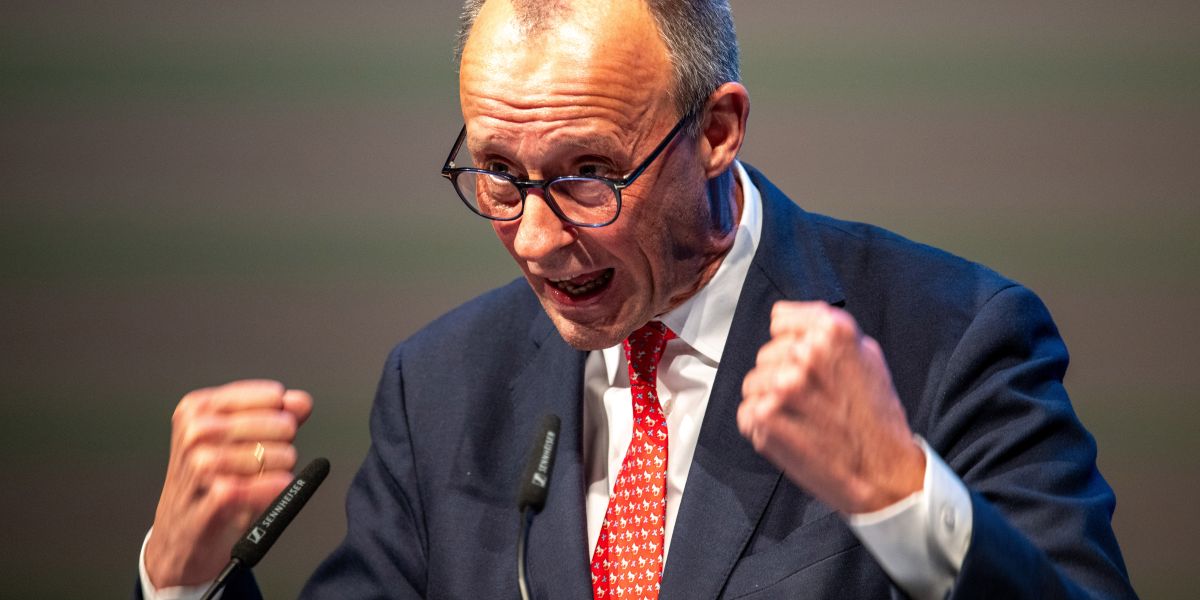
Merz, however, faces a tough task in reinvigorating voter support. A recent Insa survey found that just 22 percent of Germans thought he was doing a better job than Germany's previous chancellor, Olaf Scholz (SPD).
Transport strike in Frankfurt: Subways and trams stopped
The warning strike in Frankfurt's public transport has begun.
Since the beginning of the Thursday morning shift, public transport workers of Frankfurt's transport company (VGF) have stopped work.
Subways and trams remained in the depots. All nine subway lines and the ten tram lines are affected by the strike.
Commuters in Frankfurt can switch to the following means of transport, which are open despite the warning strike: the S-Bahn, regional (RE) trains, city buses, the rail replacement service for the U2 and regional buses and express buses.
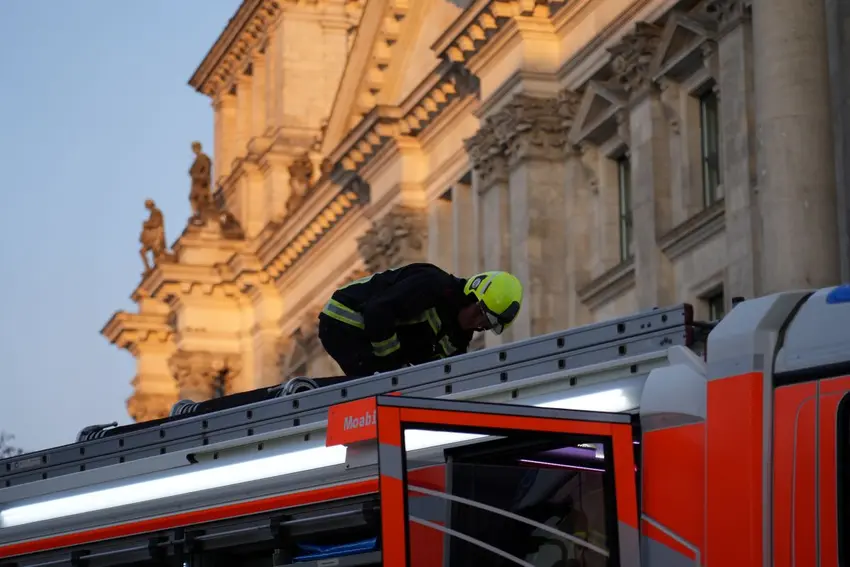
Reichstag building re-opened after gas detector triggers alarm
A gas detector triggered an alarm in Germany's legislative capital building, the Reichstag building, causing a major fire brigade operation on Thursday morning.
After two hours, the building which houses the Bundestag was opened again.
A small amount of a hazardous substance has most likely leaked, said a fire department spokesman to the German Press Agency. They suspected that a strong cleaning agent had leaked and triggered the gas detector.
Around 80 emergency personnel had been called out to the scene.
Tensions soar between Germany and France on defence spending and EU issues
Germany does not need the same new fighter jets as France, Chancellor Friedrich Merz said Wednesday, signalling that Berlin could abandon a flagship joint defence project for Europe.
"The French need, in the next generation of fighter jets, an aircraft capable of carrying nuclear weapons and operating from an aircraft carrier," Merz told the German podcast Machtwechsel.
"That's not what we currently need in the German military," he said.
The Future Combat Aircraft System (FCAS) project was launched in 2017 to replace France's Rafale jet and the Eurofighters used by Germany and Spain, to come into service around 2040.
But the scheme, jointly developed by the three countries, has stalled in the past year as France's Dassault Aviation has had disputes with Airbus Space and Defence over control of the project.
On the same day Germany's foreign minister sought to shut down talk of worsening relations with France, telling AFP that Paris remains Berlin's "closest partner and most important friend in Europe".
"Our partnership is of existential importance for both our countries, which is why open communication, honest exchange and critical debate between us is so important," said German Foreign Minister Johann Wadephul in a statement.
Wadephul had accused Paris of not putting its money where its mouth is when it comes to defence spending.
Paris also opposed a European Union trade deal signed with South America's Mercosur bloc, an agreement strongly backed by Berlin. And the EU last December watered down its planned 2035 ban on petrol cars, in large part because of German encouragement and in the face of French opposition.
Wadephul stressed that "it is crucial for the European Union that France and Germany continue to join forces, that we always seek common ground despite sometimes differing viewpoints".
Federal constitutional court upholds rent control
Germany’s rent control law remains constitutionally sound after the Federal Constitutional Court rejected a landlord’s complaint against its extension.
The decision concerned the so‑called rent cap, which limits rents for new leases in areas with tight housing markets to a maximum of ten percent above the local comparative rent, as determined by municipal rent indexes.
The case was brought by a Berlin landlord whose tenants had successfully sued for charging excessive rent under the rent cap rules. She challenged the first extension of the law beyond 2020, arguing that it infringed on her property rights.
The court dismissed the complaint, ruling that landlords do not have a constitutional right to maximise rental profits. Housing, the judges stressed, has major social importance and property use that exploits housing shortages is not protected by the constitution.
The court also underlined the legislature’s legitimate aim of curbing rising rents, reducing social inequality and preventing gentrification.
READ ALSO: Berlin issues first ever fine against landlord for overcharging on rent
Bavarian leaders trade jabs on Ash Wednesday ahead of Bavarian elections
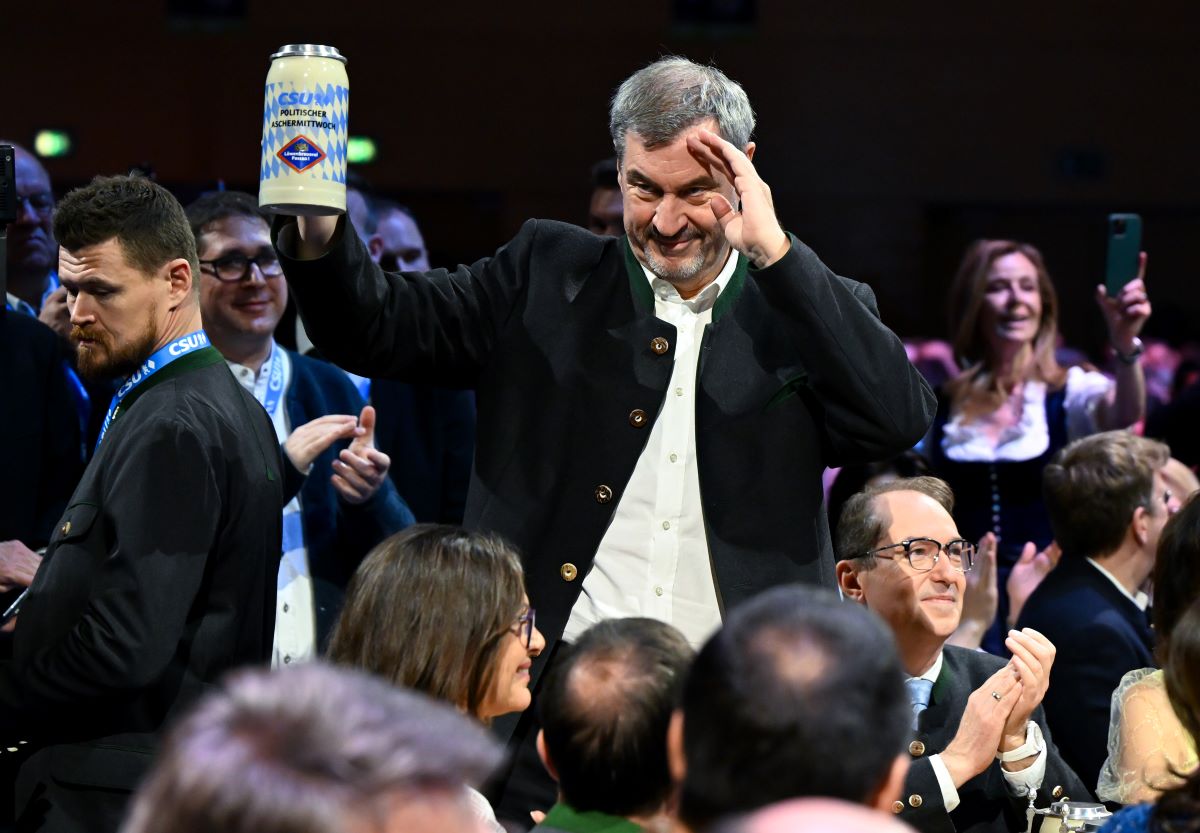
On Ash Wednesday in Germany, and particularly in Bavaria, political parties traditionally host events where their leaders vent frustrations and lob insults at their rivals. This year's Political Ash Wednesday featured all the sharp rhetoric and pointed attacks across party lines that would be expected, as the southern 'Free State' geared up for local elections on March 8th.
The largest event was hosted by the CSU in Passau, where party leader and Bavarian Prime Minister Markus Söder addressed several thousand supporters.
Söder used his speech to reject increases in income tax, higher fuel prices and any rise in inheritance tax. He criticised what he described as the arrogance of the political left and reiterated the CSU’s demand for universal service and compulsory military service, arguing that defending democracy requires concrete action rather than words.
The Greens, meeting in Landshut, focused their criticism on Chancellor Friedrich Merz and Söder himself. Parliamentary group leader Katharina Dröge mocked Merz as outdated, while Bavaria’s Green leader Katharina Schulze accused Söder of prioritising self‑promotion over responsible economic policy.
At the SPD event in Vilshofen, Vice Chancellor Lars Klingbeil called for more open political debate, while co‑state chair Ronja Endres criticised Söder’s frequent absences from the Bavarian parliament.
Elsewhere, Free Voters leader Hubert Aiwanger stressed "individual freedom," while Alternative for Germany (AfD) representatives dismissed allegations of nepotism as a media‑driven campaign.
READ ALSO: Where in Germany you'll pay hotel tax and why you won't in Bavaria
With reporting by AFP, DPA and Tom Pugh.
Comments