

Valentine’s Day is not traditionally a major event in Germany. Cards, flowers and heart‑shaped chocolates are still regarded with suspicion in some quarters.
But recently, there are signs the celebration is gaining ground. Restaurants tend to fill up, supermarkets turn pink, and more and more couples seem able to acknowledge the 14th of February without rolling their eyes.
Could the idea of romance be undergoing a makeover in Germany?
We look at one reason why Germans have been comparatively slow to take the holiday to their hearts – and if viewing trends in the country might hint at a wider cultural shift.
Emotionally catastrophic literature
More than 80 percent of people in Germany rate Valentine's Day as "low importance" according to marketing agency Into the Minds.
And few people would disagree with the claim that Germans are more likely to regard romance with suspicion than people in France or Italy, for example.
For newcomers to the country, a quick tour through some of Germany's foundational texts might help explain the phenomenon.
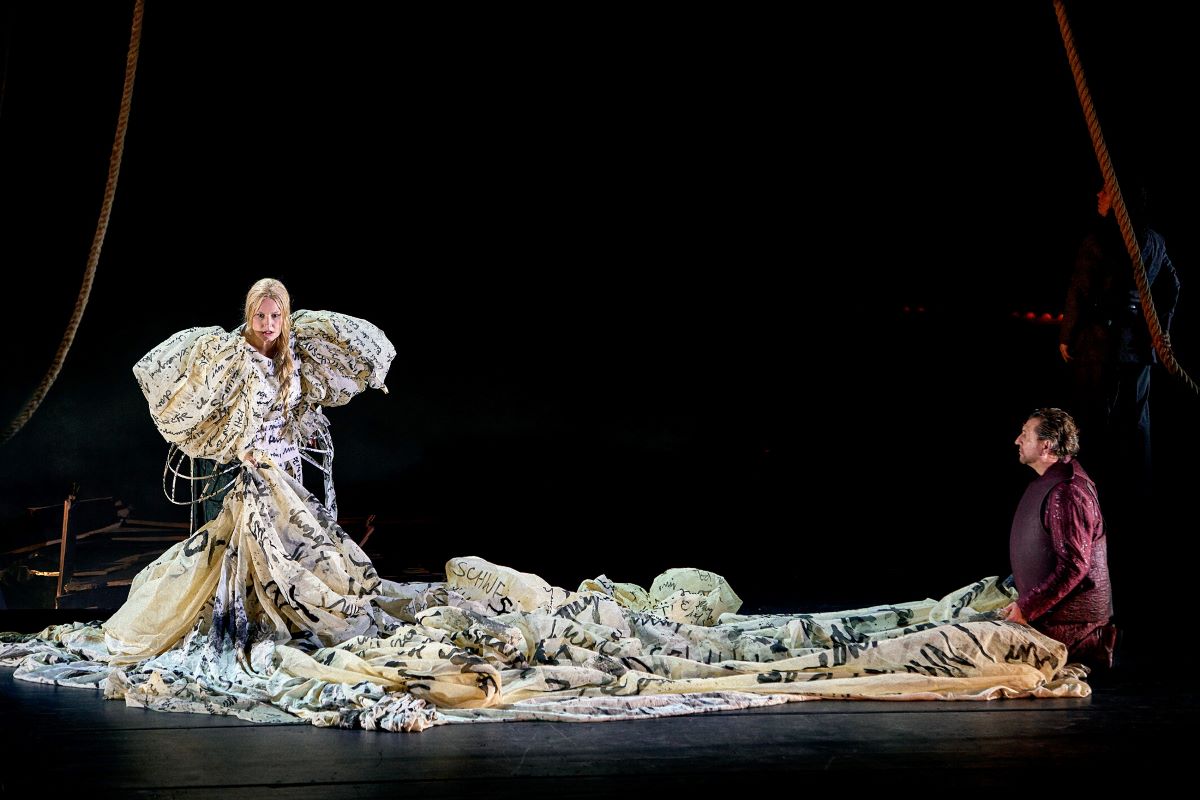
Tristan und Isolde
In Wagner’s operatic universe, romance is chemically induced and socially catastrophic. Tristan and Isolde fall in love after accidentally drinking a magic potion, immediately betraying a king, an uncle and several concepts of honour.
READ ALSO: 'Liebeskummer' - How to talk about dating like a German
Their situation is impossible from the start. Neither acts of derring-do, nor communication nor compromise can save them. Ultimately, Tristan dies of his wounds; Isolde follows him out of sheer heartbreak.
Their union is achieved in death – presented as the best available outcome.
The Sorrows of Young Werther
Goethe’s Werther is often cited as a great love story – which seems generous.
A young man meets a woman at a dance, falls obsessively in love, then discovers she is already engaged to good-hearted Albert. Instead of moving on, Werther broods, he writes letters and ultimately decides to emotionally and physically self‑destruct.
Werther borrows Albert’s pistols and shoots himself, dying slowly and dramatically. The story of Romeo and Juliet – two attractive teenagers with a real shot at happiness for most of the play – is wholesome by comparison.
Effi Briest
Theodor Fontane’s novel takes a more down to earth but no less destructive approach. The protagonist Effi is trapped in a loveless marriage and seeks warmth elsewhere.
The affair is discovered years later, but apparently not long enough that it can be quietly forgotten. Honour demands a duel, society demands exile.
READ ALSO: 'I love the clarity' - Readers reveal the advantages of living in Germany
People being punished for having dared hope that love might bring them happiness is a feature of many of these stories. The creative twist in Effi Brest lies in the slow burn, first the delayed revelation and then the slow wasting away after Effi moves back in with her parents.
Love doesn't always kill immediately, the book seems to suggest, but it always gets you in the end.
The Nutcracker and the Mouse King
Finally, a happy ending. Young Marie, growing up in an unhappy home, falls in love with a wooden nutcracker who turns out to be an enchanted prince.
There are curses, battles with mice and a thrown slipper, but devotion wins. The spell is broken, the prince proposes and the two get to rule their own magical kingdom together.
In fact, it’s almost suspiciously wholesome. As some Germans may be inclined to point out – possibly even while on a Valentine’s Day date! – there is a school of thought which regards the whole thing as an elaborate metaphor for death.
The growing dominance of English-language films
Despite being introduced to ideas of romance through emotionally catastrophic literature and the dark lens of Grimm's fairy tales, there is still evidence that romance in Germany is slowly starting to resemble the schmaltzier version found elsewhere.
Valentine's spending in Germany reached €1.3 billion in 2025 (up from €1 billion in 2020), for example. What's more, 28 percent of consumers said they planned to buy gifts in 2025 compared to only 17 percent five years earlier.
At the same time, and perhaps most revealingly, an analysis of Google Trends data performed by the online privacy platform Privacy Tutor revealed that these days none of Germany’s favourite romantic films is German.
‘Titanic’ reportedly dominates – identifed as the most popular romantic film in five German states: Baden‑Württemberg, Bavaria, Hesse, Lower Saxony and Schleswig‑Holstein.
In Berlin and Hamburg ‘Love, Actually’ secures the number one spot, while Pretty Woman is still going strong in Brandenburg and Mecklenburg‑Vorpommern. (Really, you two?)
Is it perhaps possible that exposure to Jack and Rose, Mark Darcy and Julia Roberts are collectively softening the national attitude to love in Germany – making space for light‑hearted, openly commercial celebrations like Valentine’s Day?
Comments