
Inside Germany is our weekly look at some of the news, talking points and gossip in Germany that you might've missed. It’s published each Saturday and members can receive it directly to their inbox by going to their newsletter preferences or adding their email to the sign-up box in this article.
After more than 25 years of negotiations, the European Union and the Mercosur bloc of South American countries were set to sign a landmark free trade agreement in Paraguay on Saturday. The deal aims to make it easier for goods to flow between the EU and Mercosur nations – Brazil, Argentina, Uruguay, and Paraguay – by reducing tariffs and harmonising regulations.
Germany is widely thought to be one of the major winners, with its car manufacturers, chemical firms and pharmaceutical companies expected to benefit from the removal of 90 percent of tariffs on industrial goods from the EU in Mercosur countries. This should make German products more competitive abroad, and helps to secure German industry.
But the agreement is controversial, with farmers in the EU fearing that cheaper imports of food products could threaten their livelihoods. These worries sparked widespread protests and demonstrations. The largest took place in Paris and Brussels whereas the reaction from farmers in Germany has been relatively muted.
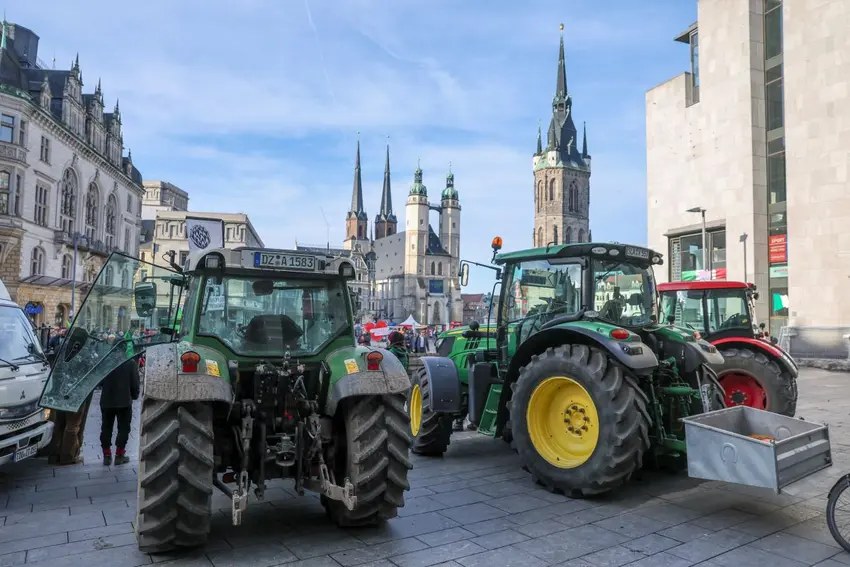
In fact, one farmers' demo which took place in Halle on Friday was on a different topic altogether. Instead, the "Showing Support for Diversity" (Haltung zeigen für Vielfalt) demonstrated against right-wing extremism, exclusion and societal division.
The Mercosur agreement does not mean completely free trade for agricultural products. Only limited quantities of beef, cheese and other goods will be allowed into the EU duty-free, with quotas in place to protect European producers from being overwhelmed by cheaper imports.
International 'Green Week' celebrates 100 years of food and farming in Berlin
By a strange coincidence, the much delayed Mercosur agreement is finally set to be signed just a day after the opening of Grüne Woche in Berlin.

At it's opening German President Frank-Walter Steinmeier, vocally supported the aforementioned Mercosur agreement: “I realize that some farmers in Germany are still sceptical, even though negotiations with South America have been going on for 25 years,” he said.
“Nevertheless, in view of the economic and political developments of our time, I am convinced that right now we need new alliances and new partners in this world full of upheaval and change.”
For the uninitiated, Grüne Woche, which started on Thursday and runs until January 25th, brings together food producers from around the globe, encourages discussions about sustainable food systems and highlights new ideas in farming and horticulture.
It’s also great fun to attend -- for anyone who is perhaps sick of eating potatoes, and looking for something to do in Berlin -- with over 300 individual events, amazing street food, an urban farm and some truly extraordinary displays in the Flower Hall.
Doors are open daily from 10am to 6pm (and 8pm on January 23rd) at the Berlin Exhibition Grounds (Messe Berlin). Tickets are a must and can be purchased online at gruenewoche.de, with prices ranging from €15 to €25. Children under six enter for free, and there are discounts for families.
READ ALSO: Eight unmissable events in Germany in January 2026
Where is this?
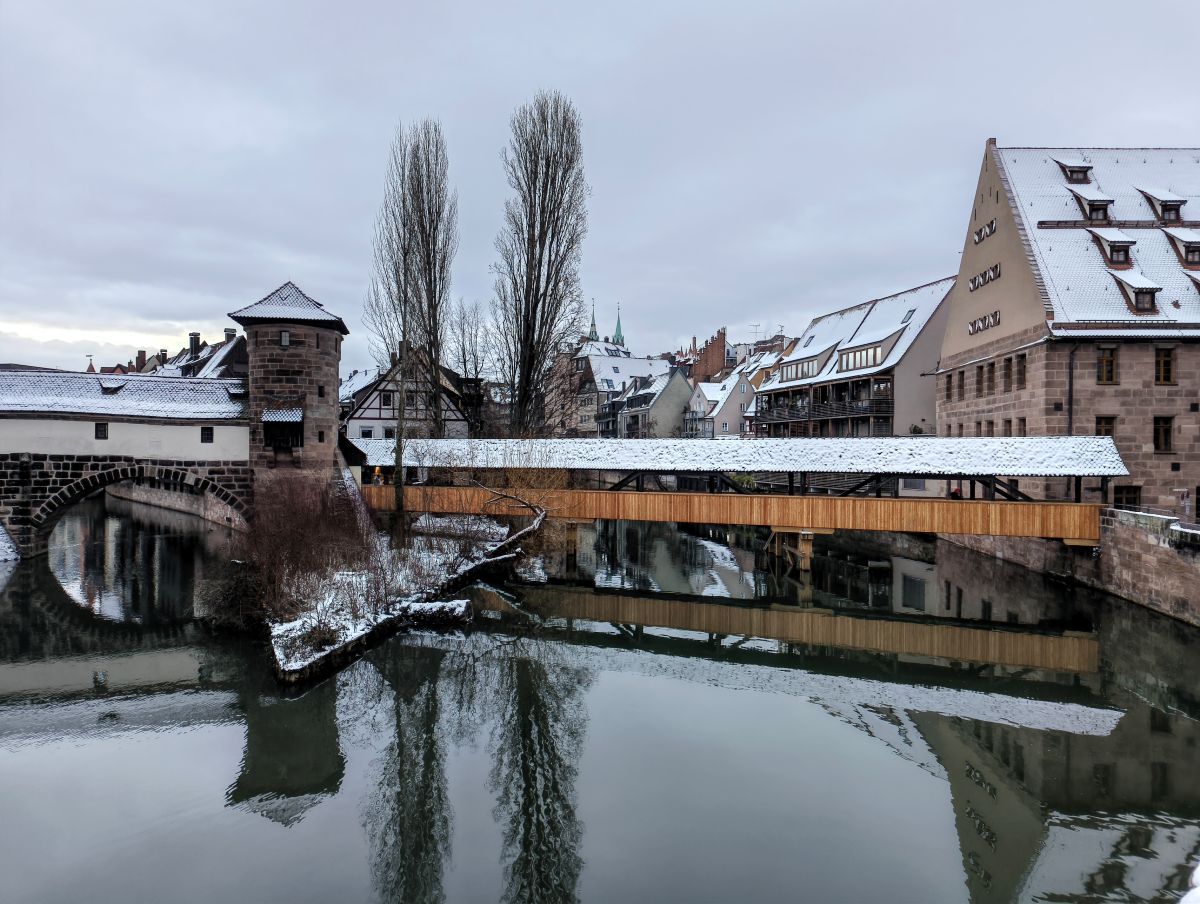
Well, it was pretty while it lasted...
A bout of freezing weather, followed by a hefty storm had left much of Germany covered in snow for much of the first couple weeks of the year. But temperatures have since risen, and in many places a bit of rain has washed the last of the snow away for now.
The above photo shows a view of the Pegnitz River in Nuremberg's old town.
READ ALSO: Four places in Germany experts say you should visit in 2026
The law of unintended consequences
Life as a politician is rarely straightforward, and recent events in Germany appear to illustrate just how thankless the job can be. The centre-left Social Democrats, for example, have found themselves under fire from their own coalition partners for trying to make the country’s inheritance tax laws a little simpler and more fair.
Meanwhile, Berlin’s mayor, Kai Wegner, has been wondering aloud whether he would have faced as much criticism for “clearing his head” during the capital’s recent power outage if he’d chosen to go for a jog rather than play tennis.
But the politician who seems to have been bitten hardest by unexpected consequences this week was actually Transport Minister Patrick Schnieder.
In October, Schnieder proposed a series of reforms intended to make it cheaper for people in Germany to pass their driving test to near-Universal acclaim.
Just a few months later, he finds himself condemned by driving schools struggling with a slump in business while potential customers wait and hope for the promised savings.
The problem has become so bad that some driving schools will have to consider putting employees on reduced hours (Kurzarbeit – a term which will be familiar to many readers who lived through the Covid pandemic in Germany) or face insolvency, according to Kurt Bartels, vice-chairman of the Federal Association of Driving Instructor Associations.
According to Schnieder, the necessary discussions with Germany’s federal states are currently underway. The plans for reforming the system should be finalised by spring, at which point the actual legislative process can begin.
But as The Local has previously reported, even this is unlikely to result in an immediate reduction in the cost of a licence.
Comments