

Tuesday's top story: Germany marks Three King's Day
Residents across Germany – and particularly in the south – may notice children singing traditional carols at doorsteps or chalk markings like "20+C+M+B+26" on doorframes on Tuesday.
These markings are typically made by Sternsinger (star singers) to mark Epiphany or Three Kings' Day, which is called Tag der heiligen Drei Könige or Dreikönigstag in German.
Dressed in robes with crowns, the groups often carry a large, glittering star on a pole to evoke the Star of Bethlehem. They perform Epiphany songs, recite a house blessing and inscribe the formula on doorframes. It varies from place to place but essentially represents the year plus the Magi's initials (Casper+Melchior+Balthazar) or the Latin phrase "Christus mansionem benedicat" (May Christ bless this house).
Homeowners sometimes offer small donations in return, often supporting global children's charities via Catholic organisations.
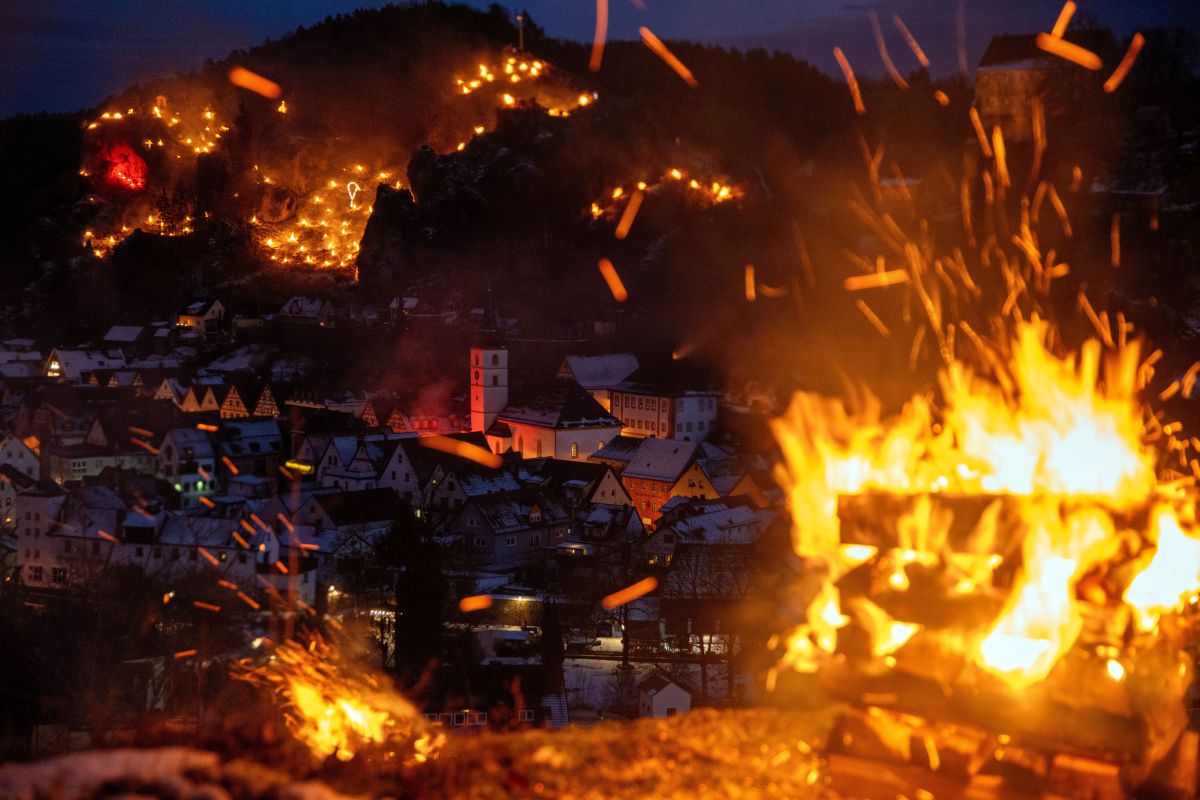
Other regional traditions to mark the day include Christian processions and special services, the lighting of fires in the mountains around the town of Pottenstein, and Epiphany bathing - including in ice-cold lakes and rivers.
Three Kings' Day is a public holiday in the states of Baden-Württemberg, Bavaria and Saxony-Anhalt. So regularly employed workers in these states have the day off, and residents in these states should expect that most shops and many businesses will be closed.
READ ALSO: Three Kings Day - What to know about the holiday in three German states
Die Linke warns of surge in old-age poverty
Germany's Left Party has raised the alarm over a looming drastic rise in elderly poverty, spotlighting flaws in the pension system.
A query by Dietmar Bartsch, co-chair of the Left Party parliamentary group, revealed that workers would need to earn a steady €19.99 gross hourly wage over 45 years of full-time employment to secure a €1,381 monthly pension – the current poverty threshold for singles – according to Labour Ministry calculations.
READ ALSO: EXPLAINED - What exactly is Germany's controversial pension package?
Nearly 19 million dependent workers earned under €20 gross per hour in April 2025, with 11.4 million earning less than €16 per hour, according to Destatis, rendering the benchmark technically unreachable for half the workforce.
"If every second statutory pension slides toward poverty risk, that's not a slip-up but system failure," Bartsch told the Funke Media group.
Brandenburg state government on the brink of a breakdown
Following the exit of state Finance Minister and Deputy Premier Robert Crumbach from both the left-wing BSW party and its parliamentary group, the SPD in Brandenburg has issued a stark ultimatum to its coalition partner.
Crumbach resigned from his positions on Monday, accusing parts of the BSW faction of prioritising opposition politics over constructive governance and saying he saw no basis left for the SPD-BSW coalition.
READ ALSO: 'Not our enemy' - Rush to rearm sparks backlash in east Germany
SPD General Secretary Kurt Fischer declared the BSW faction's crisis "acute" and questioned its capacity to govern.
"We need a clear, unified commitment from the BSW faction to the coalition at tomorrow's meeting," Fischer insisted on Monday, warning that without a secure majority, the partnership could not continue.
The SPD-BSW coalition government in Brandenburg currently has a two-seat majority. If further BSW lawmakers resign at tomorrow’s meeting, it could potentially trigger SPD-CDU talks, an SPD minority government or a snap election in the state.
Pumped up by hopes and defence stocks, Dax hits record high
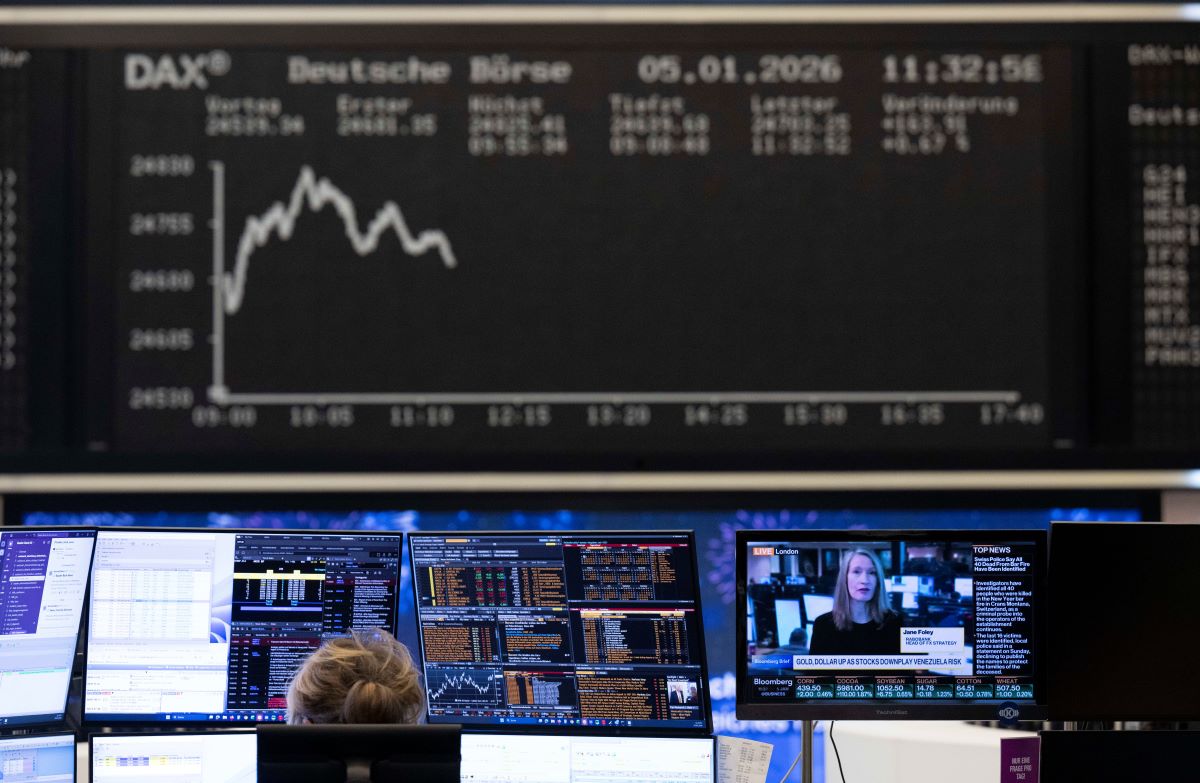
The prospect of a revival of the German economy in the new year drove the Dax to a record high on Monday.
With an increase of up to 1.2 percent to 24,825 points, the German benchmark index had left its old record of 24,771 points from October behind in early trading. Around noon, the stock market barometer was still up 0.7 percent at 24,713 points.
The MDax of medium-sized stocks gained 0.4 percent to 31,104 points. The EuroStoxx 50, the leading index of the eurozone, continued its record course and rose by 0.7 percent.
Since the end of 2025, investors in Germany have been increasingly banking on a revival of the German economy through the government's debt-financed infrastructure and armaments spending package and efforts to reduce bureaucracy.
On Monday, shares from the automotive sector and IT service providers, which mainly serve medium-sized companies and the state, were in demand.
In addition, investors grabbed arms stocks. Rheinmetall, for example, soared by 7 percent at the top of the Dax.
Consumer protection agencies warn of declining cash acceptance
Germany's consumer protection agencies are sounding the alarm over mounting difficulties in using cash for everyday shopping in supermarkets, stores and public services.
Dorothea Mohn, financial expert at the Federal Association of Consumer Protection Agencies, told the German Press Agency on Monday that cash acceptance in retail, gastronomy and administrative services is steadily declining.
This trend risks excluding groups including children and the elderly from social participation. In response, the organisation is advocating for the introduction of quotas for staffed tills in stores or machines which accept cash.
READ ALSO: Card over cash? Why Germany is seeing a new payment preference
With reporting by DPA and Paul Krantz.
Comments