
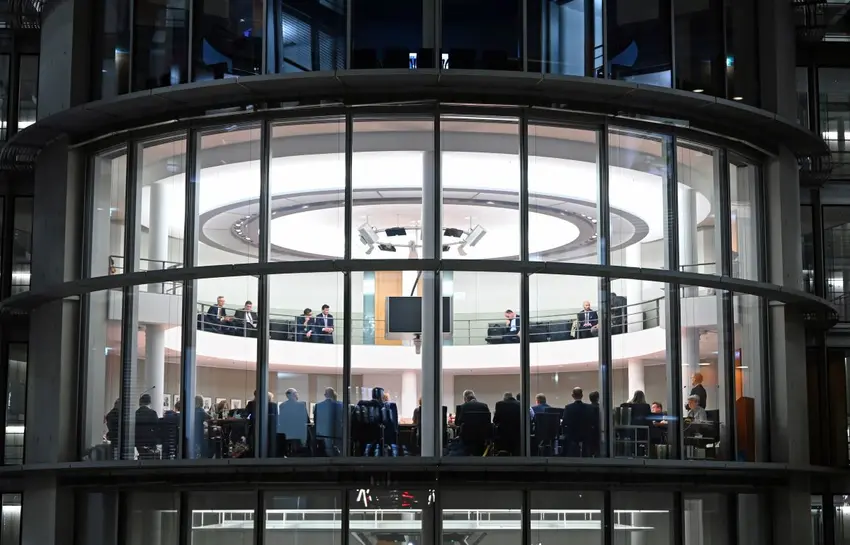
A draft of Germany's federal budget for 2026 was agreed on in the early hours of Thursday by the government's budget committee.
The total planned expenditure stands at €524.5 billion, which is €4 billion more than initially anticipated.
New borrowing will reach nearly €98 billion in the core budget, with overall new debt – factoring in special funds for defence and infrastructure – exceeding €180 billion.
A significant feature is the increase in aid to Ukraine, which will rise by €3 billion to €11.5 billion. Other notable allocations include €800 million in subsidies for climate-friendly home heating, and €50 million to support home renovations for the elderly and disabled -- although this is less generous than a popular federal program it replaces.
The draft budget was finalised in a “reconciliation meeting” (Bereinigungssitzung) in which government leaders negotiate remaining disputes and amendments to the draft budget before it's presented to the German parliament (Bundestag) for the final parliamentary vote. According to German media reports, in this case the meeting dragged on for 15 hours.
This step, scheduled for a session to take place at the end of November, is widely seen as a formality because the black-red coalition has enough seats to pass the budget on their own.
What does the budget mean for you?
For residents in Germany, the most immediate impacts of the latest changes will be felt in mobility, long-term care contributions and heating costs.
READ ALSO: Tax relief - Germany plans VAT cut in restaurants and hike in commuter allowance
Climate-friendly home heating subsidies
From next year, €800 million will be available to help homeowners, companies and municipalities switch to climate-friendly heating systems.
Subsidies can cover 30 percent to 70 percent of installation costs, with extra bonuses for installing efficient heat pumps, replacing old systems early, and also for lower-income households.
Applications must be made via the KfW portal and require a contract with a specialist heating company.
READ ALSO: Seven expert tips to reduce your heating bills in Germany
Social care
In a last-minute decision, an additional loan of €1.7 billion was approved for long-term care insurance on top of the €1.5 billion already planned, with the aim of preventing any increase in contributions for nursing care and health insurance at the start of next year.
Chancellor Friedrich Merz told the press that these contributions would remain stable.
The measure is intended to provide immediate financial relief for people reliant on social care, addressing concerns about rising costs and ensuring continued support for vulnerable groups.
READ ALSO: How you'll be affected by a steep rise in German health insurance contributions
Barrier-free renovations
The 2026 budget sets aside €50 million for renovations to make homes more accessible, especially for seniors and people with disabilities.
Funding can be used for age-appropriate conversions such as bathroom upgrades and removing door thresholds.
The previous programme was highly popular and quickly exhausted. Details of the revived scheme are still pending, but low-interest KfW loans remain available.
Air travel tax cut
From July next year, the air ticket tax – which was raised in 2024 – will be reduced, with the government announcing plans to absorb any revenue shortfall within the wider transport budget.
Environmental groups have criticised the move, which is aimed at making Germany a more attractive proposition for airlines.
Under current plans, it will be up to the airlines themselves to decide whether to pass the savings on to passengers.
READ ALSO: Germany to reverse air travel tax increase next year
Other key additions
- Military spending: Defence receives an additional boost, with the largest-ever aid package for Ukraine and relaxed debt rules for military expenditure.
READ ALSO: Plans emerge for massive rearmament in Germany
- Digital Ministry: For the first time, the new Digital Ministry is included in the budget, with a budget of €1.36 billion. Its aim is to modernise administration and digital infrastructure.
What's the reaction?
The budget has drawn mixed responses.
Sebastian Schäfer of the Green Party called it “a criminal waste of growth opportunities,” while Dietmar Bartsch of the Left Party said, the plan's “mega-debts will only produce mini-growth.”
In contrast, Social Democrat Thorsten Rudolph praised “record investments for more growth, responsibility for security, and smart measures for social cohesion.”
Comments