
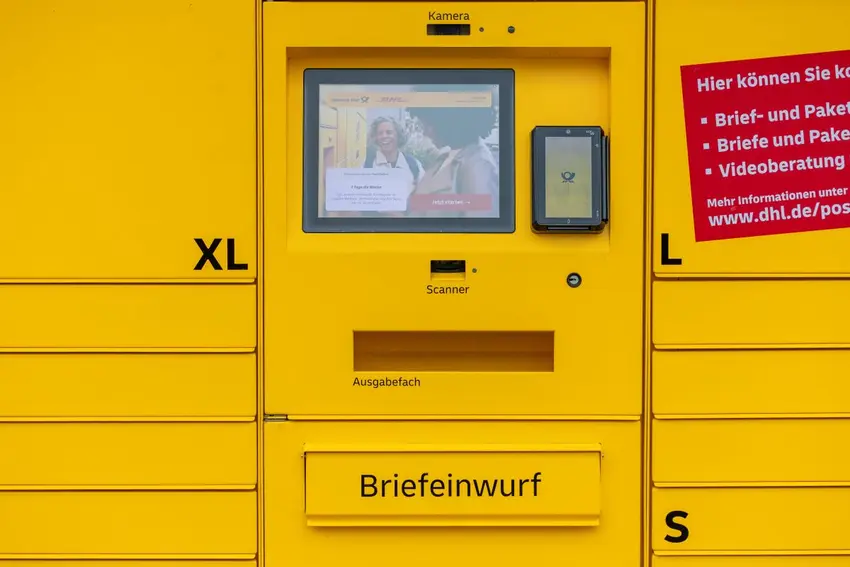
If you’ve recently tried to send a parcel or buy stamps in Germany, you may have noticed a new trend: more and more post office branches are being replaced by automated machines.
This shift is set to transform postal services across the country.
The rise of automated branches
To date, Germany's Federal Network Agency has approved 72 fully automated post office branches, known as Post Stations, in place of staffed branches. Applications for at least 550 more are currently awaiting approval.
These Post Stations operate 24/7 and function as near-complete postal service points, allowing customers to drop off and pick up parcels, buy stamps, send letters and even ask questions via a video link, all without human staff.
The expansion – part of Deutsche Post’s wider strategy to restructure its branch network – comes follows a legislative change in January 2024 which permitted Deutsche Post to use automated machines to meet its nationwide service obligations.
READ ALSO: 'Smart stores' - The new retail trend disrupting Germany's shop-free Sundays
Why is this happening?
The move towards automation is driven by several factors.
Deutsche Post has a legal obligation to maintain a certain number of post offices around the country.
Currently, many are located inside supermarkets, local shops or kiosks. But in rural areas it is reportedly becoming harder for Deutsche Post to find such partners to host their traditional counters.
In order to meet its legal requirements, Deutsche Post currently operates around 1,200 interim staffed branches to fill gaps in the network.
As of September 2025, 160 locations required postal branches but had none, reflecting the ongoing network coverage difficulties.
Legally, automated machines now allow Deutsche Post to meet its network obligations and ensure that even remote communities can still access essential postal services.
As a result, the company is planning to replace it's interim staffed branches (around ten percent of the total) with Post Stations.
READ ALSO: Will German cities have driverless taxis on the roads in 2026?
What does this mean for customers?
If you live in a rural area or on the outskirts of a town, you’re more likely to see these automated branches popping up.
Judging from a very unscientific survey of comments on social media, many users seem to appreciate the new service, particularly tech-savvy customers who value self-service, quick transactions and the freedom from traditional opening hours.
But a number of users highlight challenges such as technical glitches, occasional locker capacity issues and limited assistance for customers who have problems using the automated services.
Some users expressed concerns about the loss of personal interaction and customer service quality compared to staffed branches.
READ ALSO: Why sending post in Germany will get more expensive in 2025
The shift to increasing automation comes at a time when Deutsche Post and its competitors are attracting an unprecedented number of complaints.
The Federal Network Agency received 22,981 complaints from consumers in the first half of 2025 – an increase of 13 percent over the previous year according to reporting by ARD.
Deutsche Post acknowledged personnel shortages as a contributing factor, initially downplaying the problems but later admitting local difficulties.
In response, the company increased wages for its 170,000 employees but also announced plans to cut 8,000 jobs before the end of the year as part of a continuing drive to reduce costs.
Comments (1)