
Monday's top story: Mass cull ordered near Berlin as Germany battles bird flu
German authorities said Sunday they have ordered the culling of around 130,000 ducks and chickens on farms near Berlin as the country battles a surge in bird flu cases.
The disease has been detected in a duck farm with around 80,000 birds and a broiler chicken farm with around 50,000, the Märkisch-Oderland district in Brandenburg said in a statement.
"The veterinary office has decided, in consultation with the relevant authorities, to remove the affected animals for animal welfare and health reasons," the statement said.
Several German states have introduced measures to slow the spread of bird flu, including surveillance zones and orders to keep birds in stalls.
German Agriculture Minister Alois Rainer warned on Friday there had been a "very rapid increase in infections" over the past two weeks.
Germany's national animal disease research centre, the Friedrich Loeffler Institute (FLI), has warned of a "high" risk from the outbreak.
READ ALSO: 'Rapid increase' in bird flu in Germany, minister says
Because wild birds are affected -- including, for the first time, cranes -- the FLI warned that "further, possibly widespread transmission" is to be expected.
Authorities have urged the public to avoid contact with sick or dead animals.
The FLI has warned that bird-to-human transmission is possible in theory, although the actual danger is believed to be low.
Interior minister wants schools to teach crisis preparedness
Interior Minister Alexander Dobrindt wants crisis preparedness formally integrated into Germany’s school curriculum, citing concerns about national resilience in the face of threats such as war or natural disasters.
Dobrindt, a member of the CSU, will urge his counterparts at the upcoming Interior Ministers’ Conference to introduce annual double-lessons for older students, focusing on possible threat scenarios and practical steps for personal and family readiness.
He emphasised that children play a crucial role as knowledge-multipliers within families.
Alongside the education initiative, Dobrindt highlighted broader civil protection reforms, such as expanding shelter capacity in public facilities and ensuring homes are equipped with basic emergency supplies, like flashlights and radios.
He said that these measures are prudent precautions, not cause for panic.
In response Nicole Gohlke, deputy chair of the Left Party faction in the Bundestag, told the AFP news agency, “I consider this scaremongering, especially among children and young people, to be unacceptable.”
READ ALSO: What will Germany's new conscription law mean for young Germans and dual nationals?
Munich voters approve plan to bid for Summer Olympics
A strong majority in the German city of Munich voted in favour of a bid to host the Summer Olympics in 2036, 2040 or 2044 in a referendum on Sunday.
Early results showed around 62 percent of voters in the Bavarian capital voted in favour.
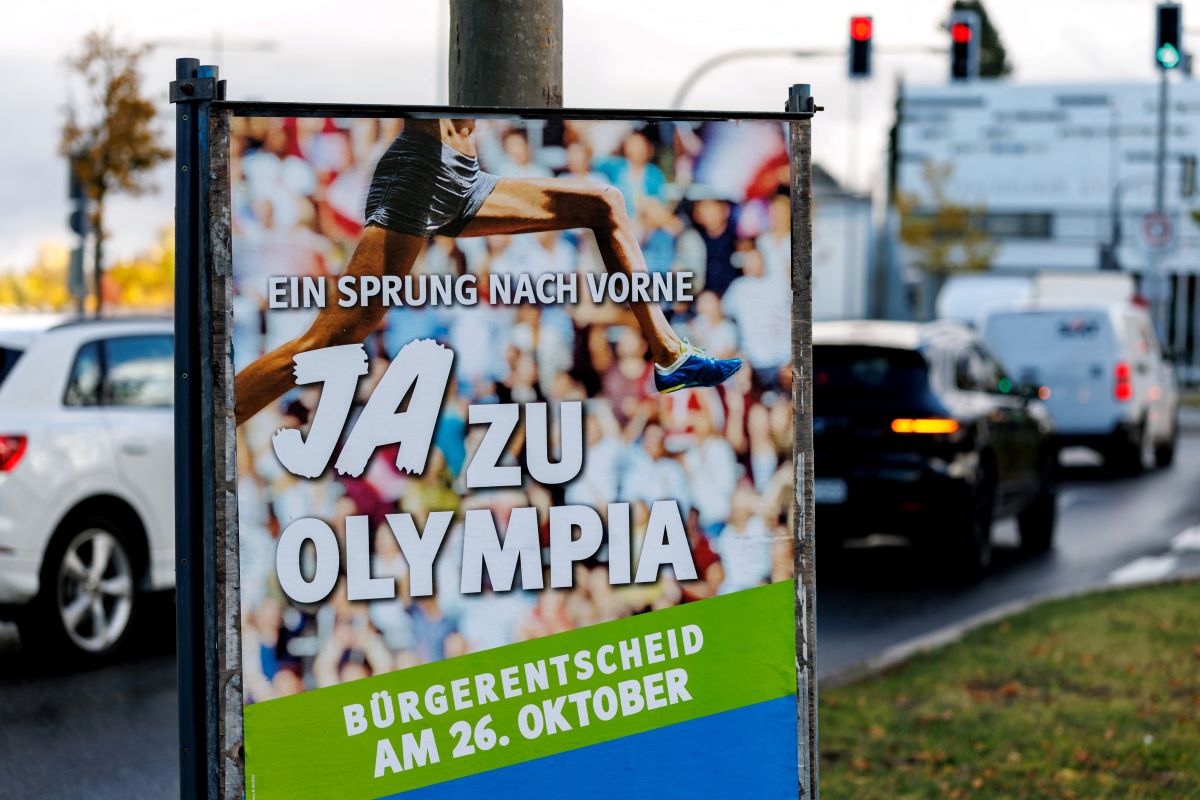
With at least 39 percent of Munich's 1.1 million eligible voters taking part, the turnout was the highest for a referendum in the city's history.
Munich last hosted the games in 1972. The Bavarian capital is one of four German regions developing a bid to host the games and was the first to hold a vote to gauge support.
Berlin, Hamburg and the Ruhr region are also developing bids, with referenda to be held in 2026.
The German candidate will be selected by the German Olympic Sports Confederation (DOSB) late in 2026 before being submitted to the International Olympic Committee (IOC).
Voter willingness to host the Olympics has dwindled in many European cities in recent decades, due largely to concerns over cost.
An estimated €6.7 million was spent on Sunday's referendum alone.
The previous seven German bids to host the Summer or Winter Olympics games failed due to popular opposition.
SPD deputy leader joins demo against ‘cityscape’ comments, drawing criticism
Senior CDU politician Steffen Bilger has sharply criticised SPD deputy parliamentary leader Wiebke Esdar for joining a demonstration in Bielefeld against Chancellor Friedrich Merz’s recent “cityscape” comments on migration.
Bilger told the Tagesspiegel that it was irresponsible for a leading SPD figure to protest against the head of their own coalition government.
Esdar defended her participation, saying she was exercising her right to protest and that the rally’s motto, “We are the cityscape,” reflected support for a diverse and inclusive community free from discrimination.
READ ALSO: OPINION - Merz's divisive comments are a distraction from real problems in Germany
Demonstrators across Germany have been voicing anger over Merz’s remarks in recent days, which critics interpreted as discriminatory. The CDU has emphasised the need for greater coalition unity amid growing public scepticism about the government’s cohesion and leadership.
Cooling towers demolished at nuclear power plant
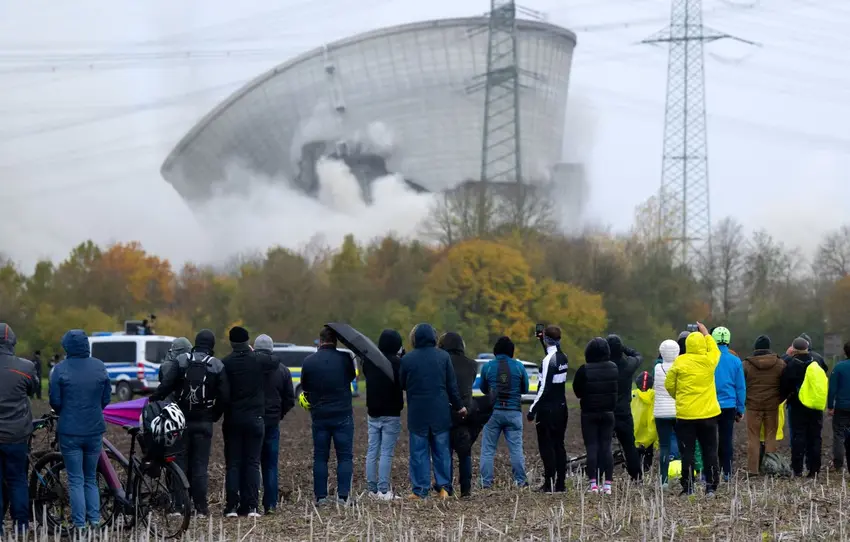
In Bavaria, two cooling towers at the decommissioned Gundremmingen nuclear power plant were demolished at the weekend, marking a major milestone in Germany’s ongoing nuclear phase-out.
The towers, which had dominated the local skyline for nearly six decades and symbolised the town’s industrial legacy, collapsed within seconds after controlled explosions using some 600 kilograms of explosives and 1,800 boreholes.
Thousands of residents and visitors gathered to witness the spectacle, with local authorities setting up special viewing zones and some pubs hosting demolition parties.
The Gundremmingen site had already closed its reactors in 2021 as part of Germany’s transition away from nuclear energy.
Following the successful demolition, the plant’s dismantling will continue, with full site remediation expected by 2040.
With reporting by AFP and DPA.
Comments