

Today's top story: Merz hails Gaza hostage release as 'start of healing'
German Chancellor Friedrich Merz on Monday hailed the release of the 20 surviving Israeli hostages by Hamas as "the start of healing" and a step towards Middle East peace.
"Two years of fear, pain, and hope are behind them. Today, families can finally embrace their loved ones again," he posted on X after the handover of the hostages, four of whom are German nationals.
"The murdered hostages must also return home so that their families can say goodbye with dignity."
German ambassador to Israel, Steffen Seibert, greeted the release of the hostages, including those who also have German nationality – Rom Braslavski, twin brothers Gali and Ziv Berman, and Alon Ohel.
"Rom, Gali, Ziv and Alon – to see you free and on your feet makes this one of the happiest days in a long time," Seibert wrote on X.
"All of us at the German Embassy salute you and your heroic families – and welcome you home."
Rents in large German cities have risen by around 75 percent since 2013
The Ifo Institute in Munich warns that rising rents in Germany’s largest cities are becoming a major economic and social problem.
A new study from the institute shows that since 2013, rents for new apartment contracts in the seven biggest German cities have increased by around 75 percent, while rents for existing contracts have only risen moderately.
This growing gap means tenants with older contracts benefit from more stable prices, but newcomers face significantly higher costs – up to several hundred euros more for comparable apartments.
Oliver Falck from Ifo explained that this trend threatens urban economic strength as workers may no longer afford to live in major metropolitan areas.
In cities like Berlin, Munich, and Hamburg, new rents are on average 70 percent, 45 percent, and 37 percent higher than existing rents, respectively.
READ ALSO: Almost all rents in Berlin found to be illegally high
The rising cost burdens especially affect lower-income households, reducing mobility and limiting workforce availability.
The Ifo researchers call for more efficient use of existing housing, faster approvals, and targeted affordable housing initiatives to address the crisis.
Germany’s wolf population developing ‘favourably’ says Environment Ministry
The German wolf population is expanding steadily across much of the country, a development deemed “favourable” by the federal government in a recent report to the EU.
Environmental Minister Carsten Schneider emphasised that the wolf has become a firmly established part of Germany’s natural landscape.
This positive growth has led to a shift in policy, with some German leaders now pushing plans to ease up on hunting restrictions and conservation laws.
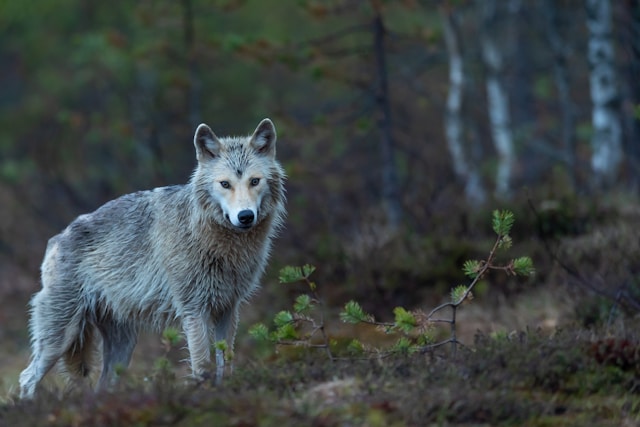
The report reclassified the wolf’s conservation status as “favourable” beyond the northwest Atlantic region to include the continental region covering most of Germany. This change allows for more regionally tailored management, including allowing the hunting of wolves that have been known to attack sheep and cattle.
Bavarian officials criticised the federal government for insufficient support to alpine farmers. Suggesting that conservation efforts should be rolled back in that region as well.
Members of the ruling coalition have pushed for incorporating the wolf into federal hunting law, which would enable hunting them more quickly.
How to manage wolves has long been a contentious issue in Germany, with the agriculture lobby pushing to hunt them while conservationists say that better support for farmers -- in the form of electric fences or wolf dogs -- would be more effective solutions.
Foreign intelligence chief names Russia as Germany's biggest threat
The German intelligence services warn of an acute threat from Russia and a possible escalation in relations at any time.
"We must not sit back and assume that a possible Russian attack would not come until 2029 at the earliest. We are already under fire today," warned the President of the Federal Intelligence Service, Martin Jäger, in front of members of the Bundestag.
Jäger was joined by the leaders of Germany's domestic and military intelligence agencies.
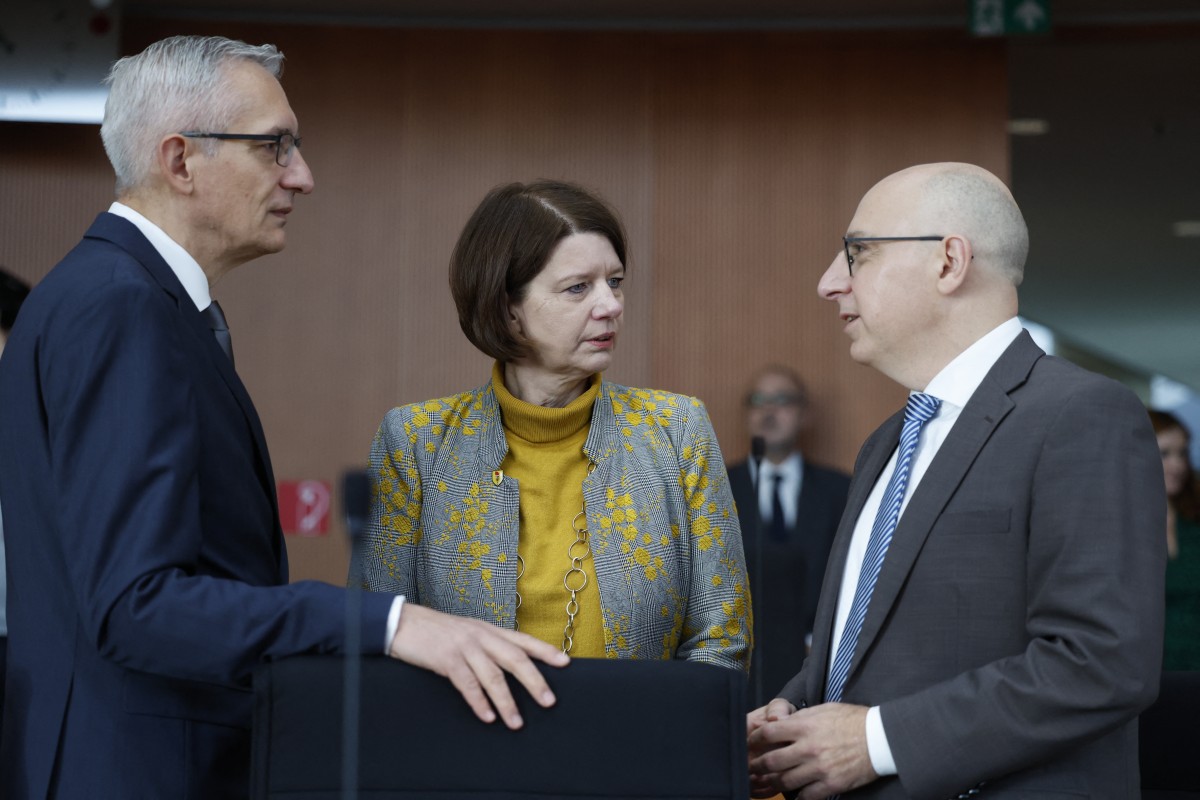
Although they mentioned other threats, such as political and religious extremism, it was Russia that dominated their remarks.
Jäger said Germany is Russia's "number one target in Europe", given that it is the largest EU economy and plays a "leading role in supporting Ukraine".
The warnings come after a series of incidents in the European Union, including the incursion of Russian drones into Poland and the violation of Estonian airspace by Russian fighter jets.
In Germany, Russia is suspected to be behind a slew of recent drone incursions, including incidents that halted flight operations at the Munich airport. Authorities also suspect Russia of waging sabotage and disinformation campaigns.
READ ALSO: How can Europe protect its skies against 'escalating' drone menace?
IMF presents new global economic forecast on Tuesday
The International Monetary Fund (IMF) will present its new forecast for the further development of the global economy on Tuesday in Washington.
Among other things, the effects of the tariffs pushed by US President Donald Trump should be interesting. However, the full extent of US tariff policy is yet to be seen.
IMF Managing Director Kristalina Georgieva had already warned, "Uncertainty is the new normal and it is here to stay."
In July, the IMF had forecast global growth of 3.0 percent for the current year, and the outlook for 2026 is 3.1 percent.
For Germany, the organization expected mini-growth of 0.1 percent this year and growth of 0.9 percent for 2026. Germany has thus far remained the problem child among the leading industrial nations.
READ ALSO: 'Bürgergeld is history' - How Germany's unemployment benefit is being reformed
With reporting by AFP and DPA.
Comments