
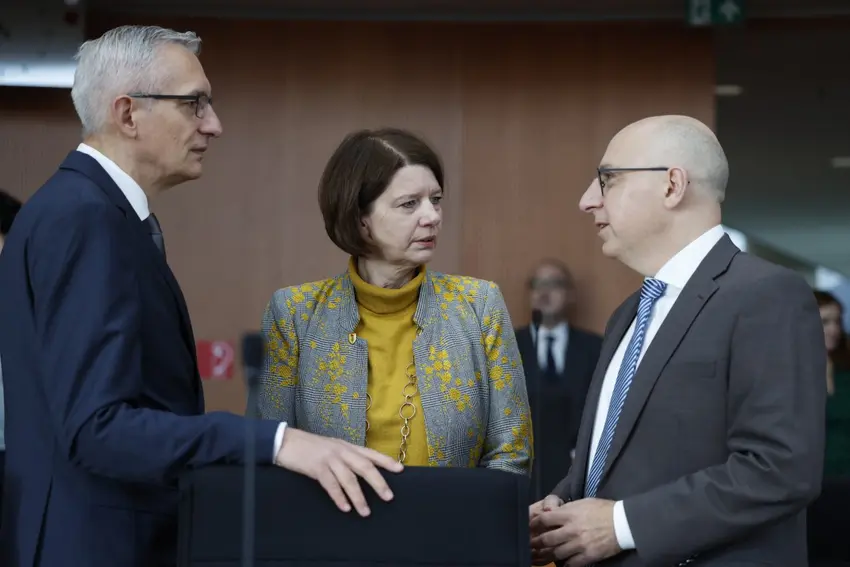
Martin Jäger, head of the BND spy service, told lawmakers that Russia was determined to expand its "sphere of influence further westward into Europe".
"To achieve this goal, Russia will not shy away from direct military confrontation with NATO if necessary," Jäger, who took his post last month, said at a public briefing with MPs in Berlin.
Jäger was joined by the leaders of Germany's domestic and military intelligence agencies.
Although they mentioned other threats, such as political and religious extremism, it was Russia that dominated their remarks.
Jäger said Germany is Russia's "number one target in Europe", given that it is the largest EU economy and plays a "leading role in supporting Ukraine".
The warnings come after a series of incidents in the European Union, including the incursion of Russian drones into Poland and the violation of Estonian airspace by Russian fighter jets.
In Germany, Russia is suspected to be behind a slew of recent drone incursions, including incidents that halted flight operations at the Munich airport. Authorities also suspect Russia of waging sabotage and disinformation campaigns.
'Under fire'
Jäger, who previously served as German ambassador in Kyiv, argued that Russian ambitions and aggression were not limited to the Ukraine war.
"We must not sit back and assume that a possible Russian attack would come in 2029 at the earliest," Jäger said, referring to an earlier intelligence assessment. "We are already under fire today."
READ ALSO: Military reserves and ravioli - How Germany is stepping up preparations for war
"The means Moscow uses are well-known – attempted manipulation of elections and public opinion, propaganda, provocations, disinformation, espionage, sabotage, airspace violations by drones and fighter jets, contract killings, persecution of opposition figures living abroad," Jaeger said.
Sinan Selen, president of the German domestic intelligence service (BfV), said recent drone incidents underscored the potential "hybrid threat" to Germany and its European allies.
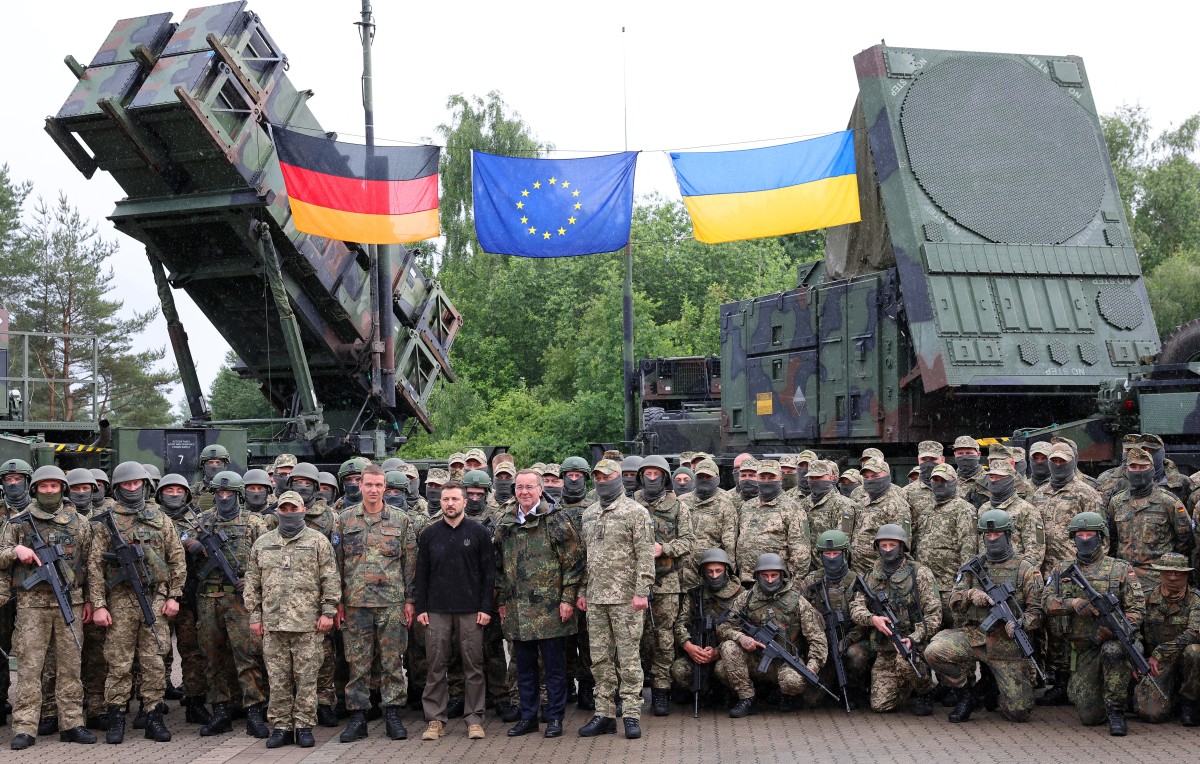
"Russia is aggressively pursuing its political ambitions against Germany, the EU and its Western allies," said Selen, who described Russian conduct as "increasingly escalatory".
"Russian services continuously adjust the levels of escalation of their activities with the strategic aim of weakening liberal democracies," Selen said.
Jäger likewise said his agency has seen a clear increase in attempts by foreign powers to "influence German domestic politics and government decision-making" – but added that Russian spies are operating in ways that "make it very difficult to trace and attribute".
Spy service overhaul
Faced with the worsening Russian threat, German intelligence services are struggling to adapt. Lawmakers are preparing an overhaul of legislation governing the secret services to give them more suitable capabilities.
The chairman of the oversight committee, conservative MP Marc Henrichmann, argued that those reforms should be "a priority", while also urging the agencies to take responsibility.
READ ALSO: Who would be affected by Germany's new military service law?
Moscow appeared determined to undermine the NATO alliance and destabilise European democracies, he said.
His deputy, opposition MP Konstantin von Notz from the Greens Party, said authorities need to better communicate the scale and severity of the danger to the broader public.
Citing examples of railway sabotage, drone intrusions and online influence operations around elections, von Notz called for "all of this to be documented and communicated".
"We need a monthly report from the intelligence services so that the German public knows where things stand," he insisted.
Comments