
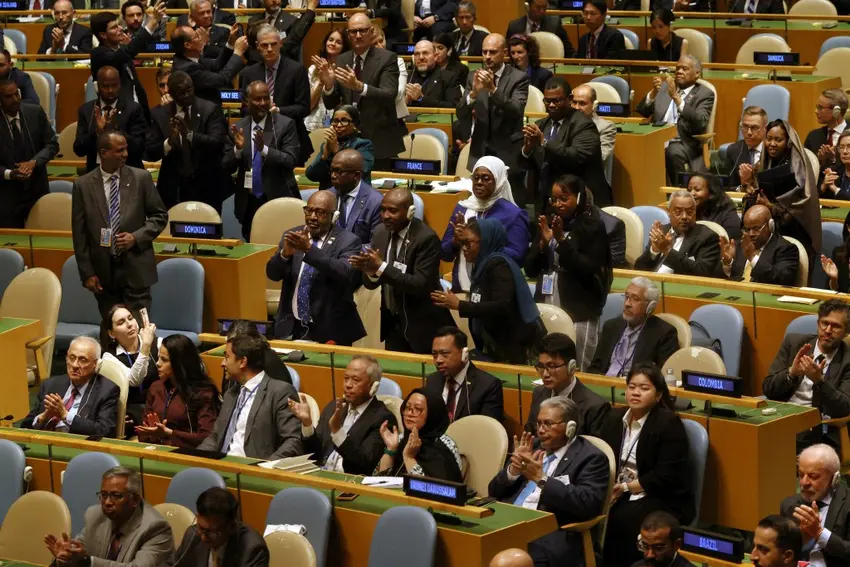
Tuesday's top story: Germany resists recognising a Palestinian state as allies move forward
France, Belgium, Monaco, Luxembourg, Malta and Andorra all formally recognised a Palestinian state at a meeting at the UN. This followed Great Britain, Canada, Australia and Portugal which had all recognised Palestine at the weekend.
But the growing wave of recognition among its allies has not officially changed Germany's position.
Speaking for Germany, Foreign Minister Johann Wadephul stressed that recognition of Palestine could not be at the beginning - but only at the end on the way to a two-state solution. However, he added that a negotiation process between Israel and the Palestinians must "begin now".
Recognition of Palestine as a state is seen by many European countries as the crucial first step toward implementing a two-state solution.
Germany doing so would be largely a symbolic gesture, but it would represent a change of tune from one of Israel's staunchest allies.
In light of its historical responsibility for the Holocaust, Germany has made support for the State of Israel a cornerstone of its foreign policy.
But Berlin has grown increasingly critical of the Israeli campaign in Gaza and its impact on Palestinian civilians in recent months as the humanitarian situation has worsened, with the UN declaring famine in parts of the coastal territory.
The US and Israel both did not attend the Palestine summit.
German police probe political motive as severed cables halt trains
German police said Monday that they were investigating a possible "political motive" after train cables were cut between Cologne and Düsseldorf, with the country on high alert for sabotage from Russia and others.
There was considerable disruption to services in the region, Cologne police said, adding that "a political motive cannot be excluded at this time".
Officers specialised in politically motivated crime are investigating and "preliminary leads have been identified", police said.
Earlier this month, tens of thousands of people were left without power in the capital Berlin after a fire hit electricity cables in what police labelled a suspected arson attack.
In that case too, police said they were investigating a possible political motive after an unnamed anarchist group posted online that it had set the blaze.
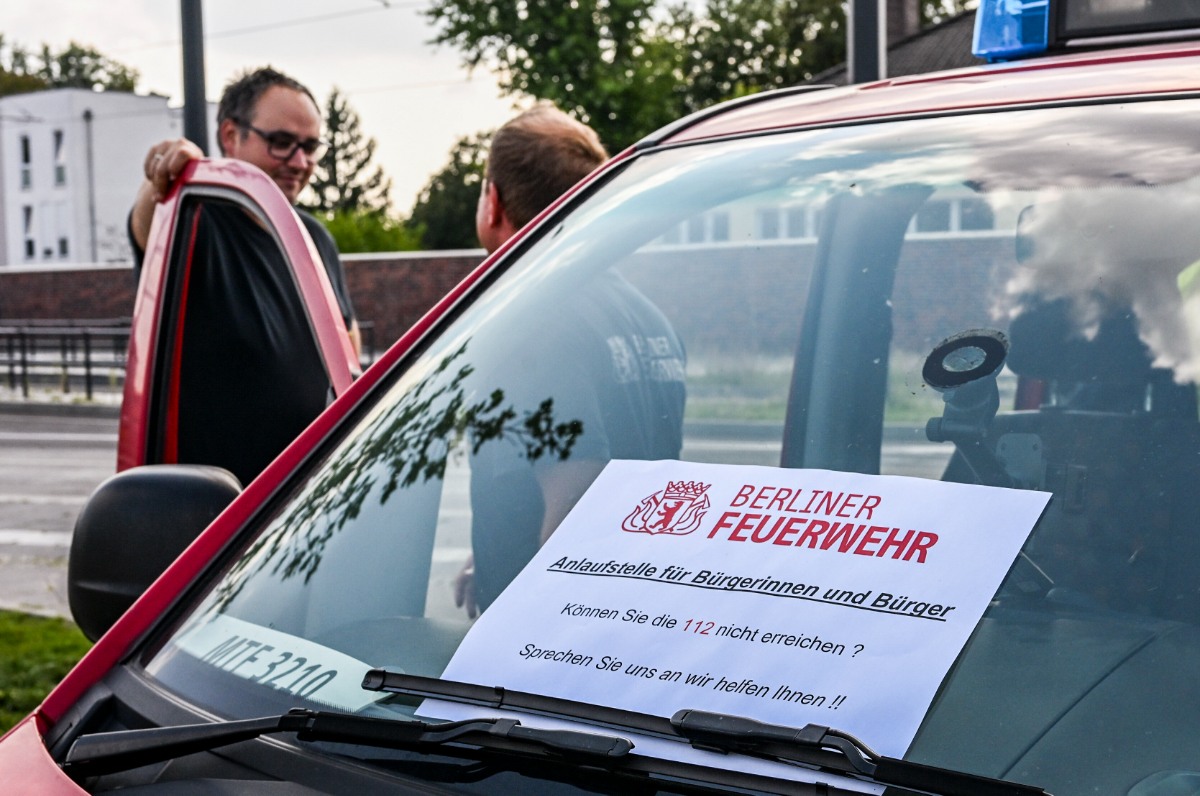
Last month three fires hit parts of the German rail network, with a far-left group calling itself the "Angry Birds Kommando" saying it was behind at least one of them.
Germany has been the second-biggest supplier of aid to Ukraine after Russia's full-scale invasion in 2022, and has accused Moscow of increasing efforts at "hybrid warfare".
Last week a report co-authored by the domestic intelligence agency found that the costs to German businesses from cyberattacks and sabotage, mainly from Russia and China, topped €289 billion over the past 12 months.
READ ALSO: Military service and ravioli reserves - How Germany is stepping up preparations for war
German authorities recently launched a campaign warning against Russian efforts to recruit "disposable agents" via social media to carry out acts of espionage and sabotage.
Bureaucracy costs German economy 67 billion, says study
Bureaucracy in Germany cost the economy a good €67 billion in 2024. This is shown by a new study by the Association of Research-Based Pharmaceutical Companies (VFA), which was shared with DPA.
The sum corresponds to around one and a half percent of the country's economic output.
Bureaucracy reduces productivity and ties up resources that cannot be used elsewhere, for example in research and development or production.
"It is therefore a locational advantage if bureaucratic processes can be implemented with as little effort as possible – for example, automatically and digitally," writes the VFA, adding that Germany risks "losing its attractiveness" if the problem isn't resolved.
READ ALSO: 'Be stubborn' - How foreign residents grapple with German bureaucracy
The costs are conservatively estimated and, according to the association, are incurred almost exclusively because of the working hours necessary for bureaucracy.
In the pharmaceutical industry, every fifth working hour is spent on documentation and reporting obligations, according to the paper.
Duisburg challenges Berlin as birthplace of currywurst
Berlin may be famed for its currywurst, but two Ruhr region authors claim the iconic German sausage snack was actually invented in Duisburg long before its celebrated Berlin debut.
Gregor Lauenburger and Tim Koch uncovered evidence that Peter Hildebrand – known locally as Peter Pomm – created currywurst as early as 1936 at his snack bar “Peter Pomm's Pusztetten-Stube” in Duisburg’s Marxloh district. As a result, Duisburg’s mayor has proudly had a plaque installed at the original snack bar, proclaiming the city the true birthplace of currywurst.
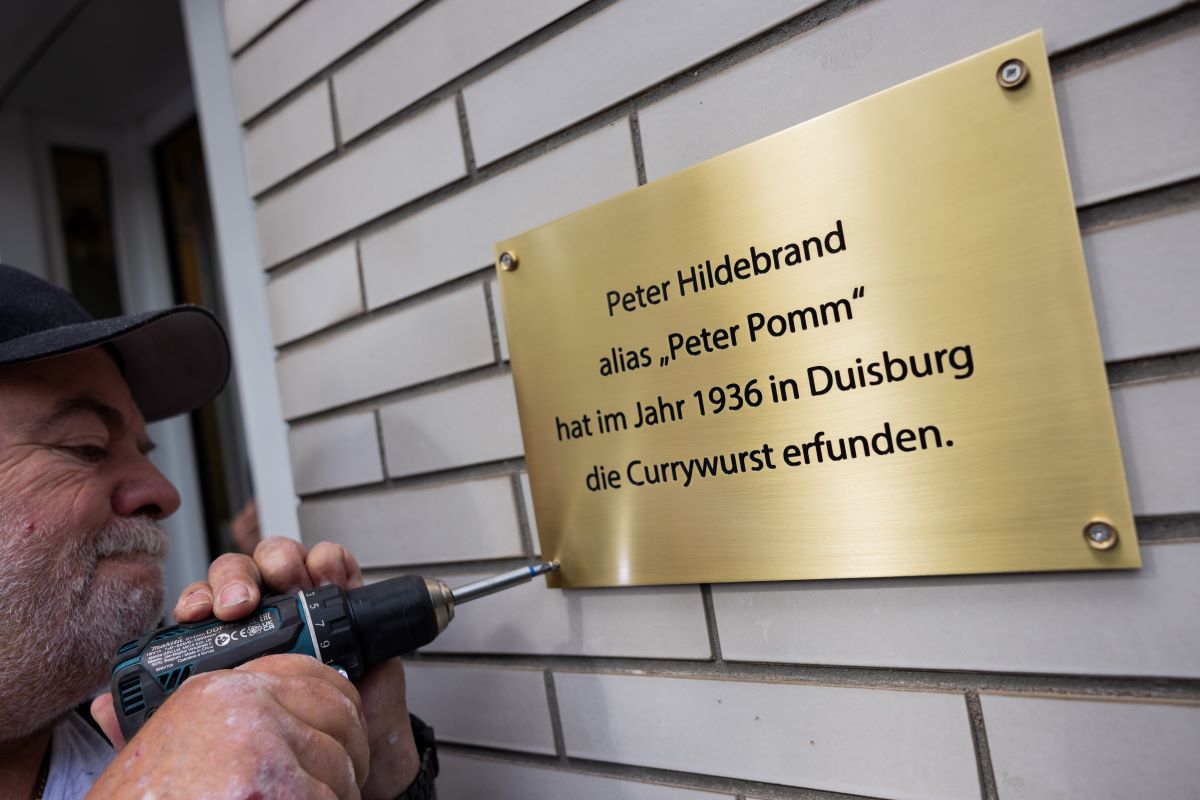
Hildebrand cooked sausage in hot tomato sauce, adding English curry powder to create a dish popular among factory workers but kept it secret during the Nazi era due to its “enemy” seasoning.
Currywurst is a fast-food dish typically made of sausage sliced and served with a curry-spiced ketchup sauce. The most widespread origin theory credits Herta Heuwer in Berlin with inventing it in 1949 by mixing ketchup and curry powder obtained from British soldiers and pouring the sauce over sliced sausage.
The authors’ claim is based on invoices showing Hildebrand purchased English curry as early as 1935, as well as multiple contemporary witness reports.
Young men make up large number of people who drowned in Germany this year
At least 321 people drowned in German waters this year by mid-September. That was 33 fewer than in the same period last year, according to the German Life Saving Society (DLRG).
But an increase in young men is particularly striking.
In the age group of 21 to 30 years, a total of 45 people died. Of these, all but one were male.
DLRG President Ute Vogt said, "Men of all ages continue to have accidents much more often. They misjudge their physical condition, misjudge dangers more often...and also go into the water more often under the influence of alcohol."
According to the DLRG, most of the victims died in lakes and ponds: 142 people died here, ten more than in the same period last year. In rivers and streams, 116 people drowned, significantly fewer than in the previous year.
With reporting by AFP, DPA and Tom Pugh.
Comments