
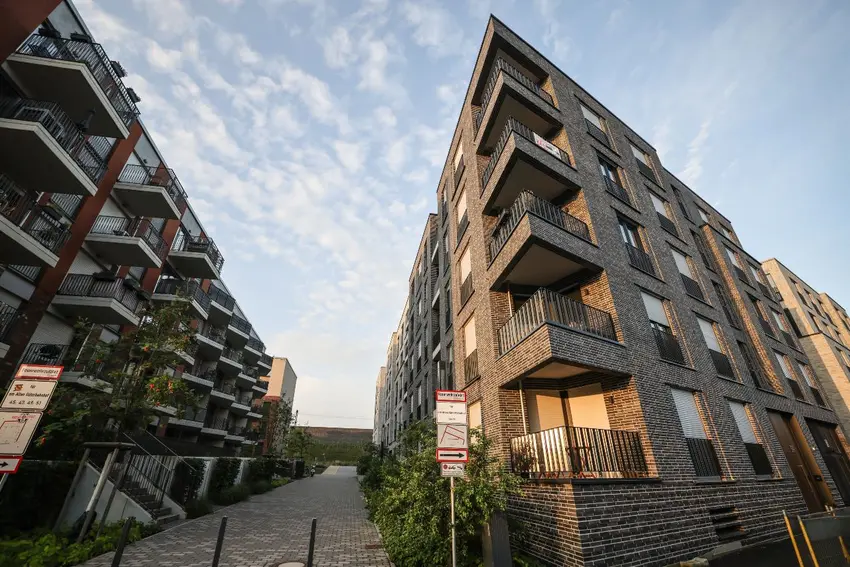
Last year, the average size of an apartment in Germany was 94 square metres, considerably more space than it was a decade ago, according to Germany’s Statistical Office (Destatis).
Also the average amount of living space per person across the country was 49.2 square metres.
Since 2014, the average apartment has grown by 2.5 square metres, and the average living space per occupant by 2.7 square metres.
This trend toward more living space per resident has been developing for many years. In 1991, people had an average of just under 35 square metres per capita at their disposal, according to earlier data.
What explains the trend?
The findings may at first seem counterintuitive, given the well-known housing shortage in cities like Berlin and Munich. But one key explanation for why the living space per person is going up appears to lie in Germany’s aging population.
READ ALSO: Which German cities are the most in need of new housing?
Many older residents in the country live in larger homes built decades ago – some exceeding 140 square metres – and are frequently reluctant or unable to move.
Reporting by the German Press Agency indicates that many prefer to remain in the homes they’ve lived in for years. They like the area, enjoy the space and need the extra rooms for when their children and grandchildren visit.
Anecdotally, it also seems likely that many are unable to downsize even when they want to. A rental contract signed years or decades ago often means it’s cheaper to stay in a large apartment than it is to move to a smaller apartment at today’s prices.
Another factor behind the trend is the rise of single-person households, which now account for more than 50 percent of households in major cities such as Hamburg.
READ ALSO: How foreign residents in Germany are winning rent reductions
Typically, single occupants tend to live in apartments of 40 square metres or more, whereas multi-occupant households often share about 70 square metres.
Commenting on the latest figures, Max Herbst, founder of Frankfurt-based FMH-Finanzberatung, said: “Two people can live wonderfully in 60 or 70 square meters. Alone, people say that anything less than 40 square meters is unacceptable.”
More space doesn’t mean more availability
As to why the average apartment size has gone up, it is partially explained by larger apartments being built in recent years.
Rather than implying less pressure on the housing market, the trend towards larger apartments is actually increasing pressure on Germany’s already strained housing market.
The total area of all apartments grew by nine percent between 2014 and 2024 as a result of new construction, but the country’s housing stock only grew by six percent.
The trend towards larger apartments had a negative impact on the actual number of apartments built, in other words. And larger living spaces, combined with high demand in urban centres, push rents and property prices up rather than down.
READ ALSO:
- How much do you need to earn to rent an apartment in Germany?
- Almost all rents in Berlin found to be illegally high
Of course, other factors are driving the housing crunch in Germany more directly. Significant causes include a lack of construction, the growth of short-term rentals and an increase in apartments being left empty by their owners.
Government initiatives to meet demand
In May this year, Chancellor Friedrich Merz (CDU) estimated the housing shortage in Germany at “500,000 or more.”
This broadly aligns with a study by the Federal Institute for Research on Building, Urban Affairs and Spatial Development (BBSR) which concluded that around 2.56 million apartments need to be newly built or otherwise added to the German rental market by 2030 to meet growing demand.
In the face of sluggish housing growth and rising rents, the government has pledged a plan for “turbo housing construction” to speed up building and ease pressure.
For now the number of new homes being built appears to be slowing. Germany’s Ifo Institute only expects 205,000 apartments to be completed this year, around a fifth less than in 2024.
With reporting by DPA.
Comments