

If you're feeling like you've heard a whole lot of federal budget news as of late, you're not wrong.
It was only a month ago that the federal budget plans for this year were approved, and then at the top of July further changes were made to that budget.
READ ALSO: Tax cuts and pensions - How Germany's budget changes could impact you
Germany's previous traffic light government failed to pass a budget for 2025 when talks broke down between the Social Democrats (SPD), the Greens and the Free Democrats (FDP). So now the new black-red coalition, of the Christian Union parties (CDU/CSU) and the SPD, have been moving to draft and approve budgets for both 2025 and 2026.
The draft budget approved on Wednesday July 30th is for 2026. To sum it up concisely, it promises more money for just about everything: from bridges and railway lines, to the German army, as well as digitalisation and education.
In this sense, the budget agreement can be seen as the conservatives trying to make good on their previous campaign promises to stimulate the economy and boost Germany's infrastructure and defences.
Presenting the draft budget in Berlin, Finance Minister Lars Klingbeil (SPD) said, "We are investing in the future now so that our country will be more modern, fairer and safer tomorrow."
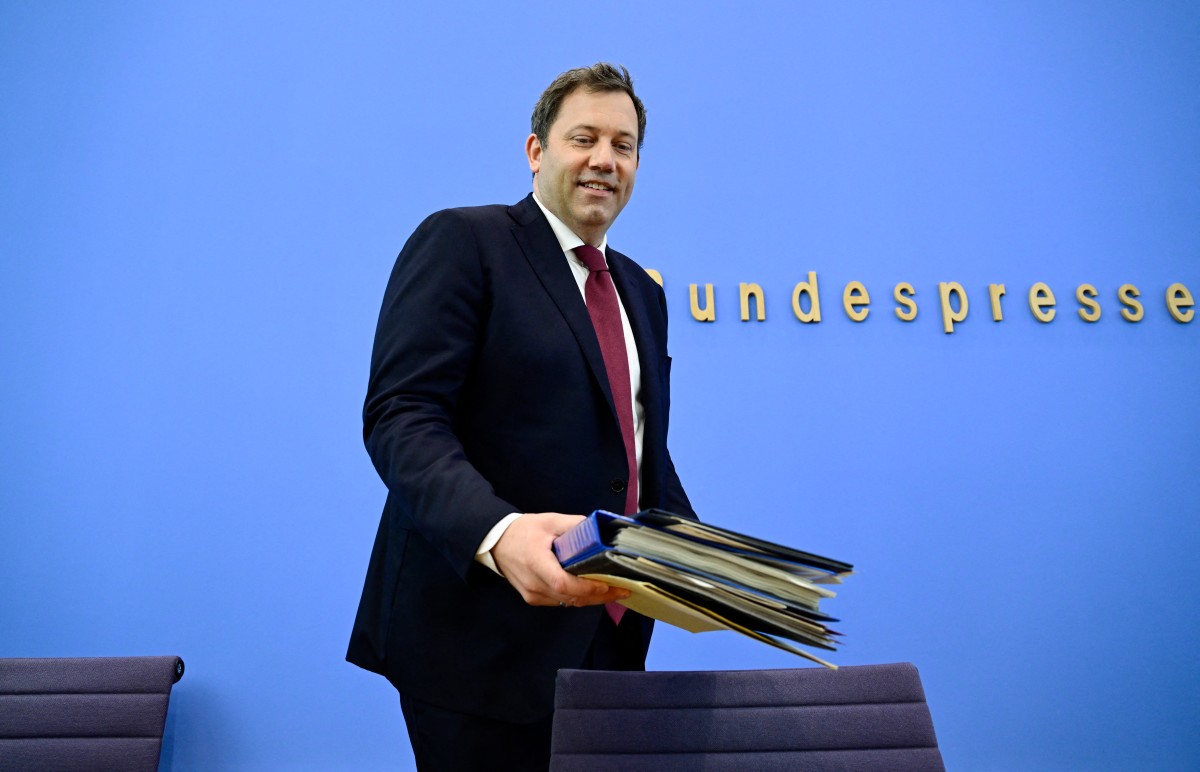
However, the spending requires that the government take on significant new debt, and there still isn't funding for key tax cuts that had been proposed.
Here's the plan as things stand:
Big figures
A total expenditure of €520.5 billion is planned for 2026, which is 3.5 percent more than is expected for this year.
The biggest portion of the budget is to go to the Ministry of Labour and Social Affairs, at around €197.4 billion. Most of that is for an increase in subsidies to the pension insurance scheme.
Around €41 billion is budgeted for the long-term unemployment benefit (known as Bürgergeld), including support for accommodation and heating in 2026. This is around €1.5 billion less than is planned for the current year because the government is counting on a revival of the labour market and a falling number of benefit recipients.
FACT CHECK: Are immigrants in Germany taking advantage of the welfare state?
Large investments are also planned, including in the renovation of Germany's rundown bridges and railway lines, and towards improving digitalisation and education.
The German army (Bundeswehr) is to receive significantly more money next year - its budget is set to be increased by about 32 percent to around €128 billion.
Strengthening the German military was among the chief reasons that government leaders pushed to relax the debt brake earlier this year. Defence spending is expected to continue to rise massively in the coming years amid the geopolitical instability in Europe.
READ ALSO: Germany has ditched the debt brake, but what will the consequences be?
What services are being funded?
Several projects announced in the black-red government's coalition agreement are expected to be funded next year.
Among these are subsidies for social housing, more money for Kitas, and a continuation of the Deutschlandticket.
A reduction of VAT on food in restaurants is also planned, plus an increase in the commuter allowance.
What's not being funded?
The draft notably does not include funding for a reduction in taxes on flights. Last year, an aviation tax was increased.
There is also no mention of an electricity tax reduction for private households, which was suggested in the conservative's election campaign. This would cost an additional €5.4 billion.
"At the moment, there is no foreseeable room for manoeuvre in the federal budget," government sources told DPA.
Cuts are planned for development spending, and job cuts are planned in the federal administration, and in security agencies.
Can Germany afford it?
To help fund next year's budget, the government plans to take out €89.9 billion in new loans, as well as taking €84.4 billion from the special funds recently set up for infrastructure and climate protection.
German leaders are faced with mounting budget constraints, as their plans for boosting the economy, defence and revitalising infrastructure are quickly adding up to a hefty price tag. In the following years, from 2027 to 2029, a €127 billion gap is forecast.
"The 2027 budget will be an enormous challenge for the government," Finance Minister Klingbeil said, hinting that austerity measures are likely to follow.
READ ALSO: How could welfare reforms in Germany affect you?
With reporting by DPA.
Comments