
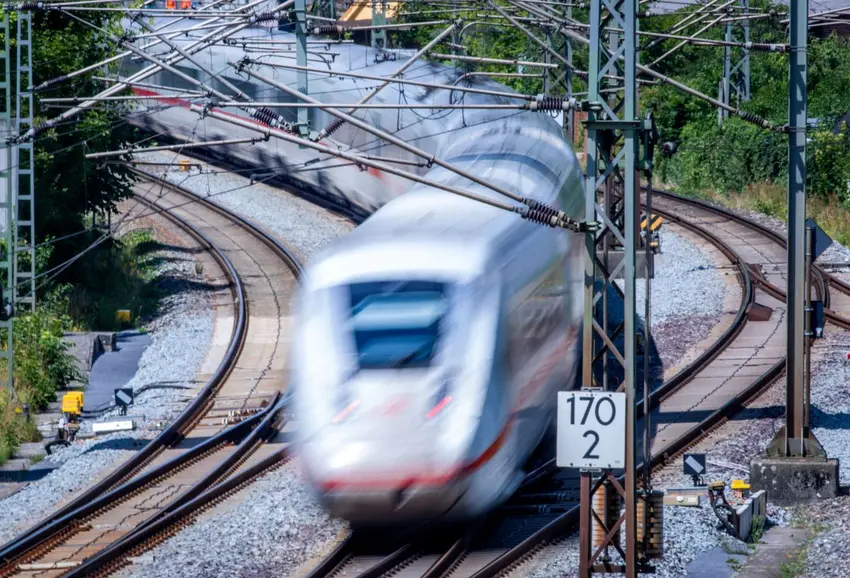
From August 1st, construction on the railway between Berlin and Hamburg will disrupt services between the two cities.
The Berlin–Hamburg railway line is one of Germany’s busiest and most important intercity connections, serving nearly 11 million passengers a year with around 470 trains operating daily.
Much of Germany's railway infrastructure has become dilapidated and outdated in recent years, leading to nightmarish delays and disruptions for passengers and freight traffic. Now Deutsche Bahn (DB) is embarking an upgrade of the Berlin-- Hamburg line as part of a revitalisation of the nation's railway, which aims to improve punctuality and enable more advanced rail operations.
Here's what passengers need to know:
Work on the line starts on August 1st, 2025, and is scheduled to continue until April 30th, 2026 – which will disrupt traffic on the line for nine months.
READ ALSO: Why Germany's nationwide rail upgrade faces a four-year delay
During this period, more than 180 kilometres of track and 200 switches will be renewed. According to DB, six new transfer points will be installed to allow faster trains to overtake slower freight trains safely.
In addition, 28 stations spread across five states will be modernized, with upgrades to safety systems and signal boxes.
Impact on long-distance travel
In order to keep direct connections between the two cities running, long-distance trains will travel via alternative lines, resulting in journey times roughly 45 minutes longer than usual.
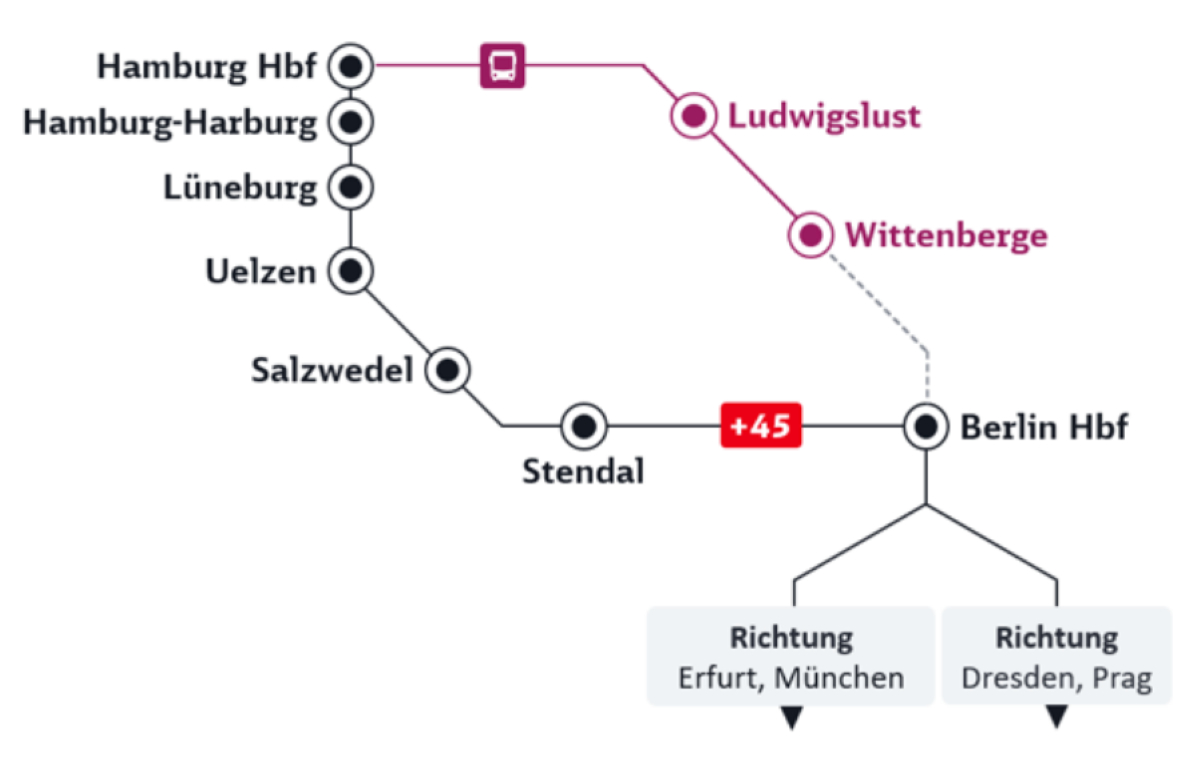
So instead of the usual two-hour trip, passengers can expect the journey to take around two hours and 45 minutes, or up to and three hours, during this time.
The rerouted trains will stop at stations like Salzwedel, Stendal, and alternate between Lüneburg or Uelzen, with a reduced frequency of about one train per hour.
READ ALSO: New international train to run from Copenhagen through Germany to Prague
Regional and local travel
All regional rail services on the route will be suspended.
To compensate, DB is planning to operate replacement buses, with over 170 buses running daily between affected stations such as Ludwigslust, Wittenberge, and Hamburg.
According to DB, these replacement buses will be equipped with onboard facilities including internet access, USB charging, and toilets (on longer routes).
Passenger information and support
DB emphasizes the importance of planning ahead and staying informed. Real-time updates, alternative transport details, and timetable changes will be accessible via the DB Navigator app, the official Bahn website, and regional transit apps.
Passengers are encouraged to consult these resources before travelling.
Short-term pain for long-term gain
For anyone who needs to use the route regularly, the next nine months are going to be tough. But few people who travel on the route regularly will be in any doubt that the work is necessary.
DB promises a future-ready rail corridor capable of supporting faster trains and increased traffic volumes, along with the rollout of better mobile service.
READ ALSO: Berlin to Hamburg train line to get upgrade to 5G mobile coverage
"Some stations will be completely transformed into so-called 'stations of the future', setting new standards for passenger comfort and service,” DB said in a press release.
Above all, the renovation work is expected to significantly improve punctuality and reliability.
Comments