
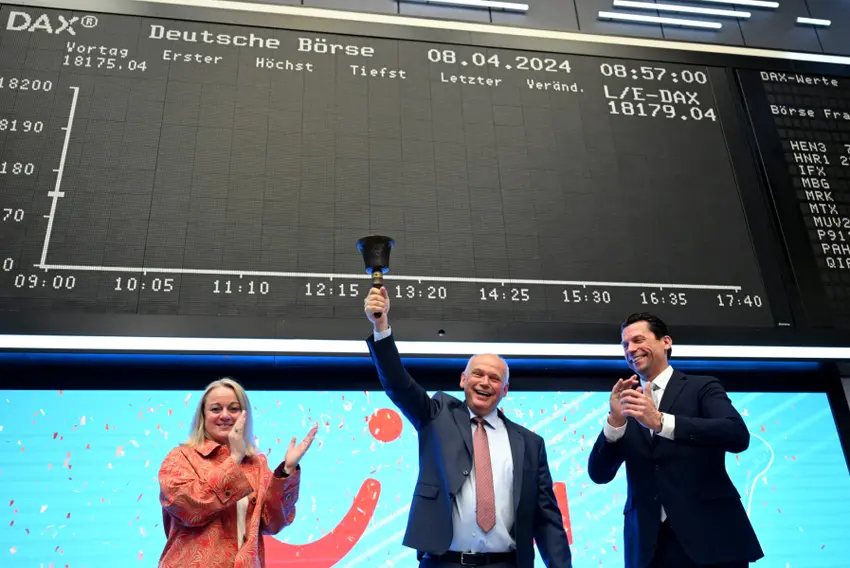
Investor expectations for Europe's top economy over the next six months rose 5.2 points to plus 52.7 points, the July release of the ZEW survey showed.
Analysts polled by financial data firm FactSet had expected a rise of just 2.7 points.
Sentiment has now more than recovered from its April plunge after Trump announced bruising "Liberation Day" tariffs and has reached its highest level since February 2022, before Russia's full-scale invasion of Ukraine.
"Despite ongoing uncertainty in connection with global trade conflicts, almost two thirds of experts expect the German economy to improve," said Achim Wambach, head of the ZEW institute.
The mood appeared to be boosted by "hopes of an early solution to the US-EU customs dispute" as well as of stimulus spending from the German government, he added.
Trump had threatened a blanket 20-percent tariff on EU exports into the United States, but later pushed back its implementation to July 9th to give time for negotiations after markets worldwide plunged.
That deadline was again postponed Saturday, with markets reacting calmly after Trump threatened steeper 30-percent duties from August 1st if the EU did not strike a deal.
In a piece of good news for Chancellor Friedrich Merz's new government, investors' mood also improved when it came to the economy's current performance, with the barometer rising 12.5 points to sit at minus 59.5.
Merz in June unveiled tax breaks to incentivise private investment as well as plans to borrow and spend 847 billion euros in a bid to upgrade German infrastructure and boost stagnant growth.
READ ALSO: German government scraps electricity tax cuts for households
More than 190 analysts and institutional investors took part in the July release of the ZEW survey.
Comments