
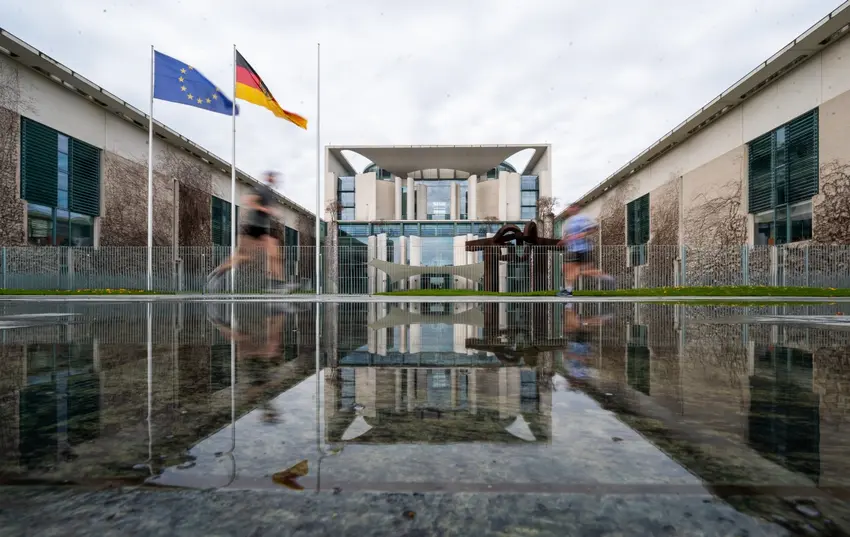
A week after US President Donald Trump's shock announcement, US tariffs on imports from the EU came into force at 6am CET on Wednesday.
The policy has sent the European stock markets tumbling, with Paris down 2.4 percent and Frankfurt dropping 2.2 percent as the market opened.
However, despite the apparent economic fallout, Trump has said he wants to stay the course on his trade war. He has so far ruled out any pause to the taxes on foreign companies.
READ ALSO: European stock markets slump as Trump's tariffs kick in
What tariffs were announced last week?
Standing in the White House gardens last Wednesday flanked by American flags, Trump announced sweeping customs duties on almost all countries in the world - including uninhabited regions of Antarctica.
However, he reserved some of the harshest tariffs for China and the European Union.
"For decades, our country has been looted, pillaged, raped and plundered by nations near and far, both friend and foe alike," Trump said, adding that the highest tariffs would be imposed on "the nations that treat us badly".
While a 10-percent tariff will be applied on all foreign goods, Trump imposed a 20-percent tariff on all EU countries including Germany.
"The European Union has been very, very bad to us," he said.
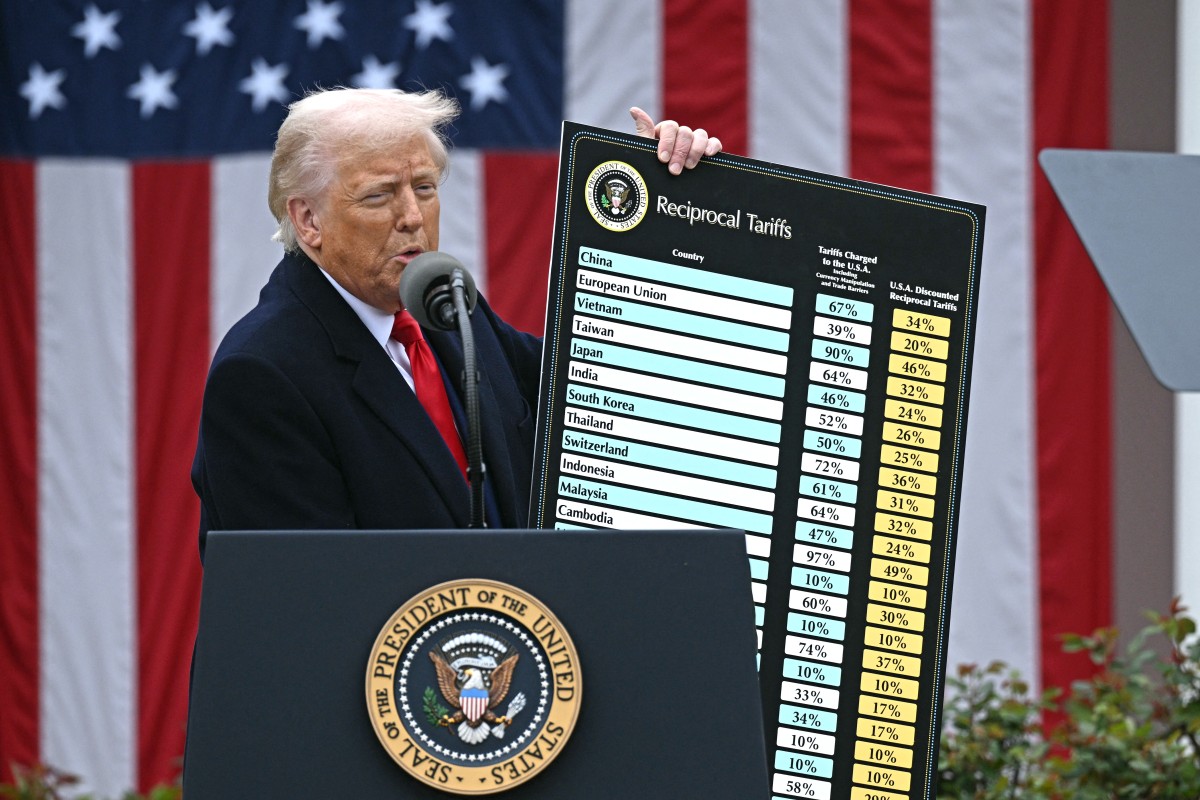
Draconian tariffs were also imposed on several other former allies of the US, including countries like Australia and Japan, as well as many poorer nations in Africa and southeast Asia. In China's case, Trump's tariffs now stand at an eye-watering 104 percent.
Each of the tariffs was apparently calculated based on trade deficits - in other words, how much a country sells to the US compared to how much it buys.
However, most economists agree that a trade deficit is not equivalent to an unfair trading relationship. Countries with low spending power, for example, cannot afford to buy products from the US at the same rate as US consumers buy from them.
Will this replace previous tariffs?
No. The new tariffs are the latest in a series of aggressive measures targeted at the EU and Germany - and will result in an extra 45-percent tax rate in some cases.
Last Thursday, 25 percent tariffs on foreign cars also went into effect, with auto parts due to be hit by May 3rd - a major blow to the German car industry. These will stack on top of the 20-percent tariff imposed on goods more generally.
He had previously announced 25-percent tariffs on steel and aluminium imports. Germany, the largest steel producer in Europe, exported a million tonnes of steel to the US last year.
For both industries - and most others in Germany - the US represents the biggest and most important export market. Experts have warned that barriers to trade could lead to higher costs and the dismantling of jobs in these sectors.
In an interview with Fox News at the end of March, Trump's trade advisor Peter Navarro claimed that countries like Germany had turned the USA into "colonies".
This was the yoke that the Americans had to free themselves from on the country's so-called "Liberation Day".
READ ALSO: Germany's inflation falls in March but trade conflicts cloud horizon
What are German politicians saying?
The potential economic fallout of the tariffs has been casting a shadow over ongoing coalition talks between the CDU/CSU and SPD, which are likely to conclude on Wednesday.
According to media reports, CDU leader Friedrich Merz is determined to counteract the negative impact with lower corporation taxes and a bonfire of red tape.
Meanwhile, the parliament Green Party has been calling for an urgent debate on the tariffs in the Bundesag.
Speaking to press last week on Thursday, outgoing Chancellor Olaf Scholz (SPD) described the policy as "fundamentally wrong".
"There will only be losers," Scholz emphasised. "This is an attack on a trade order that has created prosperity all over the world, a trade order that is essentially the result of American efforts."
Meanwhile, German Economics Minister Robert Habeck warned that "US tariff mania" could "drag countries into recession and cause massive harm worldwide."
"For consumers in the US, the day will not be 'Liberation Day' but 'Inflation Day'," he said, referring to Trump's moniker for April 2nd.
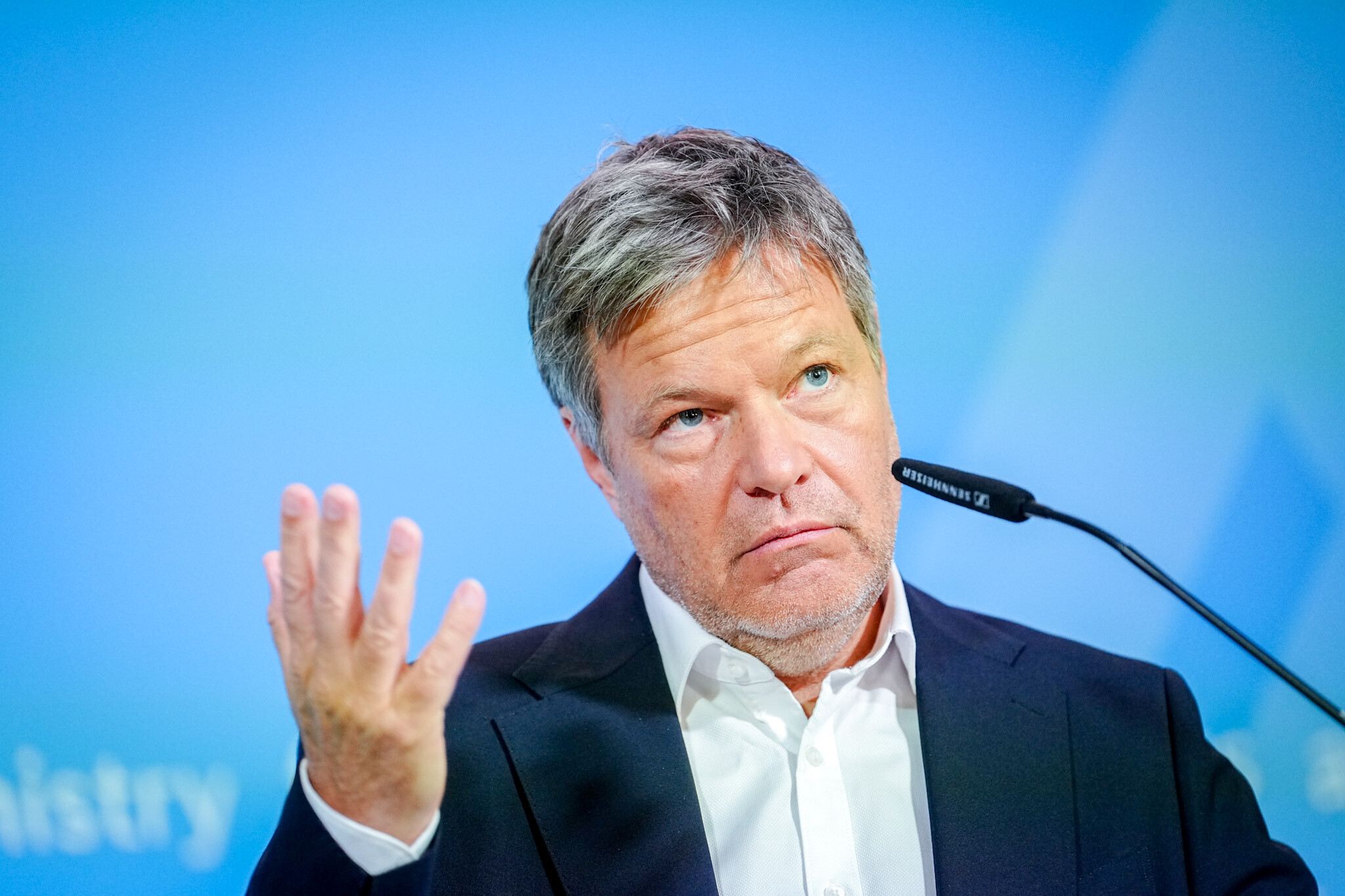
Along with other German and French politicians, Habeck has also been calling for a retaliatory levy on US tech products.
"Everything is on the table," he told a press conference on Thursday. "The big tech companies have an incredible dominance in Europe and are largely exempt from European taxes."
In retaliation for US levies introduced in mid-March on steel and aluminium, the EU plans tariffs of up to 25 percent on US goods ranging from soybeans to motorcycles and make-up, according to a document seen by AFP.
But US bourbon was spared after Trump threatened to hit European wine and spirits with massive retaliatory duties.
READ ALSO: 'Chaos is being created' - Europe hits out at Trump's tariffs
What are key industries saying?
Much like the previous tariff announcements, Trump's latest trade blow has sparked anger and bewilderment within the business community.
Leading industry federation BDI said the taxes were "an unprecedented attack on the international world trade system, free trade and global supply chains".
"The justification for this protectionist escalation is not comprehensible," said Wolfgang Niedermark, a member of the group's executive board. "It threatens our export-oriented companies and endangers prosperity, stability, jobs, innovation and investments worldwide."
Leaders from Germany's struggling auto industry were also quick to speak out last week.
READ ALSO: How will Trump's car tariffs impact Germany?
The latest tariffs will "only create losers", the German auto association (VDA) said in a statement. "The EU is now called upon to act together and with necessary force, while continuing to signal its willingness to negotiate."
Pointing to the effects of the new taxes, the auto lobby said it would be a "considerable burden and challenge" for the global car industry and affect job prospects and unemployment.
However, the German chemicals industry - which relies heavily on exports to the US - took a softer line, urging the EU "keep a cool head" and warning that "a spiral of escalation would only increase the damage".
"We regret the decision of the US government," the Association of the German Chemical Industry (VCI) said in a statement, adding that the EU must "remain flexible in its response" to the tariffs.
"Our country must not become a pawn in an escalating trade war," the association said. "The goal must be a mutually fair solution -- for Europe and the US. The United States is and remains a central trading partner for Germany."
What is the media saying?
In the hours after Trump's announcements, commentators in the German media lined up to tear apart the tariffs.
"Instead of free trade, America is now focussing on tough protectionism, and this U-turn has the potential to plunge the global economy into severe turbulence," seethed Karl Doemens in the RND.
Writing in the Morgenpost, Peter DeThier noted the fact that, in alienating key partners, "the president has remained true to his convictions".
"As is so often the case, however, he is not thinking about the consequences and is not prepared to listen to his most competent advisors," DeThier added. "This could now have serious consequences, both for the USA and for Europe and the global economy."
Meanwhile, financial newspaper Handelsblatt slammed the "completely abstruse arguments" Trump has used to justify his tariffs, adding: "The USA's trading partners aren't using the country - quite the opposite."
According to Fabian Fellmann in the Süddeutsche Zeitung, Trump's motivation is simple: "He wants to cause as much chaos as possible."
"He acts like a mixture of solo entertainer and autocrat, imposing tariffs based on emergency legislation, circulating different variants for days before committing himself at the last minute," Fellmann wrote in an op-ed on Thursday morning. "He considers it a sign of strength to be able to unsettle everyone else."
READ ALSO: What do Trump's steel and aluminium tariffs mean for Germany?
As Fellmann points out, the president's move effectively ends the era of free global trade as we knew it, pushing US tariffs up to a level not seen since the 1930s.
"Trump said on Wednesday that the tariffs at the time had been a success," he wrote. "In reality, the USA exacerbated its recession and choked off international trade, other countries imposed counter-tariffs and the global economic crisis took its course. This was followed by the Second World War."
Comments