
Inside Germany is our weekly look at some of the news, talking points and gossip in Germany that you might've missed. It’s published each Saturday and members can receive it directly to their inbox by going to their newsletter preferences or adding their email to the sign-up box in this article.
Germany made international headlines this week when an unexpected and historical hiccup in the transfer of power saw conservative leader Friedrich Merz fail to win the first vote to confirm his chancellery in the Bundestag.
On Tuesday morning, in a vote that was considered a mere formality, Merz won just 310 votes of approval out of 621 votes cast – missing the requirement for approval by six.
As the head of Germany’s new black-red (conservative Union and centre-left Social Democrat) coalition - which holds a total of 328 seats in the Bundestag - no one had expected Merz to lose the vote.
It showed that more than a handful of Union and/or SPD party members had been willing to stir the pot a bit with a protest vote against him, and in the immediate fallout there was some speculation as to whether or not Merz truly had the trust of his coalition (or, more broadly, German voters) behind him.
However, the whole ordeal turned out to be little more than a bit of drama, as German MPs met for a second vote just a few hours later and elected Merz as Chancellor with 325 votes in favour.
But that didn’t stop German media outlets from leaning into analysis suggesting that the vote cast a dark shadow over the incoming government. And of course, members of the far-right Alternative for Germany (AfD) party leapt at the opportunity to take shots at the leading parties - even calling for a fresh set of federal elections.
Since then, however, Merz has moved quickly to visit European leaders, and position himself as a strong ally to Ukraine and a fierce opponent to migration.
Besides those issues, he's sure to face some immediate challenges kick-starting the economy, navigating a looming health care crisis and dealing with increasingly fraught foreign policy matters.
READ ALSO:
- The five big challenges facing Germany's next chancellor Friedrich Merz
- The key ministers you need to know in Germany's new cabinet

Officially ‘extremist’ or not?
The AfD has also had a whirlwind of a week. Last Friday, the Office for the Protection of the Constitution (BfV) designated the party as a “confirmed right-wing extremist" organisation, citing xenophobic and anti-Muslim statements made by party leaders.
Certain state chapters of the party had already been confirmed as extremist, but applying the label to the party at a national level allows authorities to monitor the party more closely across the country, and build broader investigations into whether or not it should face harsher sanctions, or even be banned.
However, party leaders promptly launched a legal challenge, and a Cologne court has since ruled that the party will not be referred to as “confirmed right-wing extremist" while the court case is ongoing.
Officially “extremist” or not, the news has fuelled the long ongoing debate about whether the party should be banned.
Lya Paulsen, a guest columnist, laid out an argument for the ban this week, including the fact that high-ranking party members have called for mass deportations and violence, and minimised the historic crimes of the Nazis.
But Merz and other conservative leaders have not shown much enthusiasm for pursuing a political ban. One common argument against a ban is that banning the party, as opposed to defeating it democratically, could fuel support among disenfranchised voters.
Where is this?
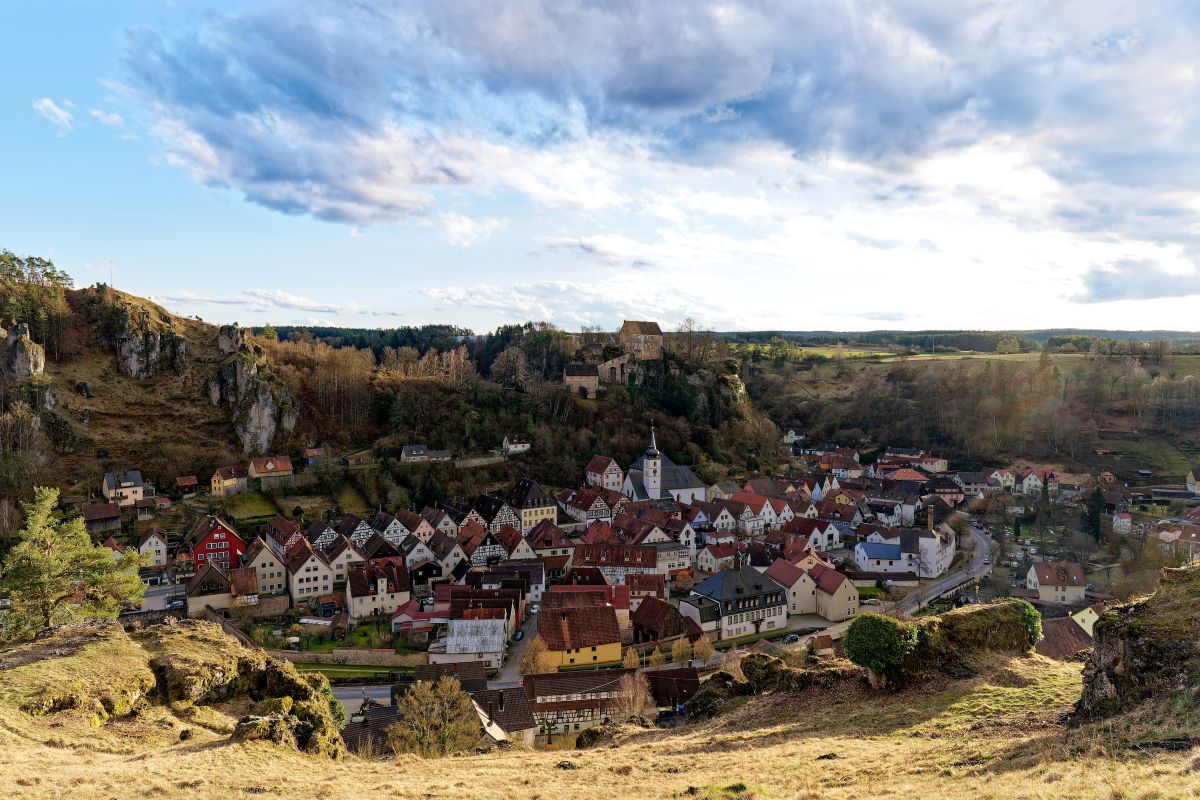
This quaint historical village in Fränkische Schweiz (Franconian Switzerland in northern Bavaria) is a bit remote, but is certainly worth a visit.
With beautiful hikes along creeks in the surrounding valleys, an ancient castle on a rugged hilltop overlooking the old town, and a good selection of beer gardens serving up classic Bavarian faire and local brews; it would be hard to have a bad time in Pottenstein.
For readers in Nuremberg or surrounding towns, it’s an excellent option for a day trip in the spring.
The ‘unfriendliest’ country in the world?
Germany continues to attract immigrants from around the world; many of whom come for job or educational opportunities as well as the country’s good standard of living and exemplary social and welfare benefits.
But one thing many new arrivals don’t appreciate – the severe lack of smiling faces.
A recent survey of more than 12,000 people living abroad in destinations around the world found that several German cities were ranked as the most ‘unfriendly’.
Munich received the lowest marks for friendliness among the locals, and many respondents noted difficulty in making new friends and integrating into social life there.
And before you shrug it off as a Bavarian thing, note that Hamburg, Berlin and Frankfurt were all next in line at the bottom of the list for friendliness. Even fun-loving Cologne was placed 48th out of the 53 cities that were listed.
The Local’s own reader surveys have often highlighted newcomers’ dismay at how serious, reserved, and sometimes even downright rude Germans can be.
But for those who stick around long enough to break through language and cultural barriers, there is the occasional bit of warmth to be found buried under German standoffishness – perhaps made all the more precious due to its scarcity.
Do you agree that German cities are so starkly unfriendly? Let us know in a comment below.
Comments (3)