

Visitors in Germany are usually familiar with Nuremberg primarily as a tourist destination. They may be aware of its history as host to some of the most high-profile trials of perpetrators of the Holocaust after World War II, or for be attracted to visiting its historic old town centre and famed Christmas market.
But whether you live in the region, or are just passing through, there are plenty of destinations worth exploring beyond the city itself.
Here’s a look at six day trips you can make from Nuremberg into the surrounding region of Franconia. If you use regional trains or the local public transport network (rather than ICE trains), you can take the trip with the Deutschlandticket travel pass.
Visit the medieval town of Rothenburg ob der Tauber
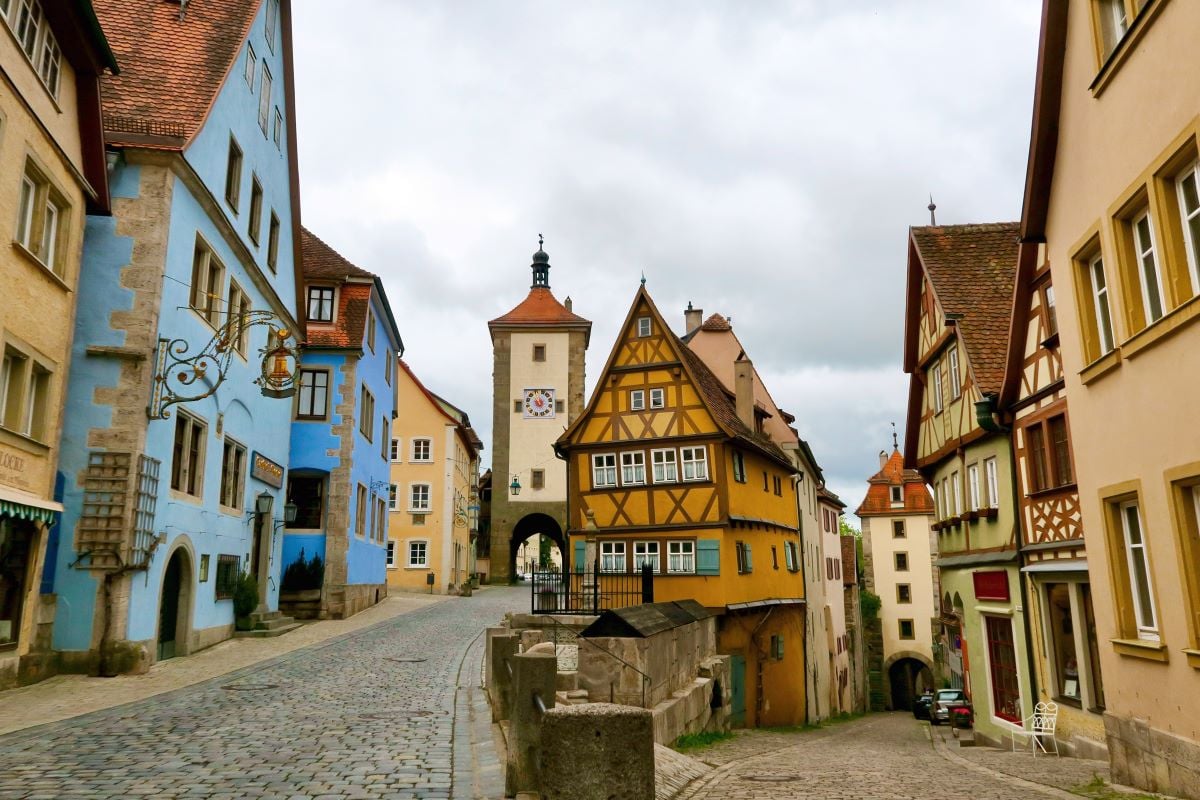
Even if you’ve never heard of Rothenburg ob der Tauber, you’ve probably seen a photo from its medieval old town centre. Images of the town's picturesque historic centre regularly appear in tourist blogs, and for good reason: the town’s well-preserved architecture is striking.
Rothenburg ob der Tauber is one of just four German cities that still has completely intact city walls. The other three – Nördlingen, Dinkelsbühl and Berching – are also found in the Free State of Bavaria.
The main highlight of a day trip to Rothenburg for most visitors is simply roaming the streets, and perhaps taking some photos at the famous forked road (also known as the Plönlein). But a few other items you could include in your itinerary are a visit to the Medieval Crime and Justice Museum, watching the clock chime in Marktplatz, visiting one of the town’s many toy stores and of course enjoying a hearty dish of the local Franconian faire with a locally brewed beer or wine.
Getting there:
You can get to Rothenburg ob der Tauber from Nuremberg via regional trains. The fastest route takes a little over an hour and involves a few transfers. Take the RE90 and transfer at Ansbach to the RE80, then change to the RE82 at Steinach.
You may also find connections via S-Bahn and bus, or with a combination of ICE and regional trains, but you won't be able to use the Deutschlandticket on ICE trains.
READ ALSO: Nine of the best day trips from Munich with the €49 ticket
Float in a salt pool at a local Therme
Especially in the colder months, a day or evening trip to a local Therme or hot spring facility is a great way to spend some relaxing hours.
There are different hot spring and sauna facilities all around Nuremberg, including some local options that make for easy spontaneous trips. But to make a day out of it, you’d be advised to try one of the bigger ones that have special mineral pools and various sauna treatments on offer.
The Franken-Therme in Bad Windsheim, for example, has salt water pools where you can float with ease as if you are in the Dead Sea. Or, for those particularly keen on the German sauna culture, Obermain Therme has an expansive clothing-free zone with dozens of different saunas to choose from.
To best enjoy your time at a German Therme and avoid additional costs you’ll want to bring a swimsuit, a robe, a towel or two and flip-flops with you.
READ ALSO: 8 spectacular spas to visit in Germany this winter
Getting there:
Franken-Therme is accessible by regional train from Nuremberg in a little over an hour. Take the RE10 and transfer at Nuestadt (Aisch) to the RB81, and then get off at Bad Windsheim.
You can get to Obermain Therme in about the same time on either the RE14 or RE28. Get off at Bad Staffelstein and walk about six minutes to the spa facility.
Explore ‘Franconian Switzerland’
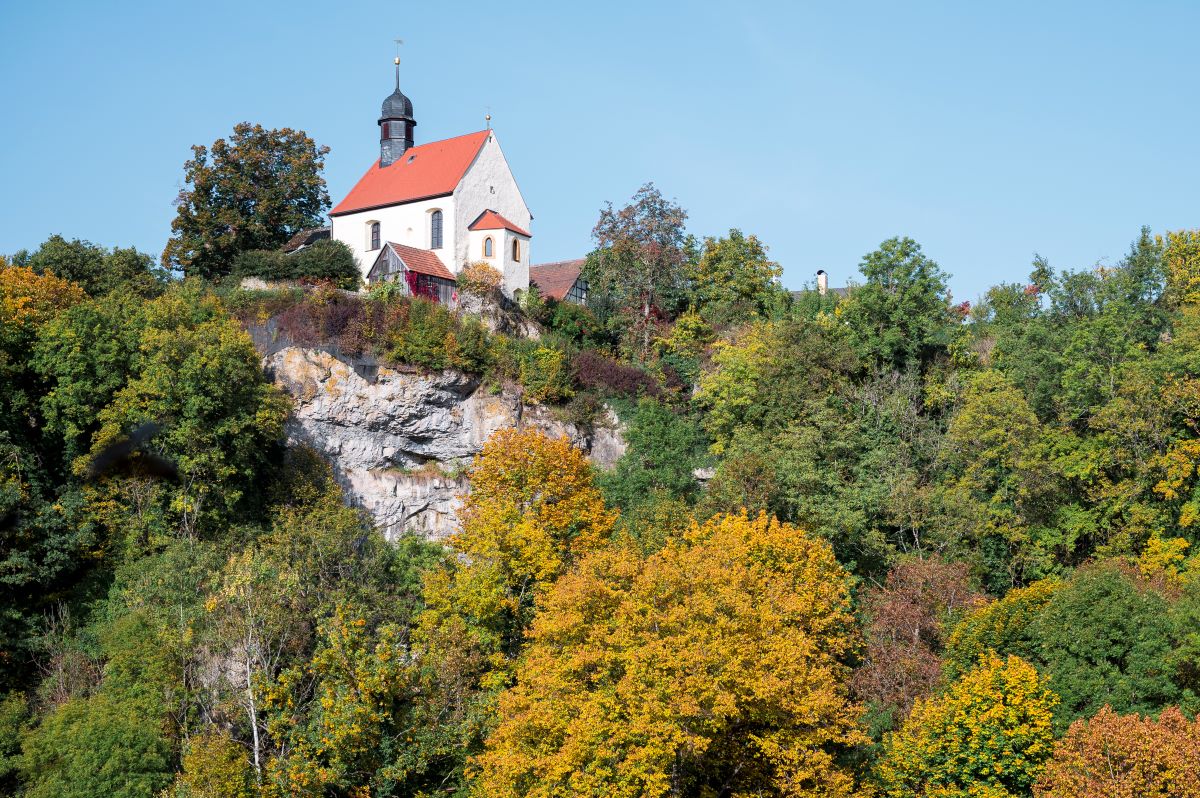
‘Franconian Switzerland’ (Fränkische Schweiz) is one of Germany’s numerous mini-‘Switzerlands’ - so named for its mountains and striking rock formations that are reminiscent of those found in the picturesque alpine country. The region is also marked by the rivers that surround it: the Pegnitz to the east and south, the Regnitz to the west and the Main to the north.
It’s known to outdoor sports enthusiasts for having some of the best hikes and rock climbing spots around. But you can also get a sense of the area’s striking scenery with a more relaxed visit to a local village.
Among the villages most recommended for an introductory visit is Pottenstein, which has been described as having a fairytale aesthetic. Pottenstein Castle, on top of a steep hill, towers over the town, and you can also check out the Devil’s Cave nearby, which is among the longest in Germany.
Getting there:
To get to Pottenstein from Nuremberg take a regional train to the town of Pegnitz (RE30, 31, 32, 33 or 38), and then catch a bus (389, 392 or 397). The entire journey takes about an hour and a half.
Take a hike nearby
You don’t have to travel deep into Franconian Switzerland to go for a scenic hike. In fact, there are quite a few hiking spots that you can get to from Nuremberg Hauptbahnhof with just a 30 to 40 minute S-Bahn ride.
The hike through the Schwarzach Gorge (via Schwarzachklamm Wanderweg) is a relatively easy loop that hikers of all fitness levels can enjoy, and comes with views that you won't soon forget. And, in typical Bavarian fashion, there’s also a beautiful beer garden along the way where you can refuel and/or enjoy a fresh pint.
For hikers looking for a bit more of a challenge (or for a higher view), try the hike around the Happburg reservoir, including the trek to the top of the Houbirg rock massif. The view of the lake from the top is stunning, and there are impressive rock towers and caves to climb around on.
You won't find a beer garden on trail here, so you may want to pack some food and drinks for the top, or you can stop at a restaurant in town on your way home.
Getting there:
To get to the Schwarzach Gorge trail you can take the S1 or S3 from Nuremberg. You can catch buses from either the Feucht or Ochenbruck stops, or if you don’t mind walking a few extra kilometres, just walk through town toward the trailhead.
To get to the Happburg reservoir you can take the S2 directly to Happurg station and walk through town from there. Alternatively you can get off one stop earlier (at Hersbruck) and take bus 334 around the reservoir to start the hike on the other side (getting off at the Förrenbach stop).
Do a beer walk around Bamberg
Beer lovers are blessed in and around Nuremberg as there are local breweries and beer gardens to be found pretty much anywhere you go. In fact, it's been reported that Upper Franconia has more breweries per capita than any other region in the world.
If you want to make a day of indulging in the local brew, one pleasant way to do so is to pitch a fair weather day to go for a ‘beer walk’ – basically hike from brewery to brewery trying a pint at each.
The scenic city of Bamberg, known for its medieval and baroque architecture as well as its smoky Rauchbier, is one popular destination for beer walks long and short.
READ ALSO: Travel in Germany - Sipping smoked beer and soaking up culture in beautiful Bamberg
Zealous hikers could take on the aptly named “13 brewery hike”. But given that its 13 breweries are scattered along a 33 kilometre trail, you may want to consider doing the trail by bike, or else walking just a portion of it unless you are feeling exceptionally strong and determined.
There are also less ambitious options to be found, such as the Fünf Seidla Steig, which has five breweries on a 20 kilometre circuit. Or the easiest option is simply to walk around Bamberg’s old town and grab a pint at any of the many beer gardens or restaurants that you pass by.
Getting there:
Bamberg is a straight shot from Nuremberg on a number of direct regional trains: RE14, 19, 20 or 28. The trip takes about 40 minutes from Nuremberg Hauptbahnhof. A number of high-speed ICE trains that connect Nuremberg to Berlin or Hamburg also stop in Bamberg.
Try German wines in Würzberg
Germany’s beer brewing tradition tends to get all of the international notoriety, but those who prefer wine will be glad to learn that Franconia also has its own wine country with some deeply-rooted viticultural traditions to match.
Starting in early spring and extending until late autumn, there are numerous Weinfeste (wine festivals) hosted in the nearby city of Würzburg.
Or, if there’s not a festival on when you happen to visit, you can still visit one of the local wineries for a tasting. Here’s a list of some of the spots you can usually drop in on for a cellar tour and/or wine tasting.
Beyond the wine, Würzburg is also worth a visit to explore its historic sites like the Würzburg Residence (a UNESCO world heritage site) or the Marienburg Fortress.
Getting there:
You can reach Würzburg directly from Nuremberg on the RE10 in about one hour and 15 minutes. Alternatively cross-country ICE trains make the journey in about 50 minutes.
Comments