
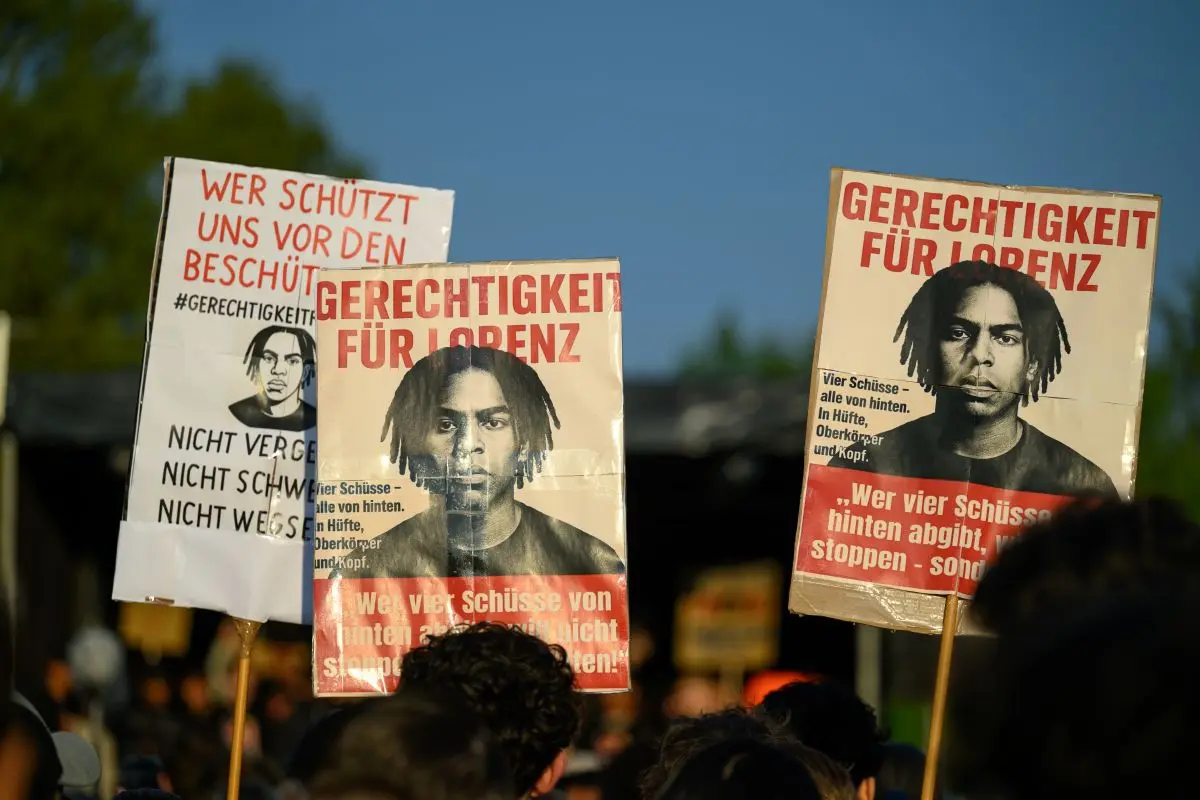
On Easter Sunday a police officer shot and killed a 21-year-old black man named Lorenz A. in Oldenburg, Lower Saxony.
Initial reports, based on police statements, suggested the victim of the shooting had threatened officers with a weapon and moved toward them, but further evidence has cast serious doubts on the police officer's reason for opening fire.
In response, around 10,000 people gathered in Oldenburg at the end of last week to protest the killing of Lorenz A. and to call for a comprehensive investigation into the police officers involved and all potential motives.
What do we know about the killing of Lorenz?
Initial police reports said that an on-duty officer had shot dead man who had threatened people with a knife outside a night club.
Reportedly, after being denied entry to the club in Oldenburg, Lorenz sprayed the security staff there with pepper spray.
A police statement shared with AFP said Lorenz sprayed pepper spray at the officers, and “advanced in a threatening way”, which led to an officer firing shots.
However, this narrative has come under question as other details about the shooting have been revealed.
The autopsy revealed that Lorenz had been shot by three bullets - in the hip, upper body and head - all of which had hit him from behind. A fourth shot grazed him on the thigh.
The police officers involved wore body cameras, but none of them were switched on.
A Professor of Police Science at the Hamburg Police Academy, Rafael Behr, told NTV news that it was a “scandal” that the bodycams were left off. In an interview with Tagesschau Behr also said the vague description of the moment that shots were fired was unusual, and that he hoped objective video evidence would emerge to clarify it.
Without bodycam footage, investigations into the incident are relying primarily on a review of police radio calls made at the time and CCTV footage.
Citing sources close to the internal investigation, Der Spiegel reported that the knife that Lorenz allegedly threatened officers with was not visible in the video before he was shot. Instead, investigators may have discovered the folding knife in his pocket later.
The officer who fired the shots has been provisionally suspended while the Oldenburg public prosecutor's office conducts proceedings against him for manslaughter, as is common protocol in such cases.
READ ALSO:
- Levels of racism and discrimination in Germany revealed in new survey
- What to do if you experience racism in Germany
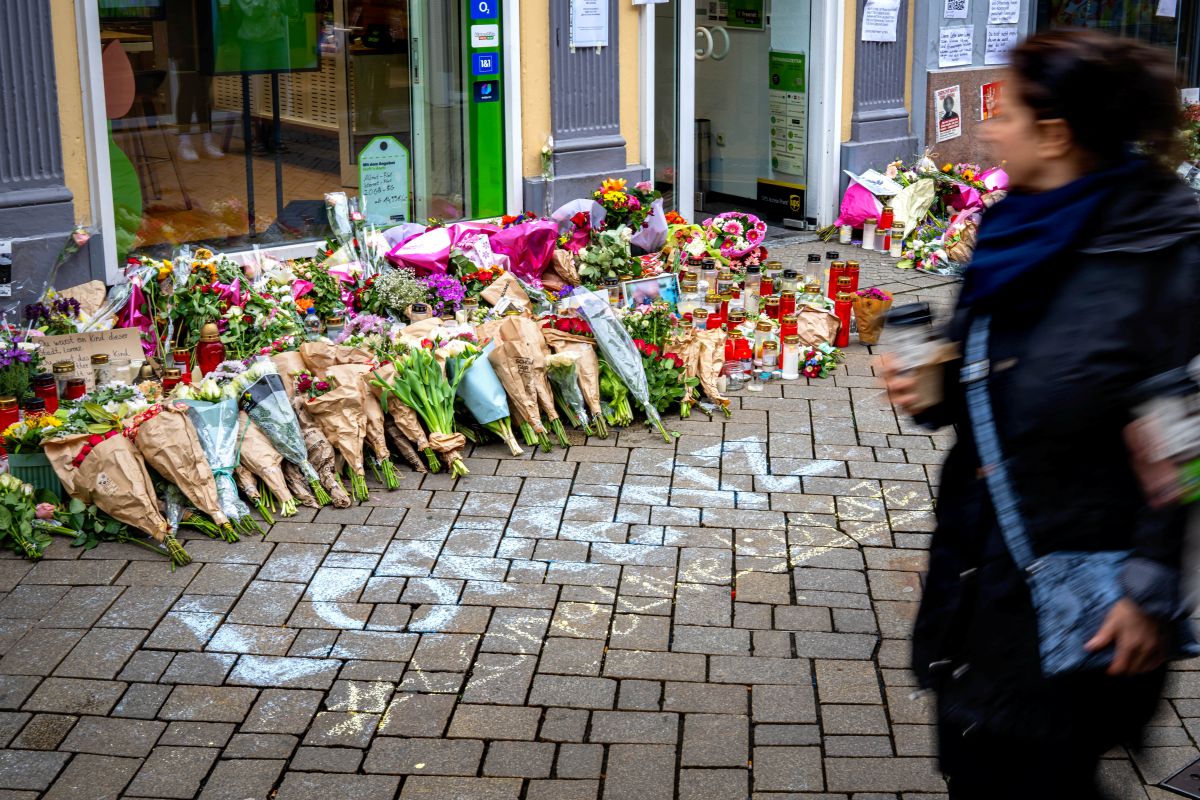
Protestors call for a full investigation
A large demonstration calling for a thorough investigation into the killing of Lorenz attracted 10,000 protestors in Oldenburg on Friday.
Some speakers at the demonstration said Lorenz had been a valued member of the community who was taken from them, while others claimed he had been the victim of an unwarranted police killing.
“Several shots from behind is not justifiable for us and that's why we said we want to stand in solidarity with Lorenz, to fight for justice, for transparency, for consistency and for an independent investigation," said Suraj Mailitafi, spokesman for the initiative "Justice for Lorenz".
How are police actions investigated in Germany?
An internal investigation is reportedly evaluating video and audio recordings of the incident.
Lower Saxony's Interior Minister Daniela Behrens has said there are "serious questions" and "devastating allegations" that have come up following the autopsy. But she also warned against pre-judging the officer.
In Germany cases like this are often investigated by a neighbouring police force, with the aim of making the enquiries more objective.
However, criminologist Tobias Singelnstein told NTV that this was one of the worst models for conducting investigations, adding that the officers involved are naturally biased.
Some German states have taken the precaution of setting up specialised and independent investigative authorities, but not all.
Singelstein noted that most investigations against police officers for unlawful violence are eventually dropped.
"Only about two percent of the cases end up in court," he told NTV.
Amnesty International Germany has made a statement that this case affects an entire community and “all those in Germany affected by racisim”, and has also warned that an investigation led by police would be biased, and needs to be free of police or interior ministry influence.
READ ALSO: What are the rules around carrying a knife in Germany?
Comments