
Following a rise in knife crime in Germany in recent years, knives have been increasingly become a serious point of concern.
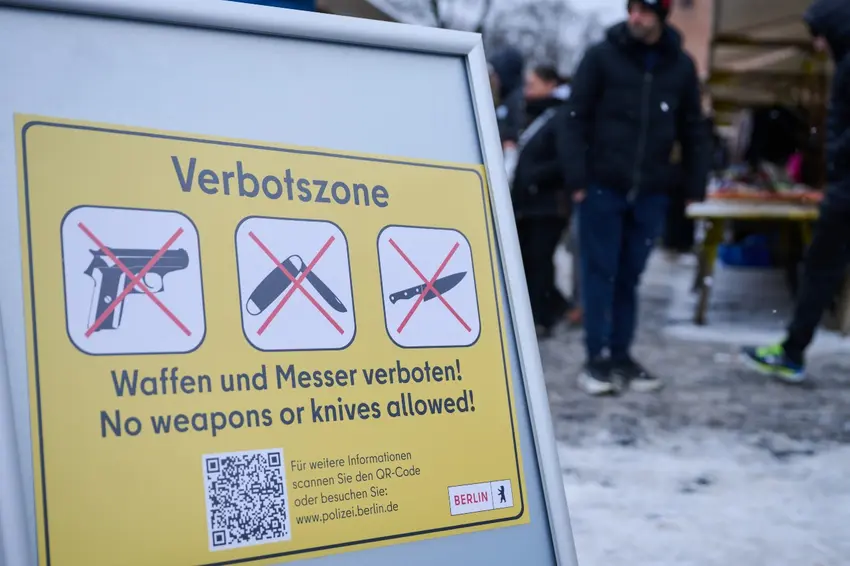
In response, various local authorities have brought in special weapons prohibition zones in city centres, including on public transport in Berlin and in major train stations elsewhere.
Over the weekend around 1,900 federal police officers took part in a nationwide operation at 41 train stations to step up security and enforce knife carrying laws. According to a police report, officers checked more than 11,600 people and found more than 300 dangerous objects, which led to 140 proceeding for violations of the weapons law and 40 investigations into violent crimes.
For citizens of countries with far less stringent weapons laws, Germany's strict rules around owning and carrying knives may come as a surprise.
Though most of us use knives as an everyday tool, some types of knife are expressly considered weapons in Germany, meaning they are illegal to sell or purchase. There are other types that can be bought but not carried in public, and finally local rules can be even more strict in specific zones.
What type of knives are completely banned?
In Germany, it's illegal to import or trade in certain types of knives, and private ownership is also strictly prohibited.
Banned knives include:
- Switchbaldes / automatic knives
- Dropping / out-the-front knives with blades over 41mm
- Butterfly knives
- Fist knives
- Brass-knuckle knives
- Push daggers
Generally, you can expect most types of combat knives to be included on the banned list, including knives with concealed blades that allow assailants to hide the weapon and pull it out at short notice.
At the next level, there are some types of knife that you are allowed to own but that should not be carried in public. These include daggers and machetes, and any type of knife with a blade longer than 12 centimetres (cm). If you do need to transport one of these knives, it will need to be carried in a locked container.
Standard kitchen knives, multi-tools with blades, two-handed folding knives and rescue knives are generally all permitted in public, though once again, the blade must be smaller than 12 cm.
Germany's weapons laws also specify a number of public places where knives of all types are expressly forbidden.
Where can I carry a knife in public?
Generally, permitted knives can be carried in most public places, though there are some areas where the rules are much stricter.
Under the revisions to Germany's weapons laws passed in October 2024, there are strict bans on carrying knives in certain parts of cities as well as some types of events.
READ ALSO: How can Germany tackle its problem with knife crime?
Public events
Following the Solingen attack, which took place at a local folk festival, the government introduced a blanket ban on knives at all public events. This includes fairs, festivals, sports events, markets, theatre performances, cinemas and concerts, as well as open-air parties and dance events.
The ban at public events applies for all types of knife, regardless of the usage and length of the blade. It is also enforced whether the event is a paid, ticketed event or not.

Public transport
In long-distance public transport such as Deutsche Bahn trains and Flixbus coaches, a blanket ban on carrying weapons - including knives - is in place. This also goes for long-distance transport hubs such as bus and train stations.
In local public transport such as U-Bahns, trams and buses, meanwhile, states are allowed to apply their own weapons bans if they want to. However, the general ban on combat knives and knives with blades over 12 cm still applies.
Weapons prohibition zones
In busy public areas that are known crime hotspots, local governments can decide to put in a place a weapons prohibition zone. This is known in German as a Waffenverbotszone.
A number of these zones already exist around the country, for example in Frankfurt's Bahnhofviertel, on the Hamburg Reeperbahn and at Kottbusser Tor and Leopoldplatz in Berlin, as well as on all city trains buses and trams since July 2025.
READ ALSO: Berlin introduces knife ban on public transport
Different rules can apply in different cities, but generally you shouldn't have any type of knife on you in these zones. If you do need to take a knife with you - say, for a picnic - you should make sure it is a type of knife that clearly poses no public threat, and be sure to store it away safely out of immediate reach.
What happens if you get caught?
As part of Germany's move to toughen up weapons laws, police have been empowered to carry out far more random checks in public areas. If you're found with an unauthorised knife on you, punishments can range from a small fine and confiscation to a longer custodial sentence.
The severity of the sentence all depends on whether you're deemed to have committed a crime or a misdemeanour.
If you're found carrying a type of illegal weapon, such as a butterfly knife or switchblade, this would be covered under the criminal code and could result in a fine or up to three years in prison. Of course, if you actually commit a crime using the knife - such as armed robbery - the sentences are likely to be much higher.
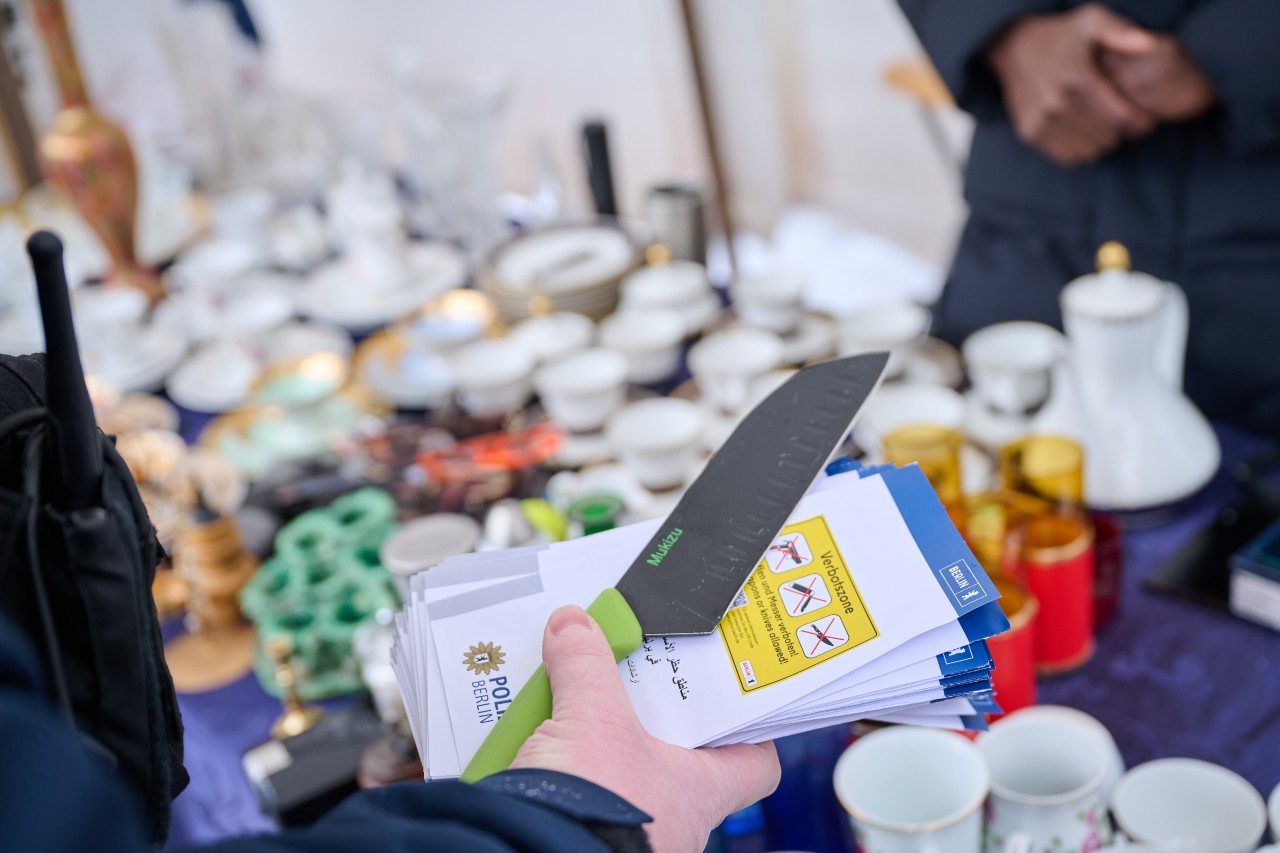
Carrying restricted knives without a good justification, meanwhile, is seen as a misdemeanour. This means you're most likely to get a fine and have the unauthorised weapon confiscated by the police.
In restricted prohibition zones, the fines for breaking the rules can be eye-wateringly high. If you're caught here with a knife that you shouldn't have on you, you could be asked to pay as much as €10,000.
READ ALSO: Which criminal offences could get you barred from German citizenship?
What about anglers and other hobbyists?
There are indeed certain carve-outs in the law for people who require a knife for their hobbies or profession. For example, chefs and tradespeople are allowed to carry knives required for their work, as are those who need specific knives for fishing, hunting or other types of sports.
Of course, this doesn't necessarily mean that bans on combat knives, for example, are lifted automatically. In some cases, you may have to apply for a specific permit that allows you to own a certain type of knife.
Comments