Inside Germany is our weekly look at some of the news, talking points and gossip in Germany that you might've missed. It’s published each Saturday and members can receive it directly to their inbox by going to their newsletter preferences or adding their email to the sign-up box in this article.
New coalition sets out its vision for Germany
Whatever you may think of Friedrich Merz, one thing can't be denied: Germany's incoming chancellor certainly lives up to the country's reputation for efficiency. Just four weeks after kicking off coalition talks, Merz's centre-right CDU and CSU alliance unveiled their new coalition pact with the centre-left SPD on Wednesday.
At almost 150 pages, it's a hefty tome - and it's pretty mixed news for the international community.
While many of the citizenship reforms brought in by the previous government will remain, the parties have pledged to scrap the "turbo" three-year path to citizenship.
That means that all foreigners, regardless of integration, will have to wait at least five years to naturalise in the country. (Unless they're married to a German of course.) Luckily, dual nationality is set to remain in place, allaying the worst fears of many foreigners.
For skilled workers, there are also a few interesting plans in the pact: the government wants to set up a new digital agency for skilled labour immigration, which will act as a single point of contact for workers from abroad. In future, the aim is to recognise foreign qualifications in as little as eight weeks.
The agreement also contains plenty of policies designed to relieve struggling households - from tax relief for the middle classes to cheaper electricity and a hike in Elterngeld for new parents. Things are set to get tougher for jobseekers, however, as Bürgergeld is set to be replaced with a much stricter system.
READ ALSO: How Germany's new coalition will affect your bank balance
Overall, the government has set itself two major tasks in this administration: boosting the ailing economy, and shoring up defence. The first will be done with hundreds of billions in infrastructure spending, as well as tax cuts for businesses and incentives to get people working more. The second with unlimited borrowing for defence and a new voluntary military service scheme.
If you want to read about the government's plans in more depth, we've got you covered in our recent explainer. In it, we take you through the main policy changes that could affect the lives of foreigners in Germany.
Wisdom of the week
Between tariff threats and sluggish growth, there's been nothing but gloomy news about the economy lately. Could this bold new plan to double down on sausage sales be the answer the Bundesrepublik is waiting for?
Where is this?
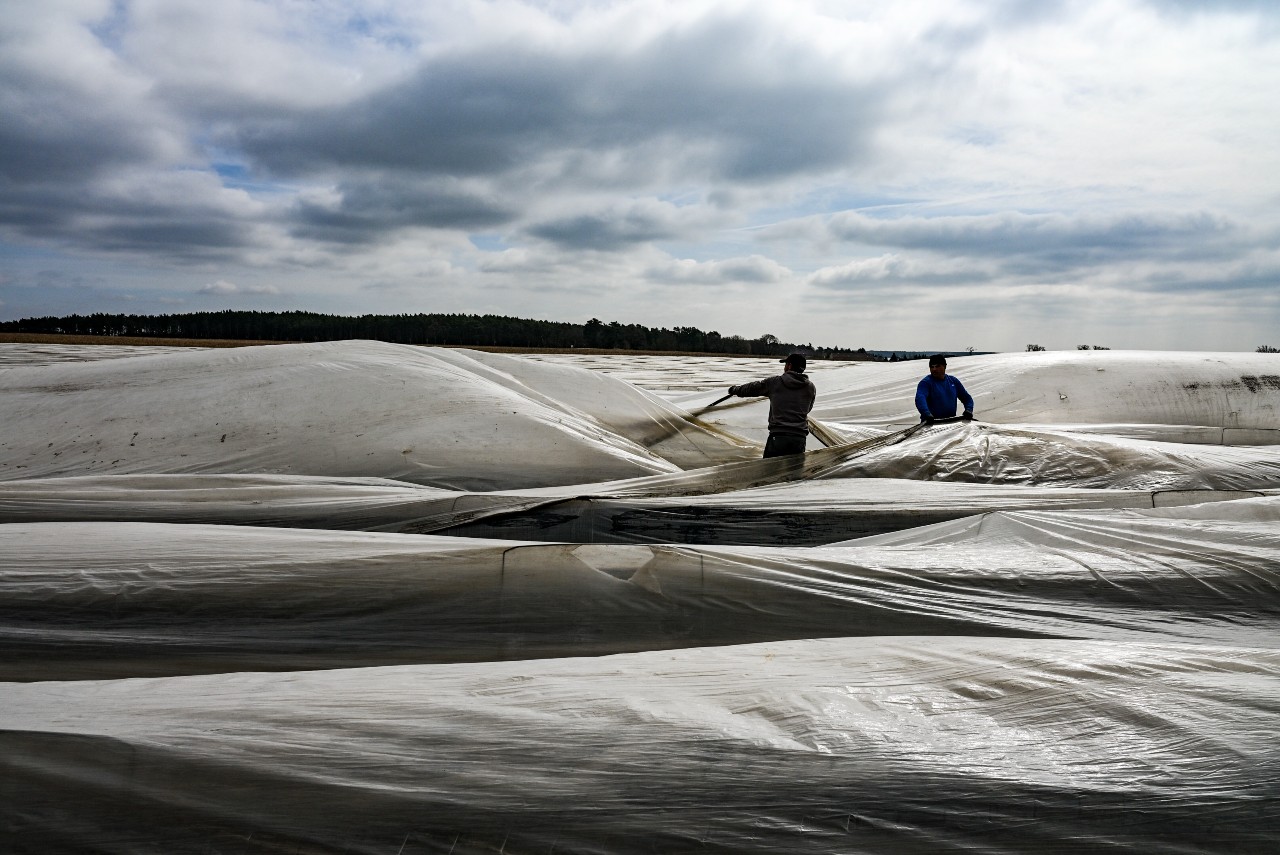
What on first glance looks like cascading ocean waves is, in fact, some large plastic sheets spread over a harvest of Spargel. Germany's white asparagus season is set to begin soon, meaning restaurants across the country will be adorning their menus with Spargel-dishes, and asparagus stalls will be springing up at the side of the road.
This picture shows workers loosening the sheets on an asparagus field in Beelitz. The small town on the outskirts of Berlin is nicknamed Spargelstadt ("asparagus city") for a reason: it's one of the most famous asparagus-growing regions in the country.
Living offline in the 21st century
Germany's lacklustre digital transformation may have been hitting the headlines lately, but as it emerged this week, not everyone is worried about online services.
According to the Federal Office of Statistics (Destatsis), around 2.8 million people in Germany live life entirely offline - and have never even used the internet.
The figures, which were based on a survey of computer use across the EU, show that four percent of 16-to-74 year olds are "offliners". For this group, booking a train ticket online or chatting with friends via WhatsApp are simply not a part of their lives.

With Germany's poor track record on digitalisation, many of us can only dream of such an innocent existence. How can you complain about paper and the post when you've never known any other way?
For the rest of us, the woes of bureaucracy drag on.
On that note, we'd love to know your thoughts on the most painful parts of administrative life in Germany. Have your say - and a healthy vent - by filling in our latest reader survey.
Easter holidays begin in several German states
Last week saw the first handful of states break up for the Easter holidays, with schools closing in Bremen, Hesse, Lower Saxony, Thuringia and Saxony-Anhalt on the 7th and in Schleswig-Holstein on the 11th.
On Monday, children in Baden-Württemberg, Bayern, Berlin, Brandenburg, Mecklenburg Western-Pomerania, North Rhine-Westphalia, Rhineland-Palatinate and Saarland are set to follow suit. Saxony will be the last of the states to head for its holidays, with schools in the eastern state closing from Good Friday.
If you're planning a fun Easter getaway, don't forget to read our rundown of the disruptions on Deutsche Bahn and potential jams on the Autobahn.
We'll be off next week for our own long weekend, so in the meantime, happy Easter from all of us here at The Local. 'Inside Germany' will be back on the site - and in your inboxes - in two week's time.
Comments