
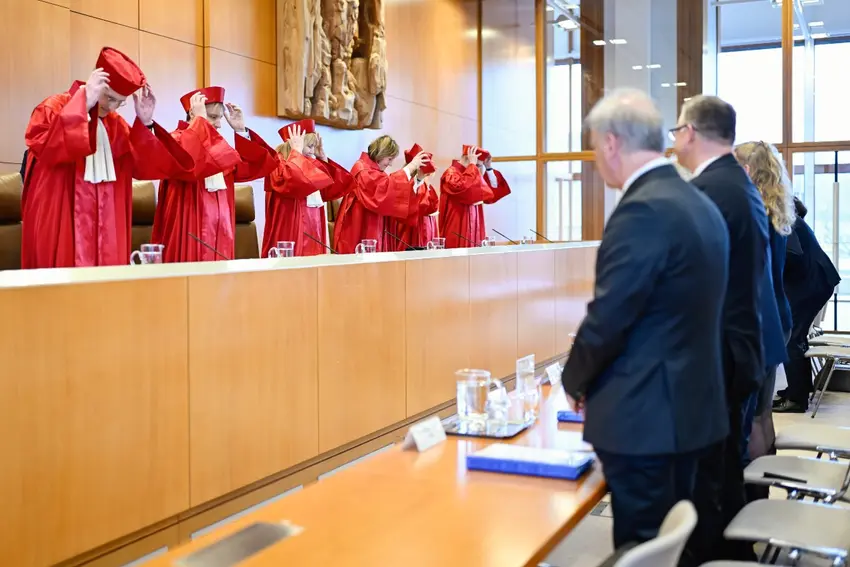
Top court rules in favour of solidarity tax
In a decision announced on Wednesday, the Federal Constitutional Court in Karlsruhe rejected an appeal against the controversial tax. The case had been brought by six politicians from the liberal FDP, who had argued that there was no justification for the tax so many decades after German reunification.
However, the court ruled that the government continues to have extra financial requirements as a result of reunification. These include more heavy subsidies for pensions in the former East.
Nevertheless, judges emphasised that supplementary levies like the solidarity tax cannot be imposed indefinitely. The surcharge could become unconstitutional as soon as the extra financial burdens cease to apply.
Since 1995, Germany's solidarity tax has been used to support the extra costs incurred by the reunification of the former GDR states into the Federal Republic. Since 2021, however, only high earners, companies and investors have had to pay the solidarity surcharge, amounting to around 10 percent of the population.
If the judges in Karlsruhe had ruled against the solidarity tax, it would have had serious consequences for the federal budget. The current draft budget for the year has firmly earmarked €12.75 billion in solidarity surcharge revenue, which might have had to be cancelled.
READ ALSO: Everything you need to know about paying taxes in Germany
The court could also have ruled that the state must repay income from the solidarity surcharge from previous years. That would have been around €65 billion since 2020. That would have been a major blow for Germany's incoming government of the CDU/CSU and SPD.
German leaders say US may miss out on green tech boom
Europe must seize on the "huge economic opportunities" offered by the green technology boom, Germany has said -- adding it was up to the United States if it decided to miss out.
Since returning to the White House, President Donald Trump's administration has withdrawn the US from the landmark Paris Agreement for a second time and vowed to focus heavily on fossil fuel extraction.
German Chancellor Olaf Scholz said at a climate conference in Berlin that he "deeply regretted" the US leaving the Paris climate accord and stressed the "enormous" economic opportunities it is missing out on.
"The global market for climate-friendly key technologies continues to grow rapidly," Scholz told the Petersberg Climate Dialogue.
He said investments in the global energy transition had exceeded the $2 trillion mark, which "corresponds to the volume of the entire global oil trade today".
The meeting's host, Foreign Minister Annalena Baerbock, said economic data contradicted the "old prejudice" that investing in climate protection was "unaffordable".
"We all know that there are spoilers in the world right now who want to prevent" greater climate investments, she told the first major meeting of the year related to the COP30 summit taking place in Brazil in November.
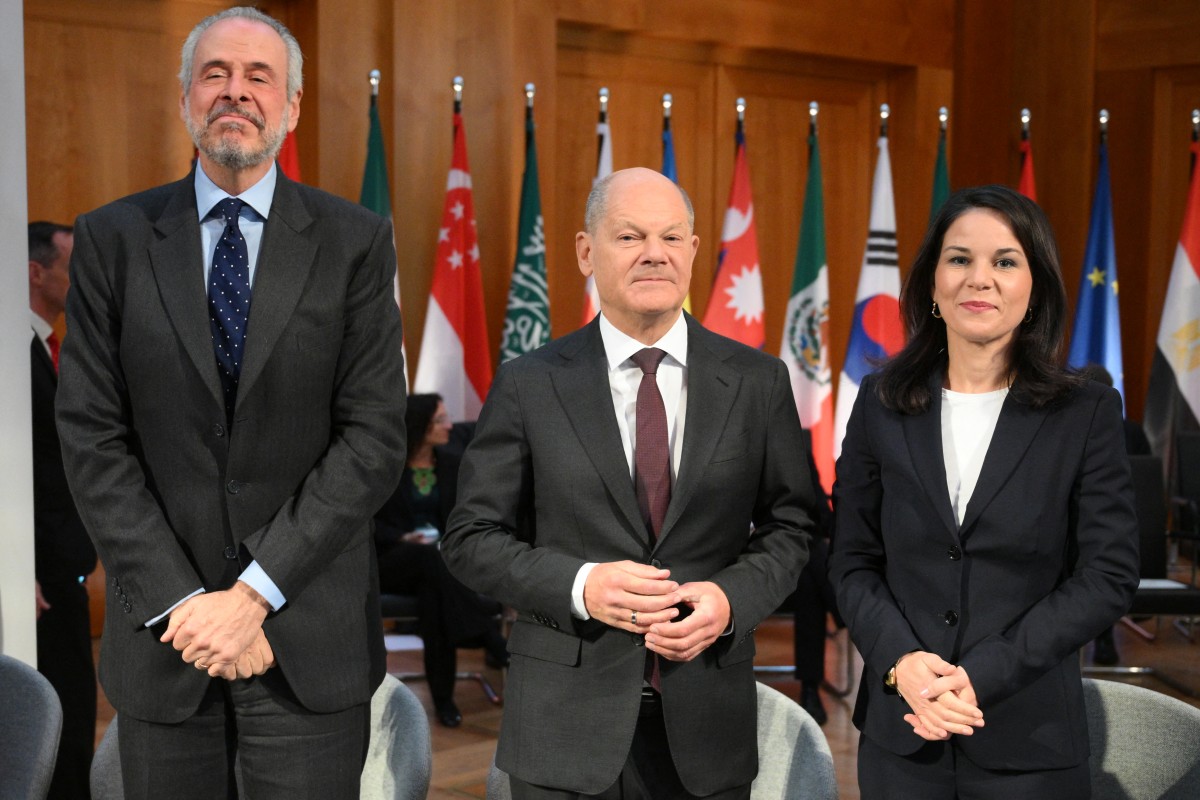
Baerbock added that "today climate protection and economic growth no longer contradict one another".
READ ALSO: German MPs give green light to 'bazooka' spending package
Lithuania suspects pilot error in DHL cargo jet crash
Lithuanian prosecutors said on Wednesday they believed pilot error was to blame for last year's deadly DHL cargo plane crash in Vilnius and called for the surviving pilot to be charged.
The plane coming from the German city of Leipzig crashed near Vilnius Airport in November, raising questions over whether the tragedy could be connected to a recent series of sabotage cases.
The crash killed one Spanish pilot and injured the three other crew members: a German, a Lithuanian and another Spanish pilot, who is currently receiving treatment in Spain. The Lithuanian prosecutor's office said it had asked Spanish authorities to "charge the pilot of the aircraft and to question him".
"The crash... is believed, on the basis of the currently available evidence, to have been caused by human error," it added in a press release.
Germany had initially raised the possibility of outside involvement in the disaster, arguing that it could have been "another hybrid incident".
The term "hybrid" is commonly used to describe attacks that do not use conventional military tactics, such as sabotaging infrastructure or launching cyberattacks.
Since Russia's invasion of Ukraine in 2022, European countries have often used the term to describe actions against them that they believe originate from Moscow.
Authorities raid Eritrean 'domestic terrorist organisation'
A nationwide police operation on Wednesday targeted suspected members of a group called the "Brigade N'hamedu", which is classified as a domestic terrorist organization according to the federal public prosecutor's office.
The group is believed to have been responsible for violent riots at Eritrean cultural events in Giessen in 2022 and in Stuttgart in 2023.
DPA reported that in both cases a large group of people attacked festival organisers and guests on the fringes of Eritrea festivals and dozens of people, including police officers, were injured.
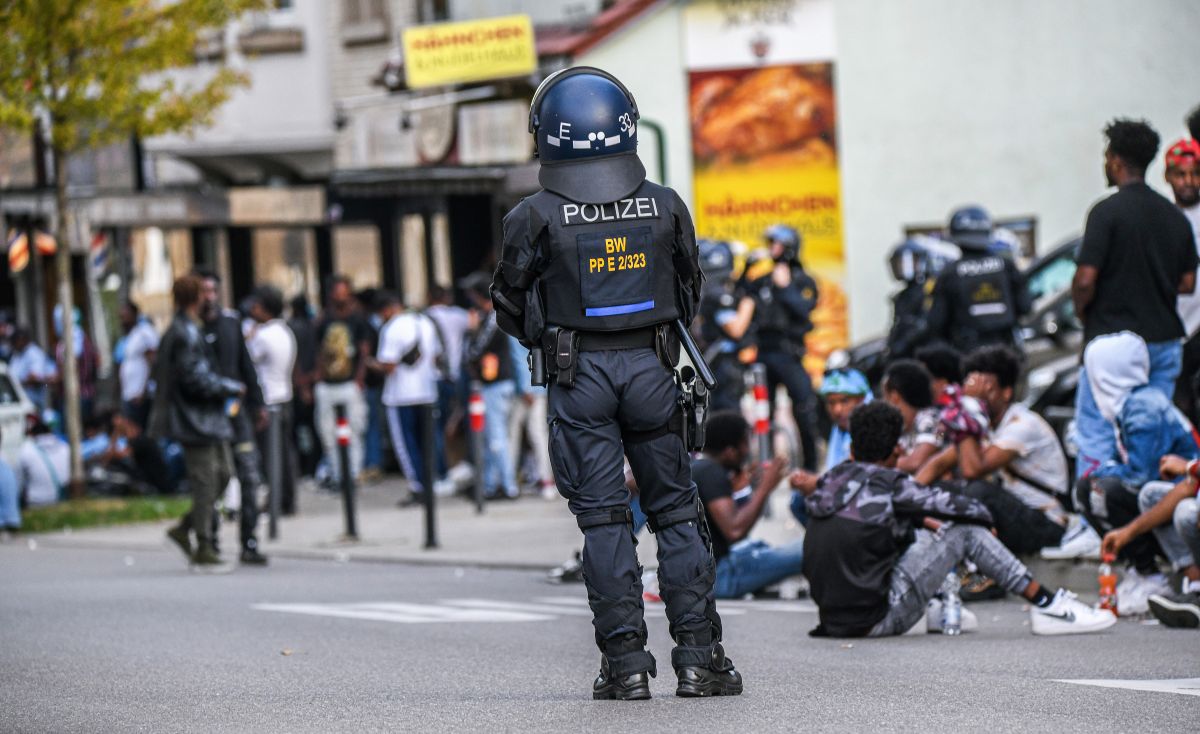
Following the attack in Stuttgart, Baden-Württemberg's Interior Minister Thomas Strobl (CDU), said that around 190 criminal proceedings were initiated. Of those so far: "A fine was imposed on 34 people, and a prison sentence was imposed on 56 people."
Wednesday's operation included a police raid on the homes of 17 suspects, in various German states, alleged to be involved with the group.
A statement by the prosecutors involved says the Brigade N'hamedu is an international network whose stated aim is "the overthrow of the government in Eritrea".
23-year-old enters Bundestag as youngest MP
Luke Hoß, 23, is a Left Party politician and now also the youngest member of the new German Bundestag.
In an interview with T-online he said the topics that are important to him, such as "affordable housing" and "fair food prices".
Germany's 21st Bundestag notably has fewer women, less racial diversity and a record number of lawmakers from the far-right Alternative for Germany (AfD). But it is also the youngest parliament Germany has had since reunification - with an average age of 47.1 years among its members.
OPINION: Merz is on top but the Left are surprise winners in Germany's dramatic election
Hoß grew up near Stuttgart in what he has described as "poor conditions". He studied law in Passau, where he joined the Green party's youth organisation until he left because he thought the party gave in too often on migration issues.
Following Sahra Wagenknecht's departure from the Left Party, he felt inspired to make an effort to rebuild support for Die Linke in Passau. In less than two years, he reportedly rebuilt the party's district association in Passau, doubling its vote count in the last election and being elected to the Bundestag himself.
With reporting by Imogen Goodman, DPA and AFP
Comments