
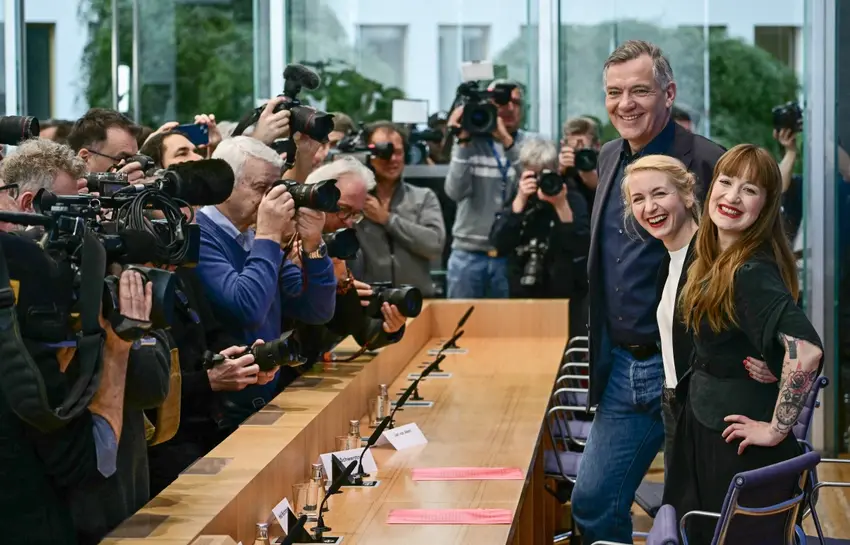
In sheer electoral terms, Sunday night was unusually dramatic by German standards. Most years, the polls are bang-on and counts are fast, meaning that it quickly becomes clear who can govern with whom. Last night, though, there were several unknowns – notably, new rules on how Bundestag is constituted and a new party, the left-wing/socially-conservative Bündnis Sahra Wagenknecht (BSW).
To make it even more fun, both this rag-tag outfit and the Liberal FDP were both polling so close to the 5 percent hurdle for entry that it was too close to call.
The losers lost, but not by much
In the end, Wagenknecht’s personality-cult party caught the bar with its toe, falling at 4.97 percent. And Christian Lindner’s own increasingly one-man outfit pulled over the hurdle with its foot, crashing out of Bundestag at 4.3 percent. Both of these are well-deserved defeats: beyond photos of ‘bouffant Betty’ and pleading for peace with Russia at literally any price, BSW didn’t have a message for voters.
And after cynically torpedoing a dysfunctional, but stable government at a time of severe international turmoil in the hope of electoral gain, Lindner has been served his just deserts. The Bundestag will be poorer without liberal voices (heaven help us if another pandemic comes along in the next four years), but in their current form, the FDP have reached the end of the road.
Share your thoughts: How do you feel about the election results as a foreigner in Germany?
Then again, as last night showed, pretty much every other party has, too. The SPD, which spent the Ampel years hoping that letting the FDP and Greens tear strips off each other would make them look like the natural party of government, have been taught the same lesson as the FDP: when coalitions fail, everyone involved looks bad.
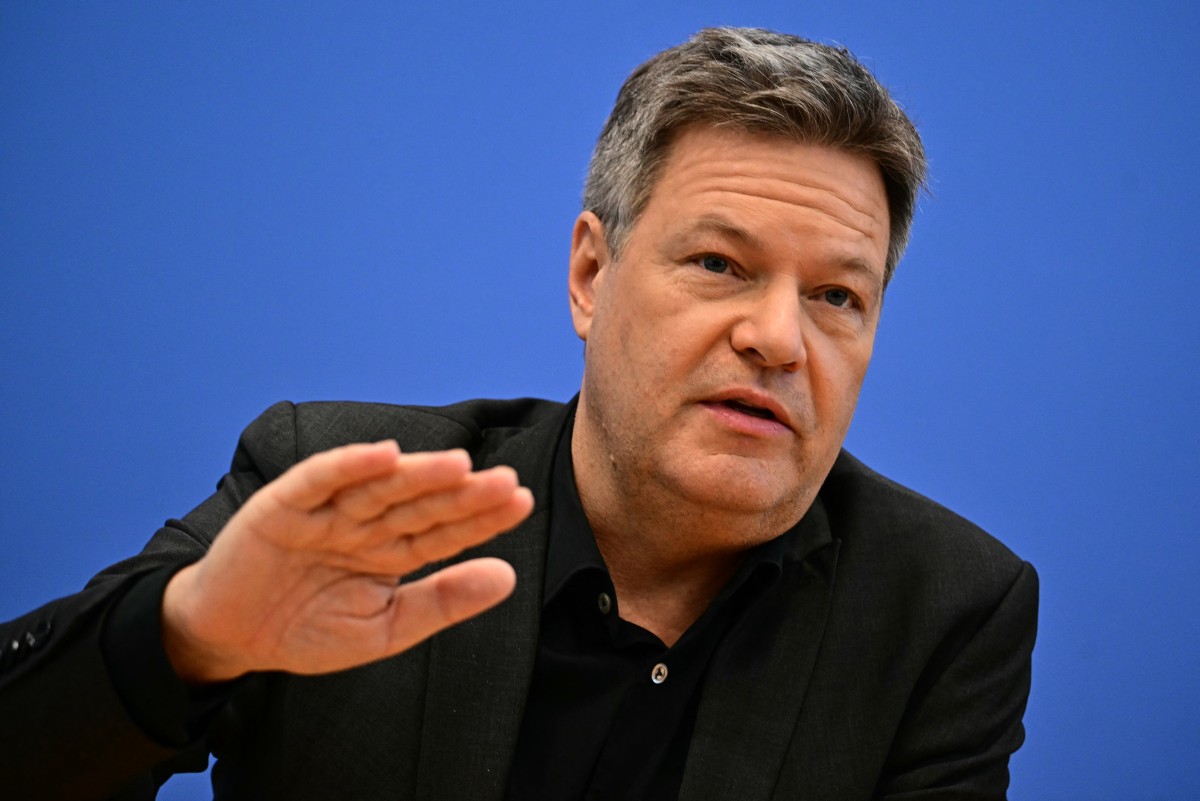
The Greens came off best, losing “only” 3 percent of their share of the vote compared to 2021, but this is hardly a strong performance. It simply reiterates that, whatever happens, they now have a core vote of around 10 percent, but that there’s currently no way back towards 20 percent/party-of-government territory. They, too, are at a dead end (as is Robert Habeck, who will now likely join Lindner and Scholz on the after-dinner-speech circuit).
The winners didn’t really win
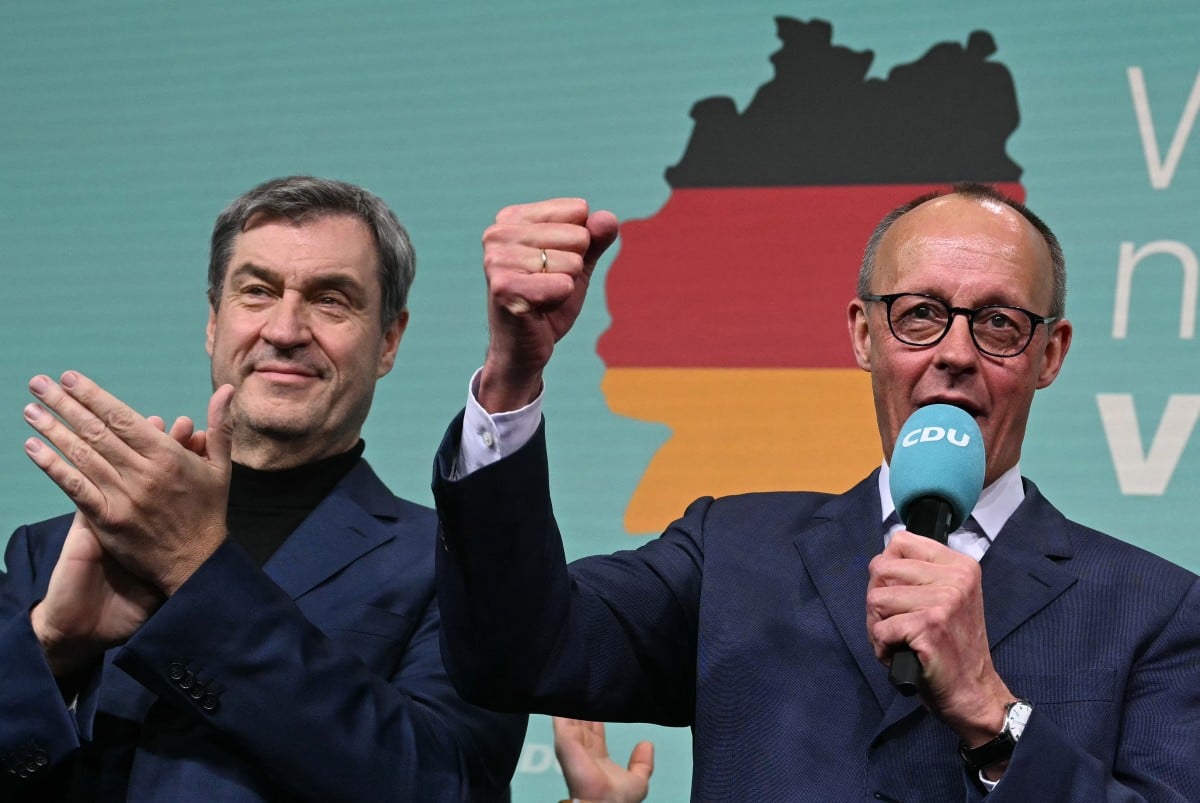
Even the two biggest winners of the night are in a political cul-de-sac. Yes, CDU/CSU have increased their share of the vote and are back to being the biggest party – but “big” is a relative term. In the Union, 30 percent is the psychological threshold – and Merz’ mishandled campaign took them from 30+ polling at the start of the year to 28.5 percent. He now starts the work of forming a government with only the grudging support of his party and anything but a ringing endorsement from the electorate.
READ ALSO: What kind of coalition government should Germany expect after election?
Indeed, rarely have so many voters cast their ballots (turnout was, at 82.5 percent, sky-high) without really endorsing the parties they opted for. Of course, AfD voters really enjoyed putting their cross in that circle – for a second, it made them feel like Trump signing decrees to clear out the riff-raff, deport those dodgy foreigners, and return things back to The Way They Were.
Yet for all Alice Weidel’s triumphalism about becoming a “Volkspartei” (people's party) – i.e. a 20 percent+ party of government – and for all Beatrix von Storch’s crawing on morning radio at the CDU/CSU’s second-worst result ever, last night didn’t go quite as well as hoped for the proto-fascists.
Even after a campaign marked by a spate of disturbing atrocities perpetrated by assorted foreign-born terrorists and nutjobs and Merz’ bringing them into the political fold, the AfD topped out at 20.8 percent. Secretly, they’d been hoping for something closer to 25 percent: in a four-party Bundestag, this would have conferred a third of the seats on them and so enough heft to block anything which requires an absolute majority.
One surprise winner turned things around
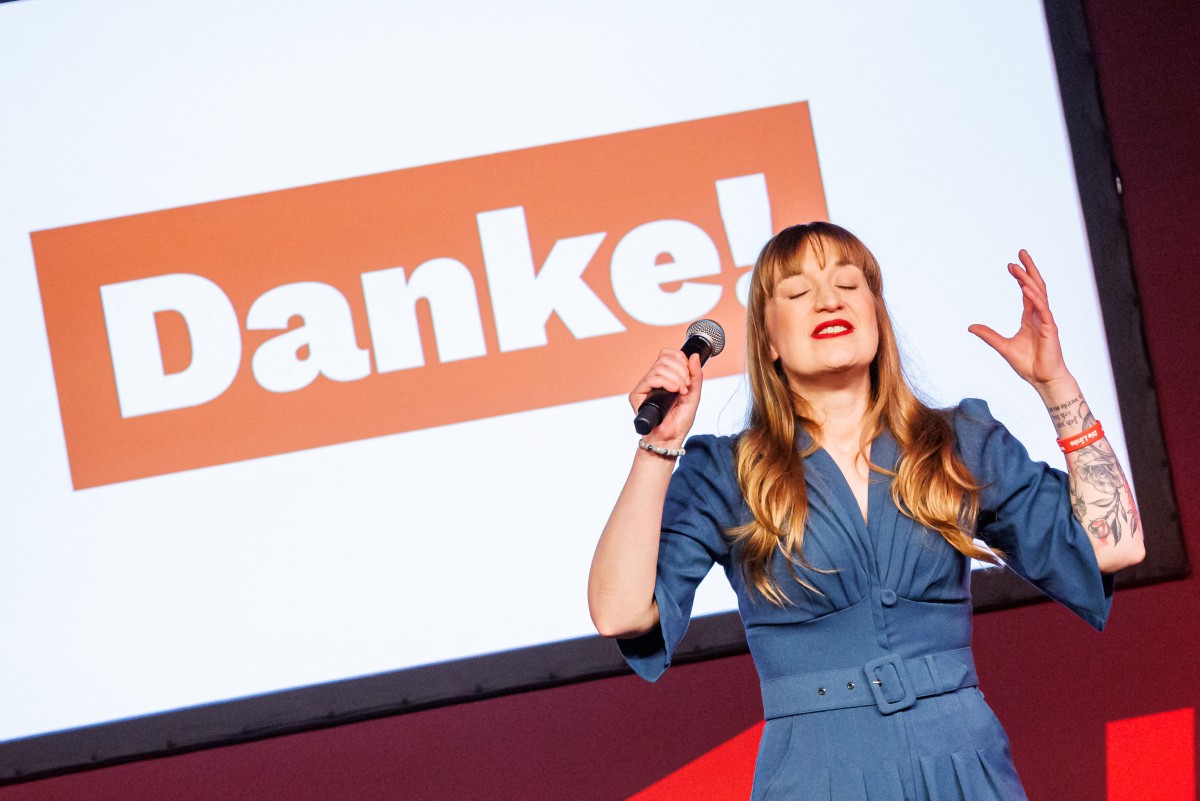
This is where the night’s only real winner came into play: Die Linke. Written off after Sahra Wagenknecht deserted to set up BSW, the far-left party surprised everyone as it found form over the last couple of months.
Using an intriguing combination of anti-fascist rhetoric (No pasarán!), TikTok skillz (Left veterans Bodo Ramelow and Gregor Gysi lip-synching, anyone?), and grassroots campaigning with surgeries for people having trouble with their service charges (“We’ll make your scrooge of a landlord pay!”), they powered their way back off of the parliamentary palliative ward and up to a stonking 8.8 percent of the vote.
That has really thrown a spanner into the AfD’s works, changing the maths in the Bundestag so that, with just over 75 percent of the seats, the other parties can work around it (e.g. to pass reform of the debt brake) – and, en passant, giving Friedrich Merz what he most wanted: the possibility of forming a two-party government with the SPD. You won’t catch Freddy being openly gleeful about this – the statist, social-welfare-loving woke Die Linke embody everything he hates about modern Germany – but away from the cameras, he’ll be relieved.
After all, even a no-longer-so ‘Grand Coalition’ with the other historic party of government will be challenging. Firstly, although the SPD knows how urgently Germany needs a government (any government!) and wants to stay in power, it can’t be seen by its few remaining loyal voters to put out on the first night, and so is already playing high-profile hard-to-get.
Secondly, what everyone forgets about Union-SPD tie-ups is that they are actually ménages-à-trois because the CDU’s sister party the CSU always has its own Bavaria-first agenda. All across home territory, results show that the CSU still have the AfD snapping at their heels in most constituencies – and as Horst Seehofer showed in the late 2010s when trolling Angela Merkel, Munich has no qualms about making Berlin’s life difficult if it helps burnish right-wing credentials.
Merz’ problem is that the SPD will weight the coalition back towards the centre and that, with a majority of just 12 seats, both they or the CSU will be able to hold him hostage whenever they want. To give you an idea of how easy this will be: over the last year, an average of 5.9 percent of the working population was off work sick. Friedrich Merz had better hope that MPs are made of sterner stuff: otherwise, he can expect 19 of them to be away from parliament with coughs, colds, and sundry ailments at any given moment.
So while Merz has every reason to claim victory, it is a narrow – and hollow – one. From day one, he will lead a shaky government working on a minimum-compromise agenda. And although the worst has been spared us – an AfD blocking minority of 158 MPs – the uncomfortable truth is that far-right outfit will, with 152 seats, now be the biggest party in opposition.
This will allow its MPs to profile themselves as the voice of ‘real people’ against a Berlin elite desperate to cling onto power. We can only hope that the combined 149 Green and Left parliamentarians have louder voices in the chamber. Yesterday’s dramatic election night was an augury of another tumultuous Bundestag term to come.
Comments