
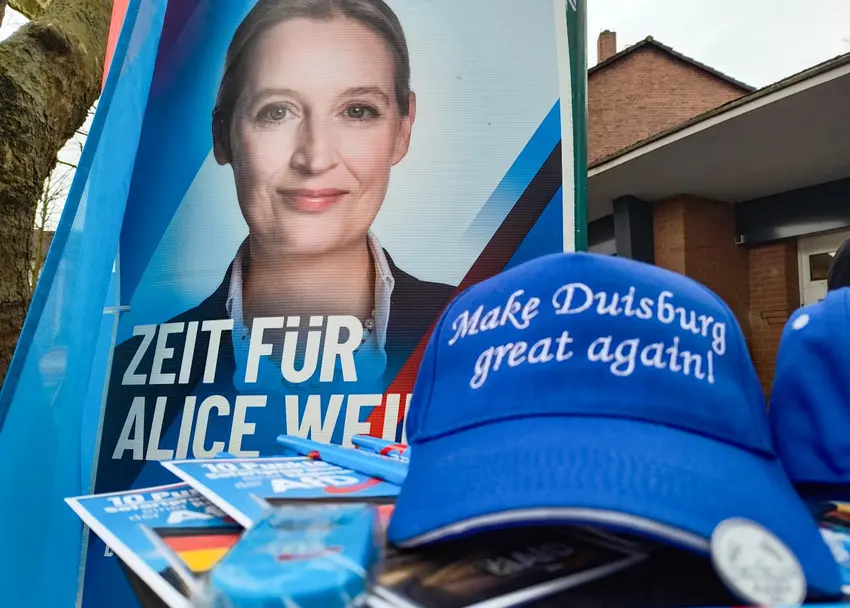
Germans voted in a federal election on Sunday and the results are clear: The right-leaning Union parties (CDU/CSU) gained the biggest share of votes and are on course to lead the next government. The far-right Alternative for Germany (AfD) grabbed the second biggest share of votes, showing that the anti-immigration party has become a significant political force.
We asked our readers to share their thoughts on the election results in a snap survey.
Nearly one-third of those who immediately responded said they were eligible to vote in the election – meaning they already held a German passport, or had recently naturalised.
Two-thirds of respondents were ineligible to vote because they didn’t have German citizenship. Many foreign residents living in Germany are unable to vote for this reason.
In fact there are more people living in Germany without a German passport than there were votes for AfD in the past election. [There are currently 12.9 million people living in Germany without citizenship, whereas the AfD got nearly 10.2 million first votes.]
OPINION: In Germany's election, too many voices will yet again go unheard
View this post on Instagram
Despite their inability to vote, foreign residents will still be affected by policies crafted by the incoming conservative-led government, and also by anti-immigrant sentiments which are fuelled by the AfD.
Many of our readers expressed concerns about the shift to the right in German politics that these elections have highlighted, while others were hopeful that centre-right leadership may boost the German economy.
READ ALSO: What kind of coalition government should Germany expect after election?
Foreign residents upset to see Germany shift to the right
Asked how they felt about the election results, many readers said they felt “worried”, “nervous” or even “terrified”.
Some noted that they were not surprised.
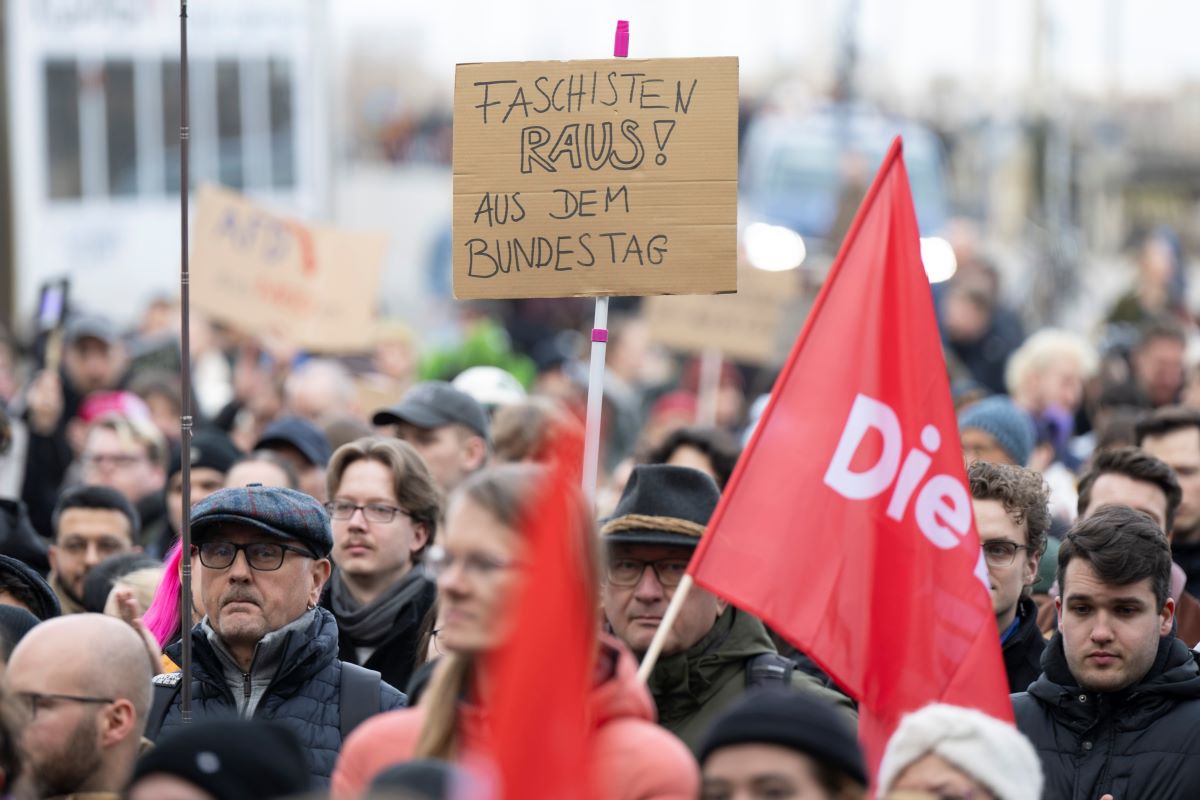
In general it appears that the victory of the conservatives (who made tightening immigration policies a big part of their campaign) and the gain in support for a far right anti-immigration party has left a bad taste in the mouths of many in the non-German population.
READ ALSO: German word of the day - Rechtsruck
Only a very few respondents expressed positive feelings about the result. But at least one reader found reason to celebrate Germany’s democratic tradition.
“Extraordinary results!” wrote Bhavesh Uppal, a 33-year-old sales manager in Berlin, adding that the incoming Bundestag maintains a full-spectrum of political offers.
“From Die Linke to AfD – there’s unity in diversity of opinions.”
Serious concerns about the AfD’s popularity
Top of mind for many respondents was the AfD’s surge in support, from just over 10 percent in 2021 to around 20 percent now.
With local chapters of the party formally considered right-wing extremist, and with leaders who have criticised Holocaust remembrance, invoked Nazi slogans and promoted deporting foreigners, many legally established immigrants in Germany have clear reasons for rejecting the party.
“I don't feel safe and frankly have no plans to travel anywhere near the East German states,” said David, alluding to the fact that the AfD won the majority of votes in nearly every constituency in the former East German states.
READ ALSO: How different groups of Germans voted in the federal election
Sabrina Mercer, a 68-year-old retired teacher living in Frankfurt said she was “horrified” about the AfD’s success and glad that they did not go much higher than 20 percent of the vote.
“I feel if they had taken the lead now with what is happening in the world, in light of the new alliance between Trump and Putin, it would have been disastrous on many levels.”
Nancy Landrum, a 63-year-old professor in Leipzig echoed these sentiments: “It's unsettling that the AfD had so much support. Germany is one place we thought we could escape extreme far-right ideologies. As an immigrant, I am worried.”
For some readers, who feel targeted by the far right party, seeing them gain so much voter support felt deeply personal.
“At least one fifth of the voters hate me and want me gone,” wrote Dmitry, a 36-year-old software engineer in Düsseldorf.
IN NUMBERS: What happened in the German election?
But most respondents had expected the vote to go this way, even if they noted concerns about the general trend toward right wing populism.
I can feel the change in the last two years and the anti-immigrant sentiment is only growing due to AfD’s rhetoric,” said Juan, who lives in Munich. “I still hope for the best with a centre coalition."
Erica, a 41-year-old freelance copywriter in Berlin, said she expected this result but had hoped the centre-left would have retained more votes.
She added, “Elon Musk's endorsement of AfD exposed some of the party's internal contradictions: The so-called nationalist party of the economically disenfranchised directly aligns with an über-rich immigrant's views."
Despite their hardline anti-immigration stance, the far right party does find some support among foreign residents.
A handful of respondents to our survey indicated that they voted for, or would have voted for, the AfD – amounting to about 20 percent of those surveyed, which is roughly aligned with the proportion of AfD voters seen across the country.
“I am disappointed that the AfD did not perform more strongly,” wrote Denizan, a 31-year-old engineer in Bremen.
He suggested that the Union parties have “already betrayed their election mandate to deport more illegal immigrants…This is particularly concerning to me as a legal immigrant who did everything right to become naturalised and have worked hard my entire life.”
'I don't trust Merz'
Despite their increased support, the AfD is still not in a position to govern in Germany.
Leading the country’s next coalition government will be CDU leader Friedrich Merz.
Asked how they felt about Merz becoming Germany’s next Chancellor, readers of The Local had mixed responses.
Overall, the response to Merz could be described as less than positive.
Many readers who disliked him said they didn’t trust him to follow through on campaign promises, or expected him to push Germany further to the right.
“Big yikes,” said Elizabeth, a 31-year-old software engineer in Berlin. “I don't expect him to uphold norms or be a trustworthy coalition partner, and I think his strategy will be to try to make the SPD blink by threatening them with the AfD.”
“This new, more right-wing CDU worries me,” said Carlos, a 38-year-old Cologne-based software developer. “As a European citizen, I don't exactly have direct fears about immigration policies, but I wouldn't like to see a Germany with closed borders.”
Carlos added that he’d prefer to see the next government coalition take aim at structural problems such as heavy bureaucracy.
READ ALSO: Netanyahu, Trump and the far right - What Merz said the day after German election
Interestingly, Merz’ business credentials earned him both support and criticism, depending on readers’ views of his politics.
Simon Slade, a retiree living in Frankfurt described Merz as “an old wealthy white man who worked for Blackrock and lacks both empathy and understanding of what is required.”
In support of Merz, Leoni, a 54-year-old English teacher in Leipzig said, “I believe he can stabilise the struggling economy...” But Leoni added that if Merz works more with the far right, that could hurt the country’s ability to attract skilled workers.
Another reader noted that his business-friendly politics could be popular with companies, but said they hope he doesn’t give up on Germany's climate promises.
READ ALSO: Tax to citizenship - What should foreigners in Germany expect from a CDU-led government?
Thank you so much to everyone who completed our survey. Although we weren't able to use all the responses, we read them all and they helped inform our article. Please feel free to leave a comment below if you would like to add any other opinions to the conversation.
Comments