

That the conservative Union parties (CDU/CSU) won the most votes in Sunday’s election, followed by the far-right Alternative for Germany (AfD) should not be a surprise to anyone who follows German politics, or regularly reads The Local.
Voter opinion polls have been predicting exactly this result for weeks – in fact the polls hadn’t shifted significantly for Germany’s leading parties since election campaigns began.
If any result in the election can be considered a surprise, it’s that the Left party (Die Linke) won nearly nine percent after polling below five percent as recently as January.
READ ALSO: Conservatives win German election as far-right AfD surges
But while the overall results of Bundestagswahl 2025 proved to be predictable, you may be surprised to see votes varied across Germany's districts, or among specific demographics.
Noticeable differences between former East and West Germany
When the election results are broken down by constituency and mapped, you can see a sharp contrast between voter preference in former East and West Germany.
The anti-immigration AfD party won the majority of votes in almost all of the constituencies in the former East German states (Mecklenburg-Pomerania, Brandenburg, Saxony, Saxony-Anhalt and Thuringia).
The only exceptions were Berlin and Potsdam and a couple of constituencies (one in Saxony and one in Thuringia) that voted primarily for Die Linke.
This clear delineation in voter preferences is a strong example of Germany’s ‘phantom border’. Even though East- and West Germany were formally unified more than 30 years ago, elections have shown again and again that voters in the former Eastern regions are more likely to vote for both right- and left-wing populist parties.
READ ALSO: How does Germany's 'phantom border' still divide the country?
In recent elections - and in this one - AfD has emerged as by far the strongest electoral force in former GDR states.
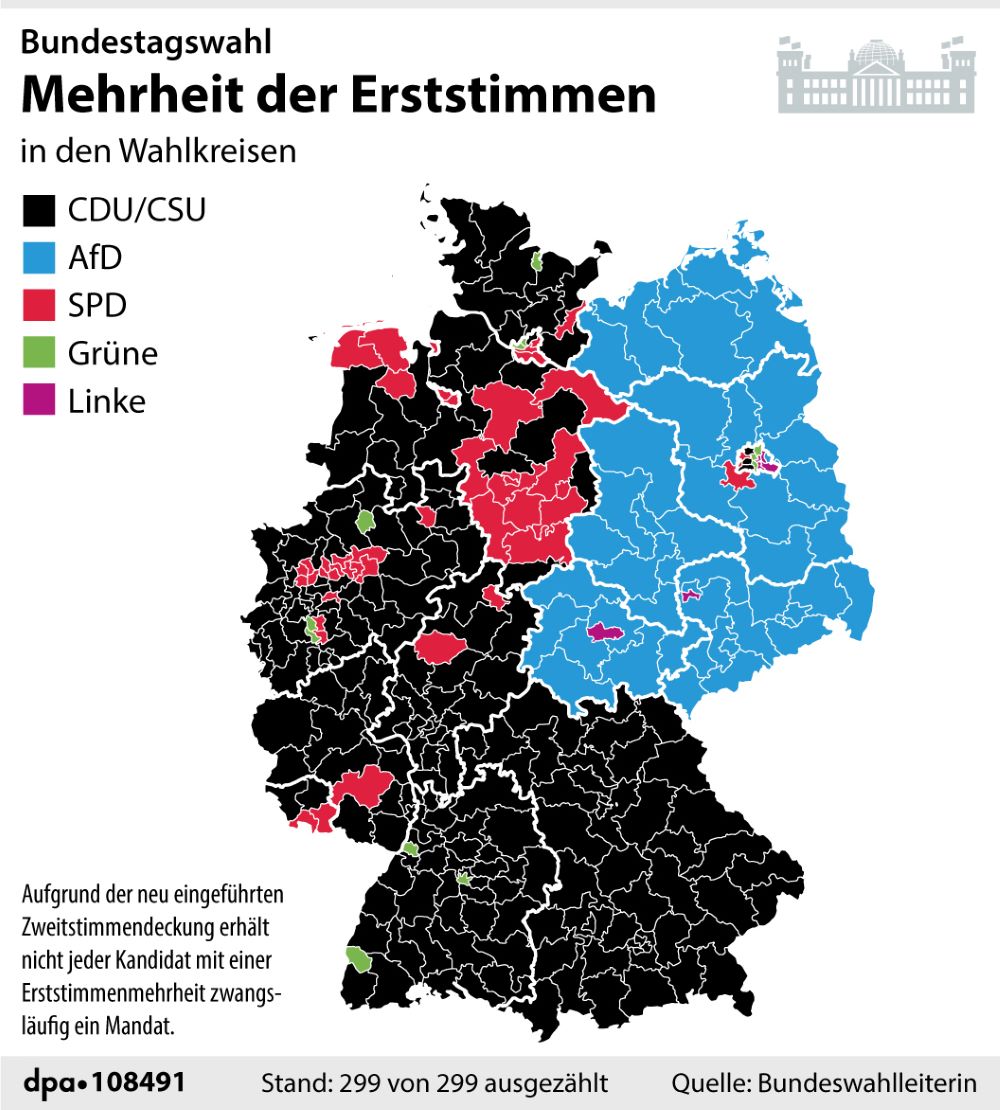
Meanwhile, the conservative parties took the most votes in the vast majority of constituencies across Germany’s western and southern states.
The conservative stronghold is especially strong in Bavaria, where every single constituency saw a majority for the conservative CSU party in both first and second votes.
The biggest exception to the Union’s sweeping success in the former West German states is seen in the east of Lower Saxony, where a cluster of districts saw majorities for the centre-left Social Democrats (SPD).
A few constituencies in Baden-Württemberg, North Rhine-Westphalia and one in Schleswig-Holstein voted primarily for the Greens. Hamburg also saw more support for the SPD and Green parties.
How did various age groups vote?
There are also stark differences in voters’ opinions to be found between the generations in Germany.
The conservatives' overwhelming victory can be attributed largely to their support from voters aged 60 or above - a group that also tends to vote for or the SPD in their droves.
Christian Endt, a data-journalist for Die Zeit, called the SPD a “pensioners’ party” in a recent post on Bluesky, noting they can expect single digit shares of votes in all groups below 60 very soon if the trend continues.
Diese Grafik erzählt so viel. Die SPD ist eine Rentnerpartei, bei allen unter 60 bald einstellig. Union ähnlich. Die Linke räumt bei den Jungen ab. In meiner Generation der 30-44-Jährigen ist die AfD stärkste Kraft, the fuck. www.zeit.de/politik/deut...
— Christian Endt (@cendt.de) 24 February 2025 at 00:17
[image or embed]
Interestingly, the Left party has done really well with Germany’s youngest voters this time around. Die Linke won the biggest share of votes from 18 to 29 year olds – this election cycle the party was up 16 percent compared to 2021, landing on 27 percent.
READ ALSO: OPINION - Merz is on top but the Left are surprise winners in Germany's dramatic election
The AfD was the only other party to get above 20 percent of the vote from the youngest voter group, but the far-right party's biggest support came from 30 to 44 year olds.
How was gender related to voter preferences?
Beside location and age, gender is also known to affect voter preferences.
For example, polls leading up to this election repeatedly showed that women tended to show less approval for both the conservative Union parties and the far-right AfD.
The Union turned out to be the biggest winner among Germany’s female voters – getting about 27 percent of the votes – but whereas the Union gained 10 points among male voters compared with 2021, they only gained six points with women.
READ ALSO: Germany's far-right AfD jubilant after gains
This could be in part due to CDU leader and soon-to-be Chancellor Friedrich Merz' statements that he would not seek gender parity in his cabinet, among other controversial conservative takes.
Women were also less likely than men to vote for the AfD by about six percentage points, and they were more likely to support SPD, the Greens, the Left and Sahra Wagenknecht’s BSW.
According to a report by Zeit, the starkest difference in voter behaviour is seen between younger women in cities as compared to older men in the countryside.
The results between these two groups are almost polar opposites: the majority of older men in rural areas voted conservative and only a slim percentage voted left, whereas the opposite is true among younger urban females. Both groups saw moderate support for SPD, but the young women supported the Greens more and the AfD less than the male group.
How did Berlin vote?
A narrow majority of voters in the capital city opted for the Left party, which won 21.8 percent of the first votes compared to 21.3 for the CDU. This marks the first Left party victory of a Bundestag election in Berlin.
Berlin has historically been a stronghold for the Social Democrats – the SPD won the majority followed by the Greens in 2021, but before that it regularly came in first or second along with the Union since 1990.
READ ALSO: What kind of coalition government should Germany expect after election?
But in this election the SPD placed fourth for first votes, after the Left, the Union and the Greens. The SPD beat the AfD by about one and a half percent in first votes, but actually lost to the AfD just barely in second votes.
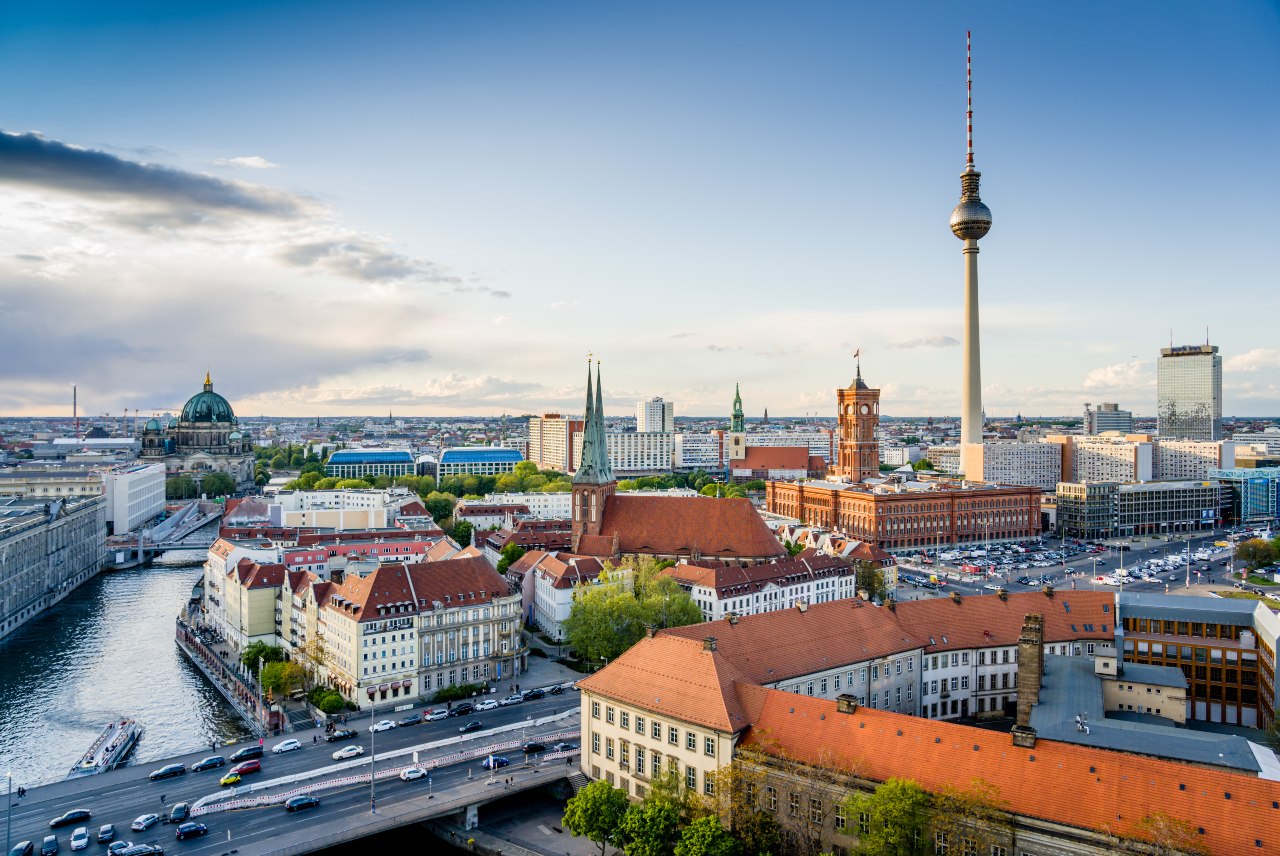
In terms of constituencies, the Left won six and the others were split between the CDU and the Greens – with the exception of Marzahn-Hellersdorf which was won by the AfD.
Tagesspiegel has published an interactive map that shows how Berlin’s districts voted.
It shows that the Left party swept most of the southeast quarter of the city including Treptow-Köpenick, much of Frierichschain-Kreuzberg, Nuekölln and Lichtenberg. Meanwhile the Greens claimed a significant portion of the middle of the city, and the conservatives got large swaths of the western districts.
The AfD won majorities in some of the north-eastern districts including in Marzahn-Hellersdorf and Pankow.
READ ALSO: Inside Germany - Poll surprises, election TikTok and the benefits of immigration
Comments (1)