
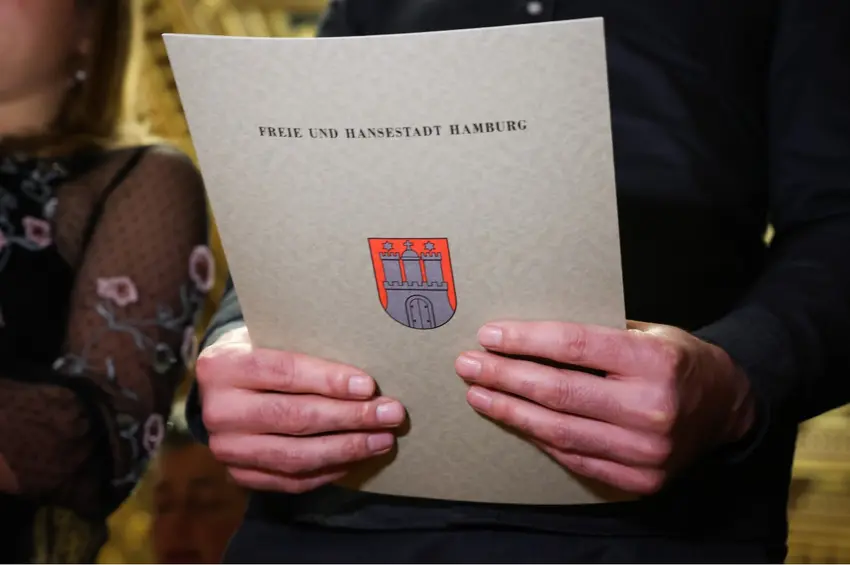
Germany's reformed citizenship law came into force on June 27th 2024. As well as allowing dual nationality, the reform lowered some of the hurdles for naturalisation.
Requirements include having lived in Germany for five years (rather than the previous eight years) and having B1 level German skills.
A previous part of the law that allowed people to naturalise after three years if they had special integration achievements and advanced German was axed in 2025 by the government.
The reform includes carve outs that exempt certain groups from having to pass a language test.
Since the law change, Germany has seen a dramatic increase in the number of foreign residents naturalising.
If you're considering applying, here are the requirements you can check and documents you can pull together using our citizenship checklist here.
Your German Citizenship Checklist:
- Legal Residency Period
- Sufficient German Language Skills
- Passing the German Citizenship Test
- Ability to Support Oneself
- Record Clear of Serious Criminal Convictions and Hate Crimes
- Forms, Documents, and the Fee

Item One: Legal Residency Period
Under the law, you will need to have been legally resident in Germany for at least five years. This is down from eight years, with legal residence referring to having lived in Germany on a valid residence permit.
Note that people who have been in Germany on different residence permits in that time – for example on an EU Blue Card for two years and then permanent residence for three years – would be eligible to apply for German citizenship.
READ ALSO: How German citizenship differs from permanent residency
The five-year rule will also apply to children born in Germany to foreign parents. Those children will be eligible for citizenship by being born in Germany – provided at least one of their parents has been legally resident here for at least five years.
You can prove your residency information with copies of your registration (Anmeldung), residence permit, and other similar documents.
READ ALSO: 'I'll be proud to finally become German': Foreigners react as dual citizenship law passes
Item Two: Sufficient German Language Skills
You’re going to need to demonstrate at least a B1 level of knowledge in German to be able to qualify for citizenship.
This is the third of six possible levels and those who complete B1 are typically classified as intermediate speakers who would be able to independently use the language. This means a B1 speaker would typically be able to handle aspects of their daily life – from making and keeping their appointments, to dealing with the authorities, to managing fluent conversations in their areas of interest without the aid of a translator.
B1 speakers aren’t generally expected though, to have advanced enough German knowledge where they could attend university courses or understand complex political debate without help – though they should be able to read some German newspapers – particularly tabloids that tend to favour simpler language.
READ ALSO: How long does it take for your German to be good enough for permanent residency and citizenship?
To certify your knowledge, you’re going to need to pass an accredited exam of at least B1 level. You can generally take these exams at a Volkshochschule or at an accredited language school – often for a fee. You can, however, book and pass this test even before you become eligible – allowing you to apply the day you hit five years if you want to.
To prove all this language knowledge, prepare an official copy of your test results. Some people aged 67 and older - such as those from the 'guest worker' generation who naturalise under the new law will be able to do so without a language or citizenship test – provided they can communicate with the authorities orally without a translator.
In a previous draft of the law, all over-67s were also exempted from taking a formal B1 test. But under the reform that passed there are no specific carve-outs that apply to everyone over a certain age.
READ ALSO:
- How good does your German have to be for the different paths to citizenship?
- How can over-60s get German citizenship under the new nationality law?
Item Three: Passing the German Citizenship Test
In addition to your language test, you’ll need to make an appointment for – and pass – the German citizenship test. Similar to the language test, you can do this before you hit your five years – so you can theoretically apply the day you become eligible.
The test consists of 33 questions about life in Germany and can cover themes ranging from German politics to history, art and more.
30 of the questions are general for all of Germany and the remaining three are generally specific to the German state you live and are applying in. You’ll need to answer at least 17 of them correctly to pass.
- What I was asked about in my German citizenship test
- Is dual citizenship really at risk of reversal?
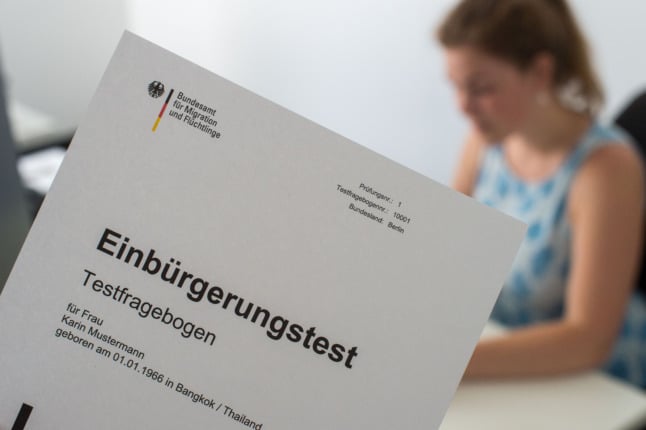
If you do pass, you should get an official document noting your results to include with your citizenship application.
Some groups, such as those from the guest worker generation, don't have to supply this test result under the new law.
TEST: Could you pass the German citizenship exam?
Item Four: Ability to Support Oneself
Under the law, you need to prove that you’ve not collected unemployment benefits and have supported yourself for at least 20 months out of the previous 24 before you apply.
Although the authority you apply to may check and verify this themselves using your tax ID number, collecting tax returns, or documentation from your health and social insurer can’t hurt.
If you’re a freelancer, you’ll probably need to head to a professional tax consultant who can issue a proof of income document your caseworker will accept, with the cost of this ranging into the hundreds of euros.
If you own your own home rather than renting it, you may need to get a Grundbuchauszug – or a land registry document proving that you own the property. This is usually between €10 and €20 though.
READ ALSO: 'I've always had jobs': Women's German citizenship bid blocked by unemployment
Item Five: Record Clear of Serious Criminal Convictions and Hate Crimes
Under both the old and the latest law, you cannot have a criminal record in Germany – or indeed another country – of a criminal offence that would normally carry a prison sentence of at least 90 days, in order to naturalise as German.
The most serious of offences would permanently bar someone from taking German citizenship. Some lesser ones though, will no longer count after a certain period of time has passed since the end of the sentence – typically at least 10 years.
READ ALSO: Which criminal convictions could get you barred from German citizenship?
The German authorities will check the German criminal register themselves for your name – but they may also check foreign ones. If you lie about previous criminal offences, you may end up being permanently barred from citizenship. They will also check for extremist activity.

The law in particular takes a hard line against anti-Semitism and other hate crimes – and requires applicants to swear to uphold the principles of the German Basic Law – including equality between men and women.
Anyone who doesn’t make this declaration or who is found to have committed certain hate crimes can be permanently barred from taking German citizenship.
READ ALSO: When can German citizenship be revoked for statements against Israel?
Item Six: Forms, Documents, and the Fee
Other than the registration, residency permits, financial documents, and test results already mentioned, you’ll need a few other documents.
Most notably, you’ll need to fill out your application form and may need to supply another valid form of identification alongside your residence permit – such as your existing passport. You’ll need a valid passport photo. You’ll also need to provide certified copies and potentially translations of your birth certificate and marriage certificate, if applicable.
Be sure to check with the local authority of where you’re naturalising, as they may have their own requirements covering how you send them documents.
Finally, the standard fee to apply for naturalisation as a German citizen is €255, with an additional €51 for each dependent child.
READ ALSO:
- How much does it really cost to apply for German citizenship?
- What documents should you get after obtaining German citizenship?
We updated this story in February 2025.
Comments (4)