
Toward the end of last year it was reported that a man in Berlin had his newly acquired German citizenship revoked after just one day due to a post he had made on social media.
The man was a Syrian national who had moved to Germany early enough to attend pre-school in Berlin.
One day after naturalising as a German, he had shared a photo on Instagram of two Hamas fighters with a Palestinian flag and captioned the photo: “Heroes of Palestine” with a green heart emoji. According to a report in Tagesspiegel, the man had already attracted the attention of the police several times at pro-Palestine demonstrations.
His social media activity was brought to the attention of Berlin’s immigration authority, which then ultimately made the decision to revoke the man’s German citizenship.
He may still try to legally challenge the decision, but the case serves as a poignant example of how Germany’s so-called “reason of state” (Staatsräson) affects citizenship law.
There are other cases in which people have been disqualified from German citizenship for much less than explicitly voicing support for Hamas, which is designated as a terrorist organisation in Germany and the EU.
In some cases people who are critical of the state of Israel’s actions in Gaza, but do not see their own statements as being anti-semitic, may find they have risked their eligibility to maintain, or apply for, German citizenship.
So what exactly is considered as being opposed to Germany’s special responsibility to Israel by Germany's immigration authorities?
We contacted the Federal Ministry of the Interior, Berlin’s State Office for Immigration and an expert in immigration law to unpack the issue.
‘Criminal deception’
Germany’s Naturalisation Act doesn’t actually contain specific rules about what can or cannot be said publicly or shared online.
As The Local has reported there are just a few specific cases in which authorities can justifiably strip a German national of citizenship.
For dual-nationals who have recently naturalised the most common reason would be that they are found to have provided false or misleading information in their citizenship application. This amounts to “fraudulent misrepresentation” or “criminal deception” (arglistige Täuschung).
As written in section 10 of the Nationality Act, part of the naturalisation process involves signing a declaration of commitment to “the free democratic basic order of the Basic Law for the Federal Republic of Germany…” and “for the protection of Jewish life, as well as for the peaceful coexistence of peoples and the prohibition of waging a war of aggression”.
A spokesperson for Germany’s Interior Ministry (BMI) told The Local that this declaration should be “sincere and based on inner conviction”.
If someone who has made this declaration is later found to have demonstrated that they don’t maintain these values through their words or actions, this is considered deceptive, and that person risks having their German citizenship revoked.
READ ALSO: Do new German citizens have to affirm Israel’s right to exist?

The spokesperson for the BMI added that suspicion around the accuracy of the declaration may arise “during a personal interview with the citizenship authority, through information provided by other authorities, or as a result of a standard investigation...into an applicant’s immigration or asylum file”.
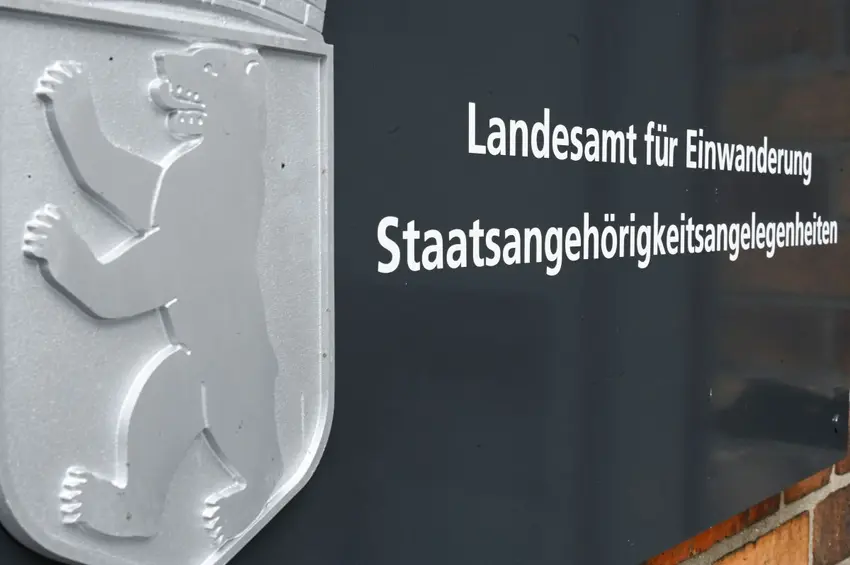
Enforcement of the Nationality Act ultimately lies with the federal states in Germany. So in the aforementioned case, it was Berlin’s Landesamt für Einwanderung (LEA) which decided that the man had effectively deceived authorities.
The LEA does not comment on specific cases, but an LEA spokesperson did confirm to The Local that when “evidence suggests that a factually incorrect declaration was made prior to naturalisation…the naturalisation may be revoked within ten years of the issuance of the naturalization certificate.”
They added that these kinds of investigations “are always assessed on a case-by-case basis…”
How many dual-nationals have been affected?
It’s not clear how many people have lost their German citizenship for this reason.
As the Local recently reported, at least 418 people saw their German citizenship taken back in 2025, according to BMI figures. However, the Interior Ministry could not specify how many of these cases involved cases of criminal deception.
But Christin Schneider, an expert in immigration law who previously worked at the Foreigners' Registration Office and now works at the legal services firm Migrando, told The Local that she and her colleagues have seen an increase in related cases.
Schneider noted that cases where citizenship is revoked due to a single social media post "are not the norm", but that there has been a jump in the number of people seeking legal support after having been rejected for German citizenship due to suspicions around their declaration of commitment to German values.
"We are receiving an increasing number of applicants who contact us after their appointment…because they have been summoned to a hearing by the authorities, where they are essentially accused of having spoken out 'against the protection of Jewish life'," Schneider said.
She added that since the modernisation of German nationality law in 2024, there has been a "noticeable intensification in the examination of loyalty and commitment requirements, particularly in connection with Germany's special historical responsibility."
READ ALSO: How many newly naturalised Germans have their citizenship revoked each year?
Your digital presence as evidence
Schneider said that applicants’ reports, as well as observations of administrative practice, show that “social media content can also be used as a source of information” by German authorities.
This is not strictly limited to the content posted by an individual themselves, but may also include a review of the kind of content they have “liked” or shared. A single like would not be seen as valid evidence for rejecting a citizenship applicant, but repeated engagement with extremist content could be.
Extremist content can here be understood as that which glorifies violence or promotes anti-semitic narratives. In many cases, what is considered extremist content would be obvious to most, especially those with a decent understanding of German history.
But disagreements and misunderstandings have been known to arise, especially in discourse and activism surrounding the ongoing conflict in Israel and Gaza.
For example, the spokesperson for the BMI confirmed to The Local that the phrase “From the river to the sea,” when connected to calls for, or endorsement of, violent acts against the State of Israel, could be considered a clue regarding someone’s commitment to the protection of Jewish life.
Comments