
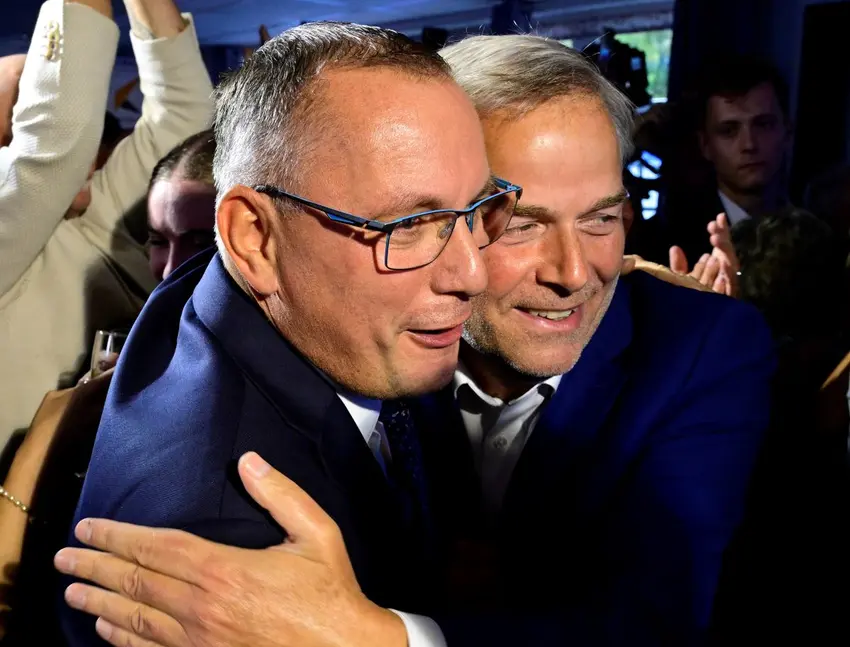
Sunday's state election in Mecklenburg-Western Pomerania (MV) delivered one of the most striking results seen in German regional politics for years.
According to the latest projections, the far-right Alternative for Germany (AfD) has emerged as the largest party with 38.2 percent of the vote, ahead of State Premier Manuela Schwesig's SPD on 35.5 percent.
For foreign residents, one likely consequence of the result is a renewed debate about migration, social cohesion and Germany's political direction.
And with the CDU facing difficult questions – and the AfD continuing to build momentum – the repercussions of Sunday's vote could be felt well beyond MV in the days and weeks ahead.
Which parties cleared the five-percent threshold?
Germany's state elections use a five-percent threshold, meaning parties generally need at least five percent of the vote to win seats in parliament.
This time, only four parties cleared that hurdle. The far-right AfD finished on 38.2 percent according to the latest projections, while the centre-left Social Democrats (SPD) took 35.5 percent.
The Left Party (Die Linke) and the Greens also entered parliament, with 6.5 percent and 5.7 percent respectively.
By German standards, that’s an unusually small number of parliamentary parties. This is likely due to the fact that the election in MV was largely seen as a two-horse race - with voters either coalescing around the AfD or tactically voting against them.
Several parties narrowly missed out, including the Sahra Wagenknecht Alliance (BSW) on 4.8 percent. The FDP performed even worse, winning just 1.0 percent.
But arguably the biggest shock of the night was the news that the conservative Christian Democrats (CDU) did not reach the five percent threshold. At 4.9 percent, the CDU recorded its worst performance in a state election in the history of the Federal Republic.
What does the result mean for the CDU?
Because the CDU leads Germany's federal governing coalition, the result is likely to be interpreted as a verdict on the party's performance in Berlin.
Merz responded quickly on election night, insisting that he intended to remain in office and continue pursuing his reform programme.
But the Chancellor’s position has been under pressure for some time now and it remains unclear whether this latest blow in MV – combined with poor election results in Berlin – could develop into a serious challenge to his leadership.
READ ALSO: What foreign residents need to know about Mecklenburg-Western Pomerania's state election
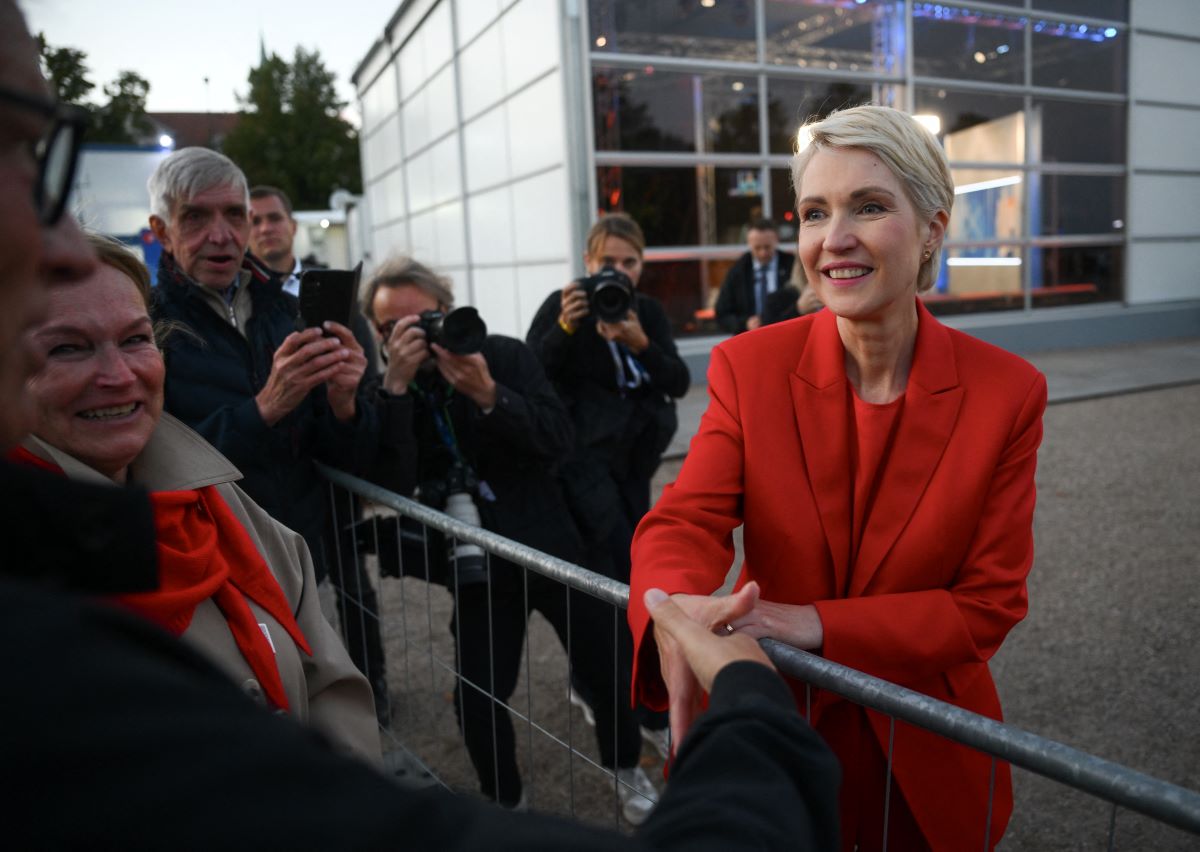
At state level, the CDU's collapse appears to have had a specific cause. Rather than winning support away from the AfD, the SPD's recovery appears to have come largely at the CDU's expense, with Schwesig's campaign successfully presenting the SPD as the strongest available alternative to the far-right party.
As a result, many centre-ground voters appear to have rallied behind the SPD, squeezing the CDU in the process.
What does the result mean for Mecklenburg-Western Pomerania?
The previous SPD-Left coalition no longer commands a majority, but a coalition of the SPD, The Left and the Greens would. All three parties have ruled out forming a coalition with the far-right AfD.
As a result, MV is now expected to move from a two-party red-red coalition to a three-party red-red-green government, with the SPD remaining the dominant force.
The likely priorities are familiar ones: affordable energy, economic development, schools, healthcare, infrastructure and measures aimed at strengthening social cohesion.
READ ALSO: Is German Chancellor Merz taking a harder line against the far-right after AfD win?
Yet governing may not be straightforward. According to the projected seat distribution, the AfD is expected to hold 32 of the parliament's 71 seats, giving it a blocking minority on some key votes.
In theory, that could make parts of the governing coalition's agenda harder to implement.
Who voted for the AfD?
The AfD dominated much of rural Mecklenburg-Western Pomerania, winning more than 50 percent in several constituencies and recording exceptionally strong results in smaller communities. In one municipality, Groß Luckow, it won almost 79 percent of the vote.
The picture was different in urban areas. The SPD remained the strongest party in Schwerin, Rostock, Greifswald, Wismar and Neubrandenburg. But even there, the AfD often finished a strong second.
READ ALSO: 'Why is the AfD so popular?' - Your questions answered on the far right threat in Germany
The result highlights a political divide that is becoming increasingly familiar across Germany: stronger support for the AfD in smaller towns and rural regions, and greater support for centre-left, left and green parties in larger urban centres.
Comments