
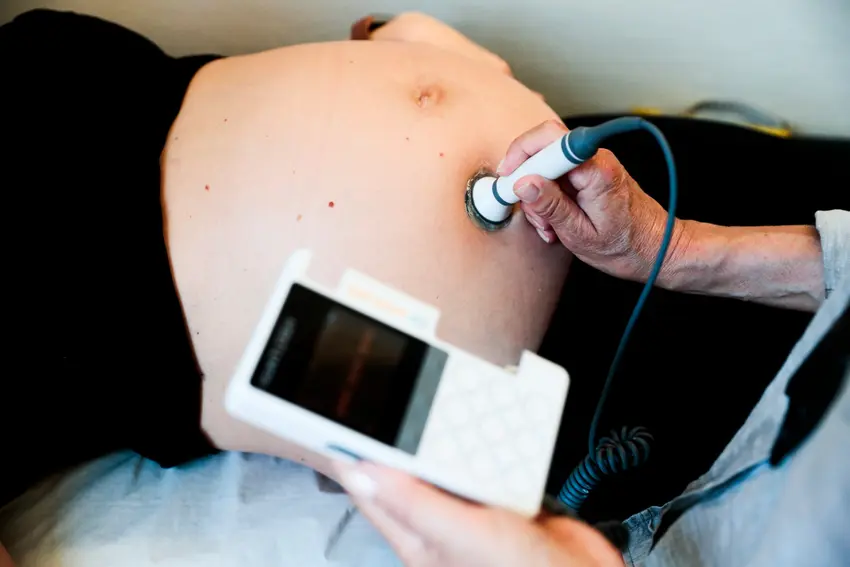
A growing number of gynaecologists are warning that women could end up paying the price as Germany’s healthcare system prepares for a major cost-cutting reform.
Doctors' groups are warning about longer waits, fewer available appointments and increasing pressure on practices, while health insurers insist that patient care will not suffer.
The concerns stem from Germany's Statutory Health Insurance Contribution Rate Stabilisation Act, a cost-cutting reform passed earlier this year to address a multi-billion-euro deficit in the statutory health insurance system.
The law bringing the reform was passed on July 10th, but details around how doctors are reimbursed for their services are still being hammered out.
Why are doctors worried?
The dispute centres on a change in how certain medical services will be paid for from 2027. A number of services that were previously reimbursed separately from doctors' regular budgets are due to be folded into a funding pool that operates under spending limits.
Until now, doctors were generally paid for prenatal care and certain preventive examinations outside their normal budget. In other words, a gynaecologist who saw more pregnant women would generally be reimbursed for the additional care provided.
But from 2027, many of these services are expected to be moved into a broader "morbidity-based total remuneration" system. Doctors say this could mean that if they treat more patients than anticipated, the extra work would no longer be fully reimbursed.
Per Kistenbrügge, a gynaecologist from Hanover, told Tagesschau that practices could end up being funded on the basis of historical activity rather than the number of patients they actually see.
READ ALSO:
- Germany softens health insurance reform plans ahead of key vote
- What German health insurance benefits can you get during pregnancy?
What would this mean for patients?
No one is suggesting that prenatal care or cancer screening will disappear, but doctors are concerned that already overstretched practices may become less willing or less able to expand capacity or take on additional patients.
For pregnant women, that could mean greater difficulty finding a practice that accepts them.
It could translate into longer waiting times for routine appointments, preventive examinations or specialist services.
For example, menopause specialist Katrin Schaudig, president of the German Menopause Society, told MDR that funding pressures could make it harder to expand access to specialist menopause counselling at a time when public awareness of the issue is growing.
There are also concerns that many practices would rely on private and self-pay services to make up for lost income, potentially creating additional barriers for women on lower incomes.
Health insurers play down doctors' fears
Health insurers strongly reject the suggestion that the reform will automatically lead to worse care.
The GKV-Spitzenverband, which represents Germany's statutory health insurers, argues that the money currently spent on these services is not being removed.
"Not a single euro less" will be available for preventive and early-detection examinations in 2027, according to spokesperson Florian Lanz.
READ ALSO: How to speed up getting a doctor's appointment in Germany
AOK Lower Saxony has made a similar argument. The insurer argued that quota-based reimbursement would only become an issue if patient volumes increased and said it didn't expect this to happen because birth rates are declining in the state.
What happens next?
While the law has already been passed, negotiations currently under way will determine exactly which services remain subject to spending limits, and whether exceptions can be made.
Doctors' organisations are using this window to push for changes.
The Professional Association of Gynaecologists has launched a petition that has already attracted tens of thousands of signatures.
The National Association of Statutory Health Insurance Physicians has also described the concerns as justified and is seeking improved funding arrangements in the ongoing negotiations.
Comments