
German climate researcher Stefan Rahmstorf is warning that Europe needs to prepare for more and more extreme weather events in the future due to climate change.
"Where warming is particularly strong, there are also stronger extremes. Their frequency increases with warming," Rahmstorf, a scientist from the Potsdam Institute for Climate Impact Research (PIK) told the Rheinische Post in an interview published Monday.
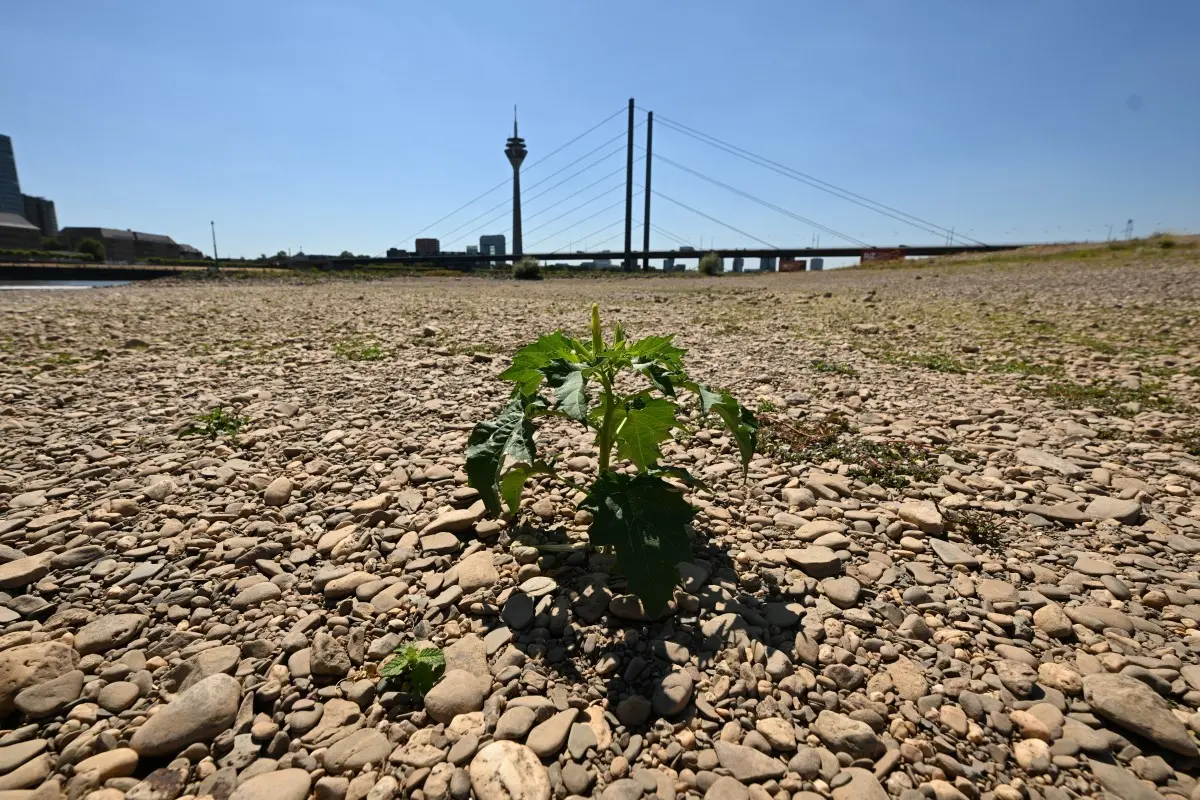
Asked if this summer's weather, including extreme heatwaves, drought, low water levels on important rivers and a large number of forest fires was "the new normal", Rahmstorf said no, "it will not stay that way, but will continue to worsen".
"What we are seeing right now is a combination of long-term global warming and natural weather fluctuations," he added. "When both come together, such extreme summers with record temperatures are created. But climate change will continue, and we experience such hot summers more and more often as long as we do not bring emissions to zero."
IN NUMBERS: Yes, summers in Germany really are getting hotter
He added that achieving net zero carbon emissions wont immediately cause the climate to cool to normal levels, but at least temperatures would stop rising: " Climate neutrality doesn't mean things are getting better – it just means things aren't getting worse."

In terms of tangible impacts in Germany, a world that continues to warm brings ever more, longer and more intense heatwaves, as well as worsening periods of drought and also more intense storms, more wildfires etc.
Heatwaves are thought to have caused more than 32,000 excess deaths across Europe this summer, with more than 12,000 in Germany alone.
Europe is seeing average temperatures increase even faster than most regions around the world. Climate scientists like Rahmstorf say this is the result of atmospheric and oceanic currents, which are causing heat to gather more consistently over Europe.
The extreme weather events we've seen are the result of just 1.4 degrees of warming, Rahmstorf added.
Conservative climate models suggest that Europe can expect at least 2.3 degrees of warming by the year 2100 if current trends continue.
Meanwhile recent observations suggest that warming has accelerated intensely in recent years.
"Global warming has been almost twice as fast in the past 10 years as in the decades before," Rahmstorf told the Rheinische Post. "This acceleration shows that we need to achieve zero emissions even faster. We must leave fossil energy use behind us as quickly as possible."
While the dire need for Germany to curb greenhouse gas emissions, and also prepare for more heat and extreme weather events, may seem obvious to anyone who has spent time in the country during recent heat events, the current government coalition has done little to acknowledge the issue or suggest any possible solutions.
READ ALSO: 'Not a word' - German top leadership silent on sky-rocketing heat deaths
Asked if Chancellor Friedrich Merz (CDU) has failed to understand the reality of the problem, Rahmstorf said, "I can't look into the heads of the government.
"There is lip service to climate targets, but actual policies are far from sufficient."
Comments