
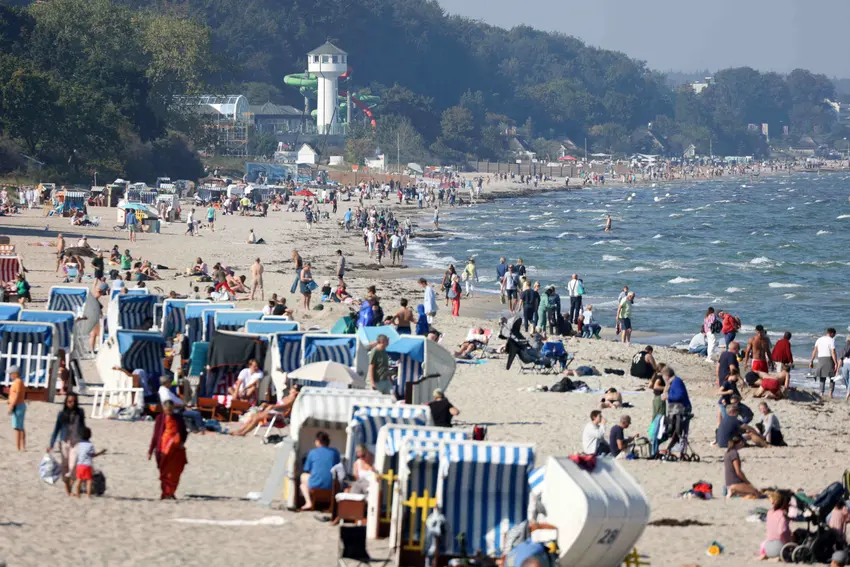
If you're looking for a place to cool off in Germany when the weather gets hot, the Baltic Sea is hard to beat.
With quaint seaside towns, soft sandy beaches and calm waters the Baltic coast makes for a genuinely lovely summer holiday destination.
And because a cool sea breeze keeps air temperatures here five to ten degrees cooler than the rest of the country, it also works for a nearby 'coolcation'.
The Baltic (Ostsee) is close enough to reach for a day trip from much of northern Germany, but if you can manage it, staying overnight is even better. The coastline and islands are full of landscapes worth lingering over, and with the right planning, visitors can enjoy an atmosphere that feels a world away from city life.
The Baltic Sea coast in a nutshell
The Baltic Sea coast is the stretch of German shoreline running from the Danish border in the west to the Polish border in the east -- through the states of Schleswig-Holstein and Mecklenburg-Western Pomerania. It includes islands like Rügen, Usedom and Hiddensee.
It’s a mix of wide sandy beaches, chalk cliffs (especially on Rügen), pine forests running down to the water, lagoons (called Bodden) and a string of old fishing villages and grand 19th-century seaside resort towns.
Compared to packed beach destinations in the Mediterranean, it's calmer and less commercial. The water is cooler and the pace slower. People come for uncrowded beaches, those iconic wicker beach chairs (Strandkorb) and a certain nostalgic, old-world charm.

What to do
Germany's Baltic coast offers various ways to enjoy a beach without the crush of mass tourism, although we can’t guarantee the main spots won’t get busy during Germany’s warmer weekends. However, it’s not hard to find off-the-beaten-track gems.
Cycling is one of the most popular ways to explore the region. A network of coastal cycle paths links fishing villages and seaside towns, running through pine woods, wetlands and open fields. A popular stretch is the ride between Kühlungsborn and Heiligendamm, which hugs the sea, opens onto wide views and passes several quiet, little-visited beaches.
If you’re up for a few unhurried hours on foot, check out a section or two of the Baltic Sea Trail (E9), a long-distance route running through Mecklenburg-Western Pomerania. It’s part of the E9 European long-distance path from the Atlantic in Portugal across to the Baltic Sea in Estonia and offers plenty of sandy beaches along the way.
What to eat
There are several local delicacies to be enjoyed on the Baltic Coast: fresh fish, dark breads, smoky flavours from wood fires and tangy pickles.
Of course, the mainstay of Baltic cuisine is, without a doubt, the mighty Fischbrötchen. This is essentially a bread roll filled with marinated or pickled fish, typically herring (such as rollmops) and onion. If the Baltic Coast had an official mascot, it would be a Fischbrötchen, so it’s well worth a try.
Three ways to reach the coast
Warnemünde is the quickest Baltic Sea beach to reach from almost anywhere in the north. It's the widest stretch of sand on the German Baltic, backed by a lighthouse from 1898, which you can climb during opening hours for €3, and the Teepott; a curved, GDR-era shell roof that looks somewhat like a seagull mid-landing. Camping options nearby are limited.
From Hamburg it's about two hours by car on the A1, or roughly 2–2.5 hours on the direct train via Rostock Hbf. From Berlin, take the RE5 to Rostock from Hauptbahnhof or Gesundbrunnen, then hop on a 21-minute S-Bahn connection that drops you 400 metres from the beach — around three hours door to sand.
From Munich or Frankfurt, an ICE into Hamburg or Berlin (roughly 5.5–6 hours from Munich to Hamburg, or 4 hours to Berlin; about 3.5 hours from Frankfurt either way) sets you up for the above connections.
Alternatively, head to the island of Usedom's Kaiserbäder for the "imperial resorts" of Heringsdorf, Ahlbeck, and Bansin. Built by Berlin's wealthy over a century ago, the villas and strip give Usedom a sense of faded elegance, and the towns are perfectly walkable and family-friendly.
Usedom sits closest to Berlin: take the RE3 to Züssow, then change onto the RB23, the small local Usedom resort railway, which winds through the pines to the coast. Plan on roughly four hours door to sand; if you're feeling ambitious, the early train out of Hauptbahnhof around 05:22 gets you to Heringsdorf by 09:25.
From Munich or Frankfurt, connect via Berlin as above. From Hamburg, it's more of a trek, with the fastest services running just over 6 hours via Stralsund.
Binz, on the island of Rügen, is the postcard option. It has a long white beach, the grand Kurhaus hotel and streets of carved resort villas with Rügen's chalk cliffs rising behind it all. It's also the hardest to do as a day trip; the fastest regional connections from either Berlin or Hamburg take around four hours with changes, or roughly 3.5 hours by car.
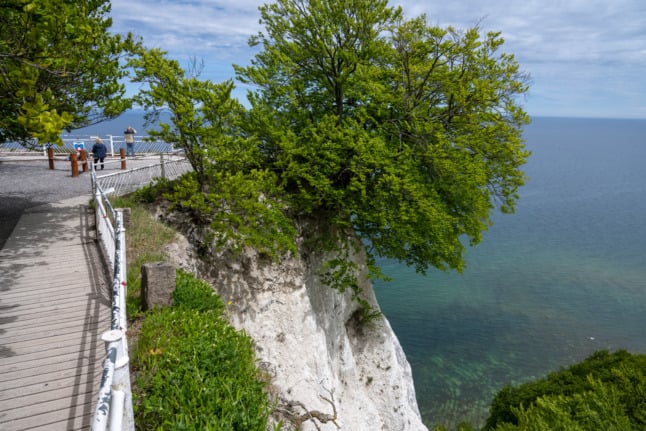
For summer 2026, direct ICE services from Berlin include a morning train reaching Binz around 12:42, though be warned that these require an additional ticket on top of any Deutschlandticket. From Munich or Frankfurt, either hub above works about equally well for the onward connection.
Regional trains, including the RE5 to Rostock and the local resort lines, are fully covered by the Deutschlandticket. ICE services cut travel time but cost extra.
Good to know:
Note that weekends with good forecasts get busy and often come with more traffic, both in trains and on the roads.
If you're coming back the same day, keep an eye on the clock. The last comfortable trains leave Warnemünde around 21:00, Heringsdorf around 19:33 and Binz between 16:00 and 18:00; miss those and you're looking at a return well past midnight.
Most resort towns charge a small day-visitor fee: Warnemünde asks €2.25, and the Usedom Kaiserbäder charge €3.70 for the 2026 holiday season, with resort fees varying elsewhere. Strandkorb rental is separate, and usually costs around €15 for the day. Not every kiosk on the promenade takes credit card, so bring some cash.
If you’re on a budget or looking for a slightly more intrepid overnight or weekend stay, several campsites along the coast are reachable by public transport, alongside others further afield that are easier to reach by car. Availability fills up fast on sunny weekends, so it's worth checking ahead; here's a live map of sites with tent availability.
READ ALSO: How to save money on a camping holiday in Germany
Wind is part of the deal here too, which is exactly why the Strandkorb exists. A light jacket earns its place in your bag even in July, and a windscreen (windschuzt) seems to be a ubiquitous feature of every German group on Baltic Coast beaches.
The long-standing German tradition of designated nude bathing areas is well-respected here, and it's not unlikely that you'll stumble upon one.
These areas tend to be clearly marked so if you're looking for them (or looking to avoid them) you'll want to keep your eyes peeled for signs with the letters "FKK" or "Freikörperkultur'" which is German for "free body culture".
READ ALSO: 'Comfortable in my own skin' - Foreigners react to public nudity in Germany
Comments