
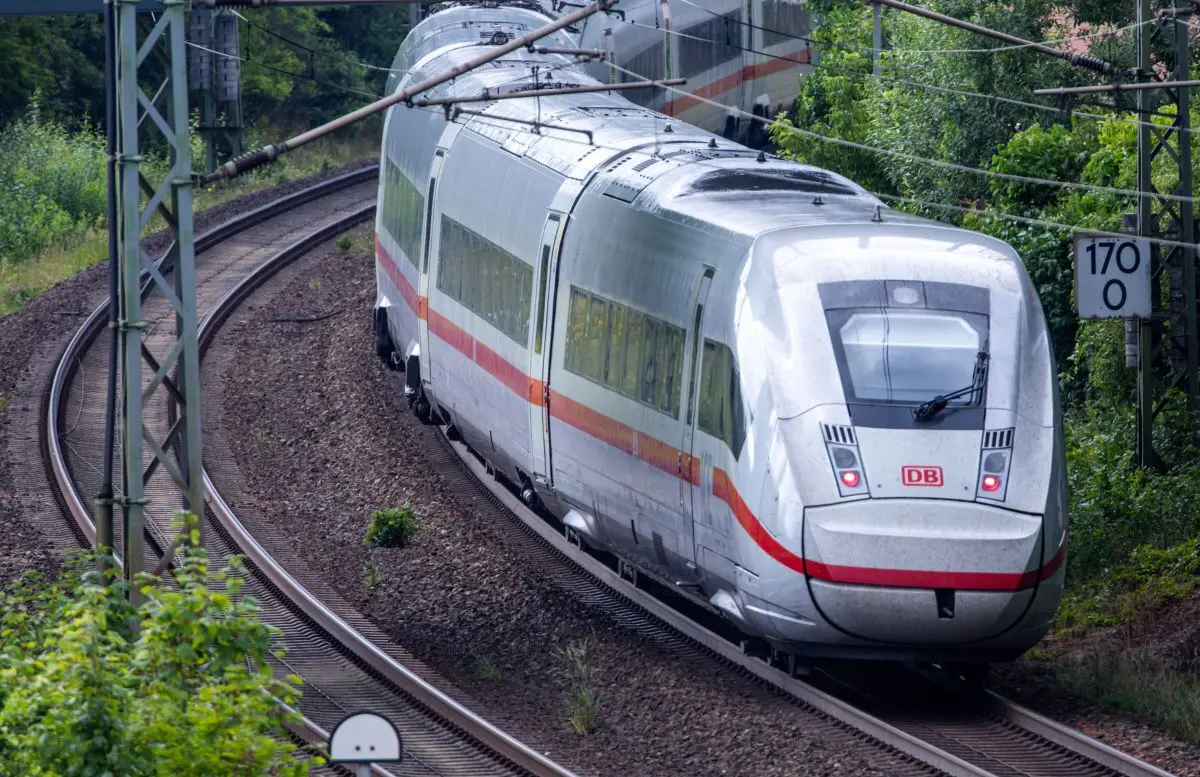
The warning comes as Italian high-speed rail operator Italo prepares to enter the German market.
The private Italian firm is planning to launch services in Germany as early as April 2028. The company is eyeing the country’s two most lucrative corridors: Munich to Hamburg via Berlin, and Munich to Dortmund via Cologne. Overall it's looking to offer up to 50 daily services connecting 18 cities on a 1,300-kilometre network.
For internationals hopping regularly between Munich, Frankfurt, Hamburg or Berlin, the prospect of more trains, more competition and potentially lower fares is appealing. Deutsche Bahn’s pricing has long frustrated passengers, and Italo’s entry into Italy has brought fares down and ridership up.
But according to a report by German tabloid Bild, which cited the EVG study, Deutsche Bahn may drop long-distance services from up to 16 cities if competitors are allowed to operate on the most profitable rail corridors.
The union has identified 16 cities that could see their long-distance rail connections cut. They include Aachen, Augsburg, Bamberg, Münster, Magdeburg, Rostock, Chemnitz, Cottbus, Freiburg, Jena, Osnabrück and Trier.
READ ALSO: Five summer holiday destinations in Germany you can reach by train
EVG leader Martin Burkert said: "If Italo is allowed to cherry-pick routes here and Deutsche Bahn is pushed off the main lines, it will dismantle our long-distance rail service. Towns and cities will be left behind, and journeys will take longer."
Burkert added that customers would first have to travel on slower regional trains to get to a station with long-distance trains.
The EVG has been warning for weeks of the disadvantages posed by increased competition in long-distance rail travel.
"I fear that cities such as Singen, Trier, Schwerin, Cottbus or Chemnitz will no longer be served if competition is not managed," said Burkert. "Operators cannot make money here."
He urged for the government to bring in rules over the allocation of train paths to avoid less profitable routes being cut.
"Deutsche Bahn must face up to competition in long-distance rail travel, but the competition must be organised in such a way that everyone is on a level playing field," added Burkert, who is also deputy chairman of the supervisory board at the state-owned company.
"Anyone wanting to make a profit on the Munich-Berlin route must, in return, also serve Freiburg, Chemnitz or Cottbus."
READ ALSO: Deutsche Bahn offers discounted tickets for last-minute travel
Meanwhile, a separate report published by Redaktionsnetzwerk Deutschland reveals that more than 90 rail infrastructure projects across Germany are at risk of stalling due to insufficient government funding.
Even projects of overriding public interest are affected, according to a parliamentary inquiry by the Greens. The Pro-Rail Alliance has sharply criticised the situation, with managing director Dirk Flege demanding the government honour its commitments.
With reporting by Airinë Nuqi
Comments