
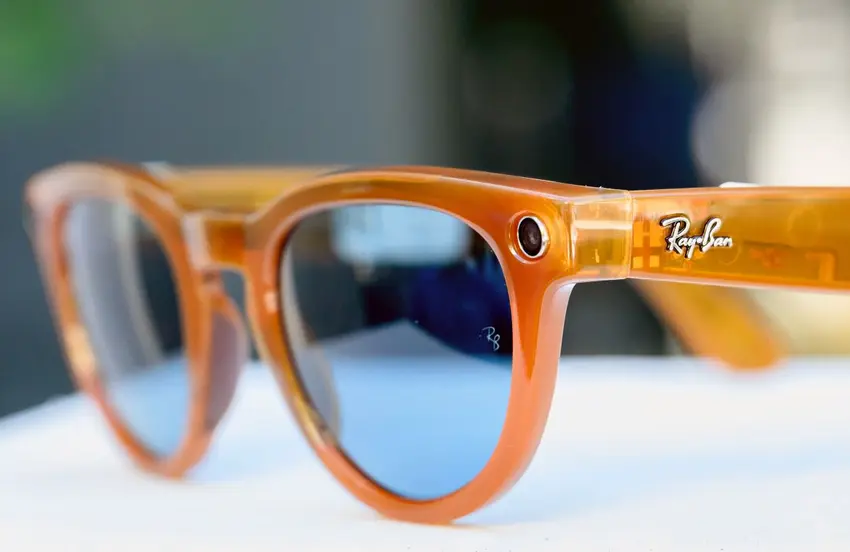
A new rule in Potsdam could reshape how emerging wearable technologies are used in everyday public settings. The city has moved to ban smart glasses with cameras and microphones from swimming pools and saunas, citing growing concerns over hidden filming.
The move comes at a time when Germany is gearing up for a new wave of smart glasses launches from major tech companies such as Google and Samsung later this year.
As those products edge closer to market, the debate around privacy, safety and legality is intensifying – and what’s happening in Potsdam could be just the beginning.
Why Potsdam decided to act
Potsdam’s city council voted to ban smart glasses with cameras and microphones in public swimming pools and saunas.
In fact, photography and filming are already banned in these facilities but the rules didn’t previously mention wearable devices like smart glasses.
READ ALSO: What are the rules on dashcams and doorbell cameras in Germany?
The push for the explicit ban came from the Green/Volt political faction, which argued that the technology allows people to take photos and videos “without the people involved being able to immediately recognise it”.
Explaining the move, authorities pointed to a growing number of recordings being shared on social media without the knowledge of those filmed.
But while the new rule may be clear in theory, enforcing it is unlikely to be straightforward – despite plans to offer pool staff additional training in how to recognise the devices.
A growing problem
Potsdam’s move reflects a much wider trend. As smart glasses become more advanced – and more discreet – concerns about privacy are rising rapidly.
Investigations in Germany have revealed a surge in videos filmed covertly with smart glasses, particularly involving women in public spaces such as lakes, beaches and pools.
What makes this especially controversial is how easy it is to bypass safety features. Although many wearable devices include an LED light which turns on to signal recording, in practice users can easily cover or disable these to make filming effectively invisible.
READ ALSO: German word of the day - Spanner
Internationally, organisations are already responding. Cruise operator Royal Caribbean, for example, has banned recording-capable smart glasses in sensitive areas such as spas, locker rooms and medical facilities.
In the US, the College Board also recently banned wearing smart glasses while taking the SATs due to concerns about cheating.
But because these devices are nearly identical to ordinary glasses, enforcement remains a major challenge.
What could happen next in Germany
Looking ahead, Potsdam’s ban could be just the first step towards broader regulation across Germany.
Under existing German law, devices that can secretly record audio or video may already fall under rules governing illegal “spying devices”.
READ ALSO: Where are smartphones banned in primary schools in Germany?
If smart glasses aren’t deemed to be sufficiently recognisable when recording, that means they could potentially face much stricter controls.
The Federal Network Agency has already warned that future models could be banned entirely – including their sale and possession – if safety features continue to be easily bypassed.
Comments