

In a week that began with tragedy in Leipzig and ended with hostages being taken at a bank in Rhineland-Palatinate, it can be a relief sometimes to find escape in the simple certainties – and the more predictable highs and lows – of sport.
And in Germany, unless otherwise stated, when we speak of sport we speak of football -- that's soccer for the Americans.
With Bayern Munich fans still recovering from their semi-final defeat at the hands of Paris Saint-Germain, it is now up to SC Freiburg to defend German footballing honour in the final of Europe's second most important club competition.
To clarify, Bayern Munich – by a distance Germany’s wealthiest and most successful club – was knocked out of the Champions League on Wednesday.
A day later, one of the country’s best-loved underdog clubs, SC Freiburg, secured a historic 3 – 1 win over Braga and with it a place in the Europa League final in Istanbul on May 20th.
For neutrals, getting behind Freiburg is easy. It's like the footballing equivalent of supporting a local organic bakery competing with a global supermarket chain.
Based in Germany's sunniest, most progressive city – famous for its green politics, medieval canals and solar-powered everything – the club is member-owned and famously stable. They represent the "little guy" who actually seems to like his neighbours.
READ ALSO: Basel vs Freiburg - Which city is better to live in?
Their opponents in Istanbul will be Aston Villa, an English premier league club powered by the wealth of two billionaire owners and VIP supporters including Prince William, former UK prime minister David Cameron and Hollywood star Tom Hanks.
The culture clash on the banks on the Bosphorus could well be as entertaining as the football itself.
Can you name Germany's top-ranked nightclub?
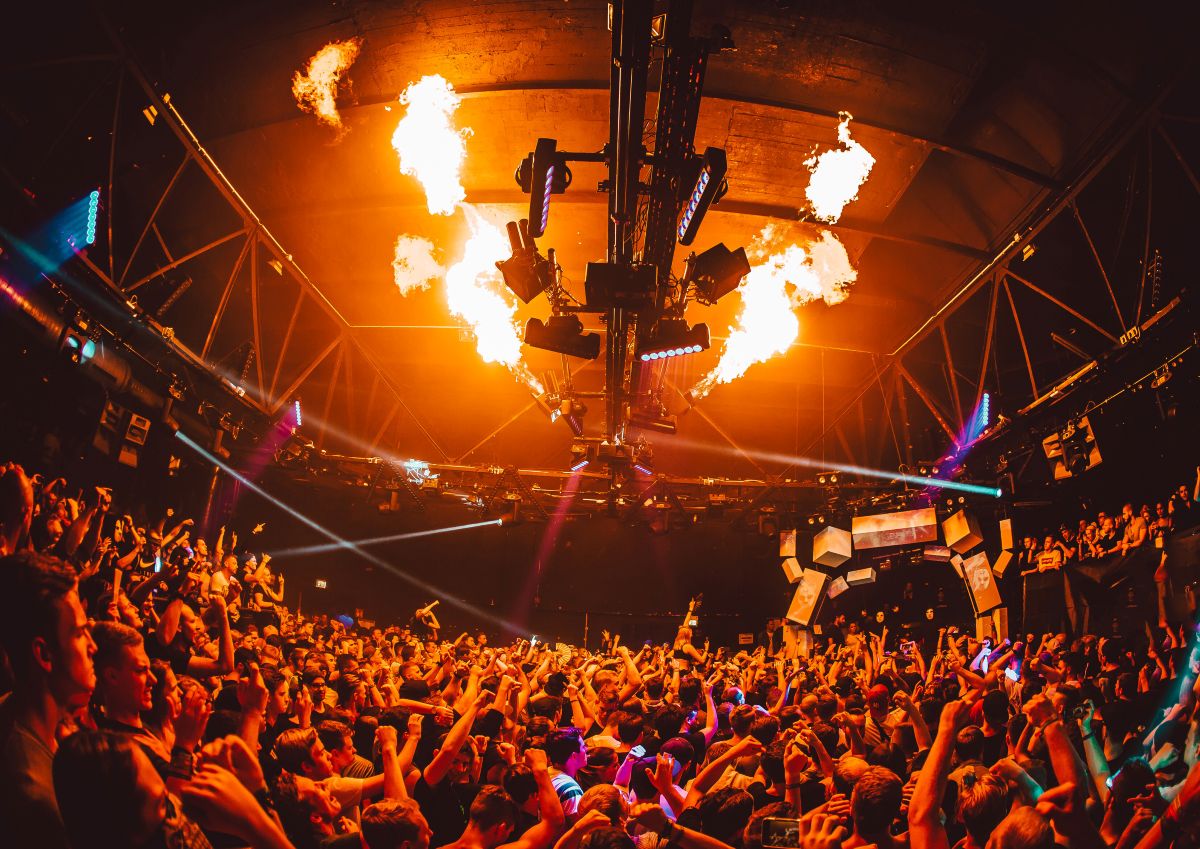
If Freiburg’s improbable Europa League run is a reminder that German footballing life exists beyond Munich, then recent club rankings suggest a similar rebalancing could be under way in nightlife.
For years, Berlin has been seen as the unquestioned capital of club culture, but the latest DJ Mag Top 100 Clubs reveals that may be changing.
Cologne’s Bootshaus is Germany’s highest‑ranked venue in 2026, ahead of Berlin institution Berghain.
The DJ Mag ranking is based on a public survey of club goers, and this year Bootshaus secured the number 11 spot worldwide, while Berghain managed 21st (out of 200 in the ranking).
READ ALSO: Study probes mystery of Berlin techno clubs' door policy
Even more striking is the arrival in the top 100 of Wuppertal’s Open Ground, a former bunker turned techno space that only opened in 2023. Praised for its openness and lack of elitist door politics, it has been described as everything Berlin once symbolised, minus the exhaustion.
At the top end of the list, Spain and Brazil now appear to dominate. Ibiza alone has multiple venues in the top four, while Brazil’s Green Valley and Surreal Park anchor South America’s rise as a clubbing superpower.
A beautiful view
There is, of course, still plenty to love about Berlin – and plenty to do away from the dance floor. Where else, for example, can you wander into a presidential palace for a free pop‑up art exhibition?
Just before it closes for a years‑long renovation, Bellevue Palace, the official residence of Federal President Frank‑Walter Steinmeier, will open its doors as a temporary gallery from June 13th to June 28th.
The short‑run exhibition, organised with Berlin’s Academy of Arts, will see works by leading artists including Katharina Grosse, Wolfgang Tillmans and Alexandra Bircken installed throughout the palace’s normally off‑limits rooms – a rare public glimpse inside one of Germany’s most symbolically charged buildings.
READ ALSO:
- The ultimate guide to Germany's open-air parties in 2026
- What's on in Germany - Ten unmissable events in May 2026

Admission is free, but visitors will need to book a time‑slot. These are set to become available via the Academy of Arts website from May 18th.
For Berliners, it’s a final chance to step inside Bellevue before the scaffolding goes up – and a reminder that the capital still knows how to surprise.
Don't forget:
For anyone not in Berlin, Wuppertal, Cologne or even Freiburg – long-distance rail travel in Germany may soon become easier on the wallet.
German rail operator Deutsche Bahn announced this week that it will begin offering discounted last‑minute tickets for long‑distance journeys from May 9th, with fares for travel in the following week going on sale every weekend.
Prices will reportedly start at €6.99, with BahnCard reductions sometimes also applying. The six‑month trial follows a decision to freeze long‑distance fares for a year, as Deutsche Bahn looks to make rail travel more attractive at a time when the cost of getting around continues to rise.
READ ALSO:
Comments