
Friday's top story: Germany rules out immediate action in Hormuz crisis
Germany, along with Italy and France, has said it would be willing to help ensure safe passage through the Strait of Hormuz, but only after a ceasefire is in place. The countries effectively distanced themselves from calls for immediate military involvement.
The position was set out after six major powers – Britain, France, Germany, Italy, Japan and the Netherlands – issued a joint statement condemning recent Iranian attacks on commercial shipping and expressing readiness to contribute to future efforts to secure the vital waterway.
The clarification comes as Iran’s effective blockade of the strait has paralysed shipping through one of the world’s most important maritime chokepoints, through which around a fifth of global oil and gas normally passes.
At least 23 commercial vessels have reported incidents, leaving some 20,000 seafarers stranded.
Germany’s Boris Pistorius said any involvement would require a ceasefire, an international mandate and parliamentary approval.
Italian Defence Minister Guido Crosetto stressed that any initiative would not be a “war mission” and should take place within a UN framework following a truce.
READ ALSO: Germany 'would have advised against' US-Israel war on Iran
Özdemir invites CDU to talks on new Baden-Württemberg government
The Green Party has invited the Christian Democrats to an official exploratory meeting about forming a state government coalition in the next few days. The aim is to prepare coalition negotiations.
The CDU should determine the time and place. The CDU Baden-Württemberg should decide on Friday whether to accept the invitation, but this is more of a formality as the party is expected to accept.
The Greens and CDU have been governing together in the southwest since 2016, but tensions recently ran high between the two parties following the very close election results.
Some CDU members had suggested a shared state premier position with the Greens. Özdemir had rejected this.
READ ALSO:
- Five key takeaways from Baden-Württemberg's state election
- Meet Cem Özdemir, Germany's first state premier with Turkish heritage
"We want to open a new chapter in the book of Baden-Württemberg's history," emphasized Green politician Cem Özdemir.
The Greens and CDU stand for the continuity of a stable and reliable government, he suggested. Adding that the next few weeks will be about "forming a stable and reliable government that people can rely on for the next five years."
A continuation of the green-black coalition is currently considered the only realistic option for a state government here. Namely because the party with the next biggest share of votes was the AfD, which both parties have so far refused to govern with.
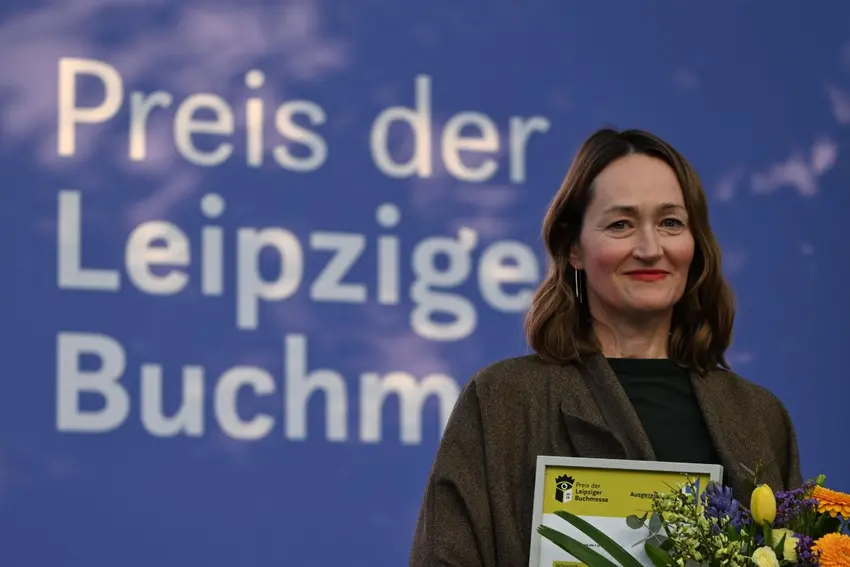
Katerina Poladjan wins Leipzig Book Fair Prize for Fiction
Author Katerina Poladjan has been awarded the Leipzig Book Fair Prize for Fiction for her novel Goldstrand.
Born in Moscow in 1971, Poladjan received the prestigious honour for her fifth novel, which traces a journey through Europe’s 20th‑century upheavals.
Set across just 160 pages, Goldstrand moves from Odessa to Rome and on to the former socialist holiday resort of Golden Sands on Bulgaria’s Black Sea coast.
At its centre is Eli, a film director reflecting on his life during therapy sessions with an enigmatic analyst. Through fragmented, at times absurd dialogue, Poladjan explores memory, identity and historical rupture.
The jury praised the novel for showing how a life story can emerge from “self‑questioning and invention” and described Poladjan’s prose as both light and profound.
READ ALSO: Everything you can borrow from a library in Germany
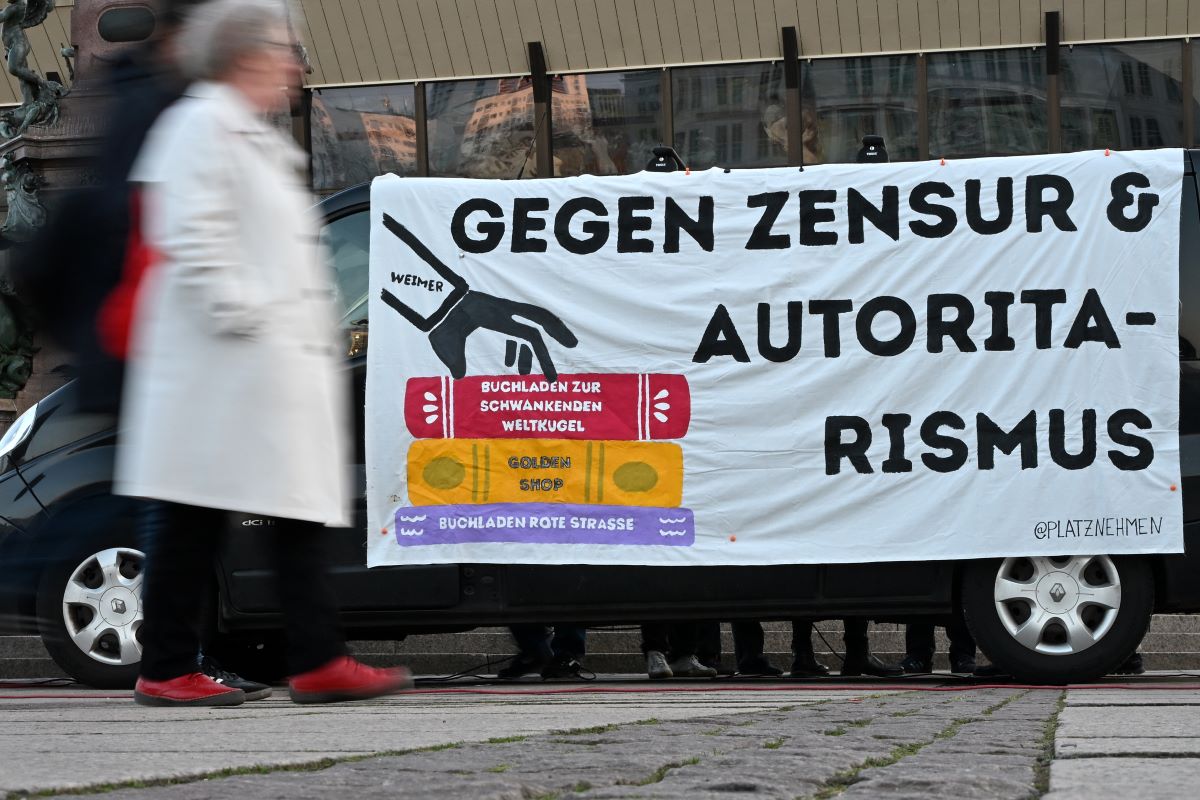
The opening of the Book Fair had been overshadowed by protests against Minister of State for Culture Wolfram Weimer after he excluded three left-wing bookstores from the German Bookstore Award.
In her acceptance speech, Poladjan who was born in Moscow in 1971 – criticised Weimer, saying his actions evoked “dark memories” of her childhood in the Soviet Union.
Poladjan, who grew up in Rome and Vienna after her parents left the Soviet Union, now lives in Germany. The Leipzig Book Fair runs until Sunday, alongside the city‑wide reading festival Leipzig liest.
Study finds racism and discrimination remain deep‑rooted in Germany
Racism and discrimination continue to be widespread in Germany, according to the latest findings of the National Discrimination and Racism Monitor (Nadira), presented in Berlin on Thursday.
While the study recorded a slight overall decline in racist attitudes and experiences, researchers said the change does little to alter the broader picture.
The survey found that 36 percent of respondents believe in the existence of “different human races”. Even more strikingly, 66 percent said they consider certain cultures to be “more progressive and better” than others, while nearly half believed some groups are “naturally more hardworking.”
READ ALSO: Why are so many EU citizens planning to leave Germany?
Researchers noted that explicit references to race are increasingly replaced by terms such as “culture” or “groups,” without changing the underlying hierarchies.
Experiences of discrimination remain part of everyday life for many, particularly people perceived as “foreign.” One quarter of Black respondents and 17 percent of Muslim respondents reported verbal abuse or threats at least once a month, while trust in state institutions has fallen sharply among affected groups.
Federal Anti‑Discrimination Commissioner Ferda Ataman warned that racist thought patterns remain entrenched and called for stronger legal protections, better support services and clearer political leadership to confront the issue.
With reporting by AFP and Paul Krantz.
 Paul Krantz, Editor, The Local Germany

Comments (2)